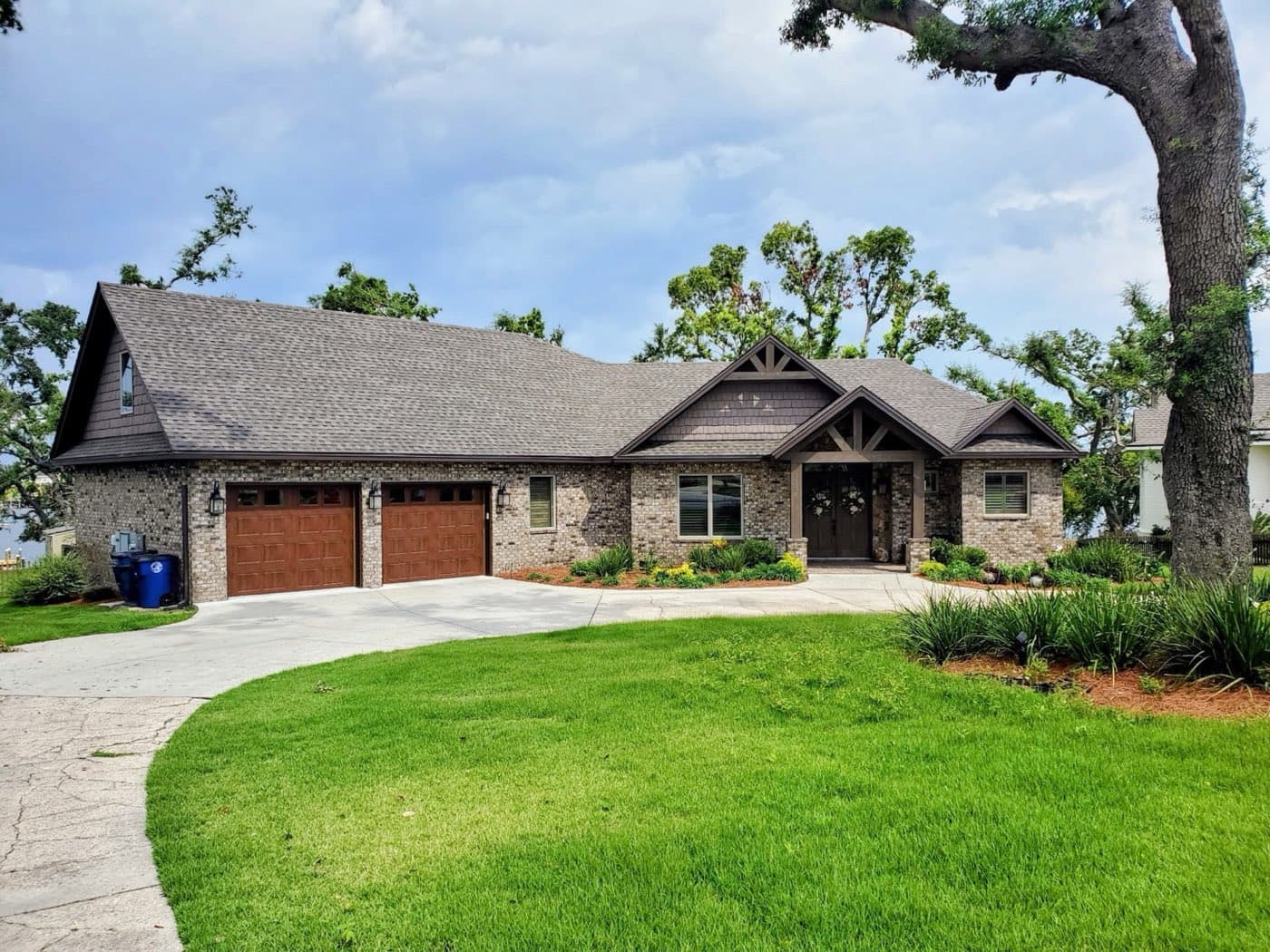
Every few weeks a homeowner asks us the same thing: should I put metal on this house instead of shingle? It's a fair question, and the honest answer is that it depends on the house, how long you plan to own it, and how close you are to the Gulf. We install Atlas Pinnacle architectural shingle as our default residential system, and we also install metal when the situation calls for it. We have no reason to push you one way or the other, so here is the even-handed version.
Both are good roofs. Both pass the Florida Building Code when they're installed right. The differences are in cost, lifespan, and how each one ages in salt air. We'll walk through all of it, including the trade-offs the brochures tend to skip.
Upfront cost
This is usually where the conversation ends, so let's start here. On a typical Northwest Florida home, standing-seam metal runs roughly double the cost of architectural shingle. Sometimes a little less, sometimes more if the roof has a lot of valleys, hips, or penetrations, because metal is labor-heavy to flash and trim around all of that. 5V metal (the exposed-fastener panel you see on a lot of older ranches and cottages) costs less than standing seam but still lands above shingle.
So metal is a bigger check on day one. The case for it is never about the upfront number. It's about the math over time, which is the next part.
Lifespan and how each ages here
Architectural shingle realistically lasts 18-25 years in our climate. Metal lasts 40-50, and a standing-seam roof installed well can go longer than that. On paper one metal roof outlives two shingle roofs, which is the whole financial argument for it.
The catch is salt air. The coating on a metal panel is what protects it, and within a mile of the Gulf that coating gets tested hard. Cheap exposed-fastener metal can rust at the screws and seams faster than the brochure lifespan suggests. Standing seam with a quality Kynar finish holds up far better because the fasteners are hidden. Shingle ages differently: salt and sun cook the granules off, and coastal shingle roofs lose 3-5 years off the numbers above. We get into the chemistry of that in Salt air and shingles.
Wind, hurricanes, and insurance
Both systems can be rated for our wind zone. A properly installed Atlas architectural shingle roof with the right nailing pattern and a sealed deck performs well, and we install to those standards as part of any roof installation. Standing-seam metal, with its concealed clips, has an edge in sustained high wind because there's no exposed shingle edge for gusts to lift. Exposed-fastener 5V is more vulnerable than standing seam, since the panels are only as strong as the screws holding them.
On insurance, the thing that actually moves your premium is the wind-mitigation inspection, not the roof material by itself. A sealed roof deck, proper nailing, and good attachment can earn you credits on either system. We explain what the inspector checks in Wind mitigation explained. Some carriers do view a newer metal roof favorably, but don't assume metal alone guarantees a discount. Get the wind-mit done and let the documented features do the work.
Heat, noise, and looks
Metal reflects heat, which matters in a place where the attic hits oven temperatures from May through September. A reflective metal roof or a 'cool' shingle can lower attic temps and ease the load on your AC; both have rated options listed with ENERGY STAR. The savings are real but modest, and they depend more on your attic ventilation and insulation than on the roof color, so don't buy metal expecting your power bill to be cut in half.
Noise is the question everyone asks. On a roof with a solid deck and underlayment, a metal roof in rain is not loud. The tin-shed sound people remember comes from panels over open purlins, which is not how we build a house. Aesthetically it comes down to taste. Shingle reads traditional and blends into most neighborhoods. Standing seam reads clean and modern and suits coastal and contemporary homes. Some HOAs have opinions, so it's worth checking before you fall in love with a profile.
Resale and when each one wins
For resale, a sound roof of either type sells a house. A buyer's main worry is the age and condition of what's up there, not the material. Metal can be a selling point on a long-term coastal home, but if you're planning to move in a few years, you will not recover the full premium you paid for it.
Here's our honest read. Shingle is the right call for most homes: it's proven here, it's affordable, and a 20-year roof is plenty if you don't plan to own the house for decades. Metal genuinely makes sense for waterfront homes that need maximum corrosion resistance, low-slope ranch roofs where 5V or standing seam sheds water better than shingle, and owners who plan to stay put for 20-plus years and want to buy one roof instead of two. On a Destin or Pensacola Beach property right on the water, that long-term math often tips toward metal. If your shingle roof is just worn and you're weighing options, Repair vs. replace is a good place to start.
Get an honest recommendation
The only way to know which roof fits your house is to look at the house. We'll measure the slopes, check your proximity to the Gulf, ask how long you plan to stay, and give you real numbers on both. Book a free roof inspection or reach out for an estimate, and we'll tell you straight which one we'd put on if it were our own home.