Storm damage roof repair has been a significant part of what we do for nearly 40 years. Whitrock Associates has been on Northwest Florida roofs through countless named storms, surprise squalls, and the everyday wind events that quietly chip away at a roof until one heavy rain finds the soft spot. Storm work is one of the things we do most. Not because we chase it, but because we've stayed here through every hurricane season in that time, and our neighbors keep calling.
When a storm hits, the order of operations matters. Get the roof secured against the next rain, then do the actual work, repair or full replacement, to a standard that will hold through the next storm. Timing matters, and we move fast.
If you're reading this because a storm just rolled through, the most useful thing you can do right now is call. We prioritize storm calls and get out as fast as we can, and we'll talk you through what comes next before we even quote.
Why storm response is different in Northwest Florida
The Florida panhandle sits on a stretch of the Gulf Coast that catches a disproportionate share of named storms: Ivan, Dennis, Katrina (yes, we got rain bands), Sally, Michael, Idalia. Each one stresses roofs in slightly different ways. Ivan brought hours of sustained wind, Sally dumped 30+ inches of rain in a day, and Michael in Bay County was a textbook example of what Cat 5 wind does to under-built decking. A contractor who hasn't been here for the past decade is guessing about what they'll find when they pull the shingles back.
There's also the insurance environment. Florida's property insurance market has been turbulent, with carriers leaving the state, premiums climbing, and AOB reform changing how claims work. Coverage has tightened on what's included and what isn't. It's worth reading your own policy closely and knowing where you stand before a storm hits. That part is between you and your carrier.
Practical takeaway: the panhandle punishes roofs in specific ways, and a contractor who's seen it before knows what to look for once the shingles come back: soft decking, failed flashing, and lifted laminations that don't show from the ground.
What's included in our storm response
- Priority emergency tarping on active leaks. We keep tarp materials on the truck during hurricane season
- On-roof damage assessment with documentation photos and a written repair-or-replace quote
- Repair work if the damage is localized: flashing, attic vents, missing shingles, ridge cap
- Full tear-off and replacement if the damage is widespread or the existing roof is too compromised to patch
- Code-required upgrades brought up to current FBC (wind mitigation, ice and water shield, drip edge)
- Final building-department inspection coordination with the city or county
How storm work runs with us
- 01
The first call
Call as soon as you can after the storm. We prioritize active leaks for tarping and photo documentation, and book the soonest non-emergency assessment slot. Either way, we'll tell you over the phone what to do about your interior: buckets, plastic, what to move, what to leave.
- 02
Roof assessment and quote
We walk the roof, photograph the damage (granule loss, lifted tabs, exposed fasteners, soft spots, hail bruising if applicable), and give you a written assessment and quote. You get a copy to keep. If you're filing an insurance claim, you're welcome to share it with your carrier.
- 03
Scheduling
Once you're ready to move forward, we get you on the schedule. Work starts after any required permit is approved, not before. During storm season we can be several weeks out depending on volume, but emergency tarping holds the interior until the actual date. We'll tell you straight whether it's two weeks or six.
- 04
The actual roof work
Repair or full replacement, depending on the damage. The crews doing the work are ones we've worked with for years: reliable and accountable, not whoever's cheapest that week. Tear-off if needed, decking repair, a full peel-and-stick deck, drip edge, flashing, shingles or metal, ridge venting. Cleanup includes magnet-sweeping for nails and a final walk-through with you.
- 05
Final inspection and warranty
Permit close-out with the local building department, manufacturer warranty registration, and a copy of everything for your records. If anything's wrong in the first five years (a fastener pop, a sealant issue, anything), we're back out at no charge.
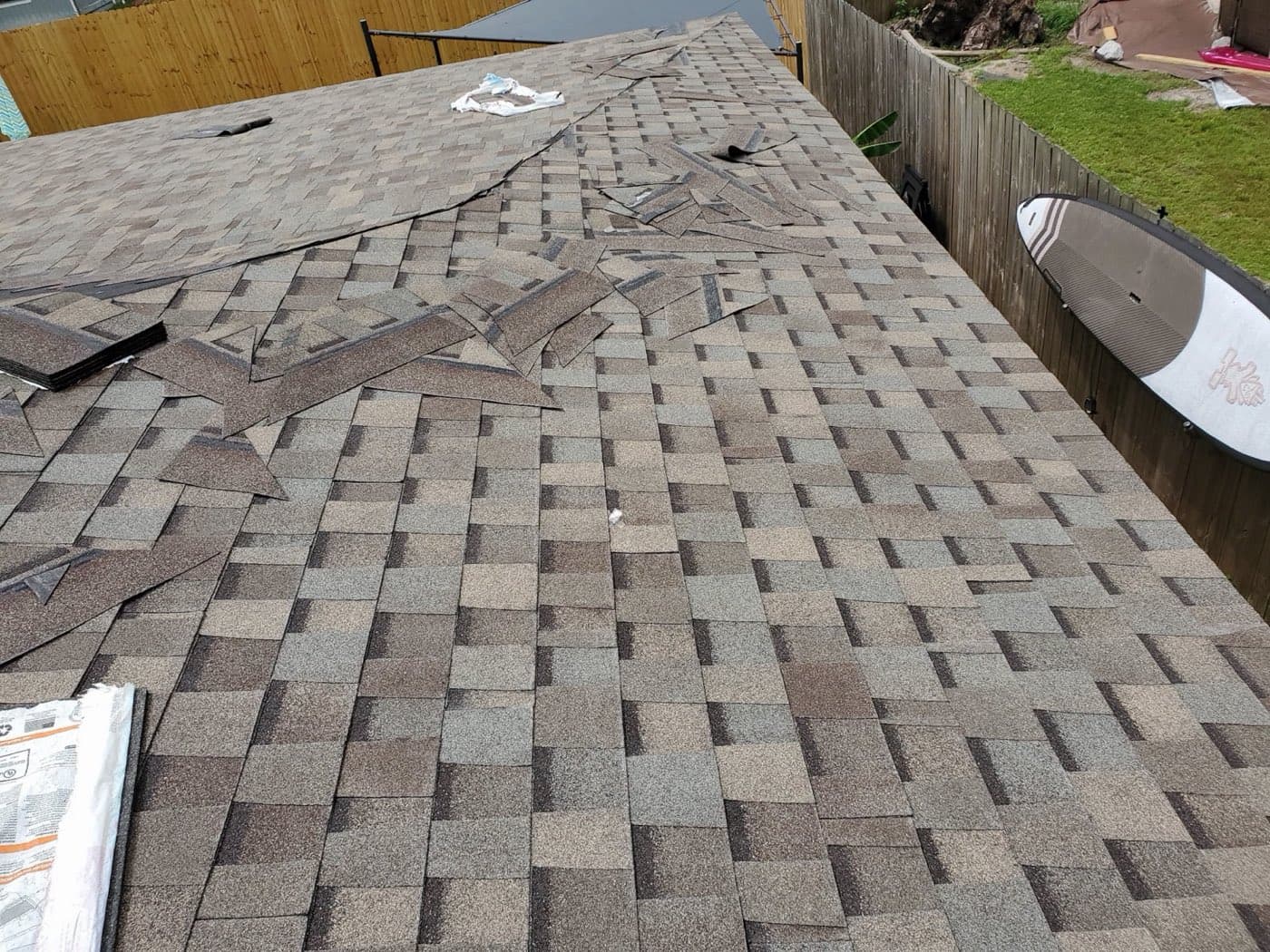
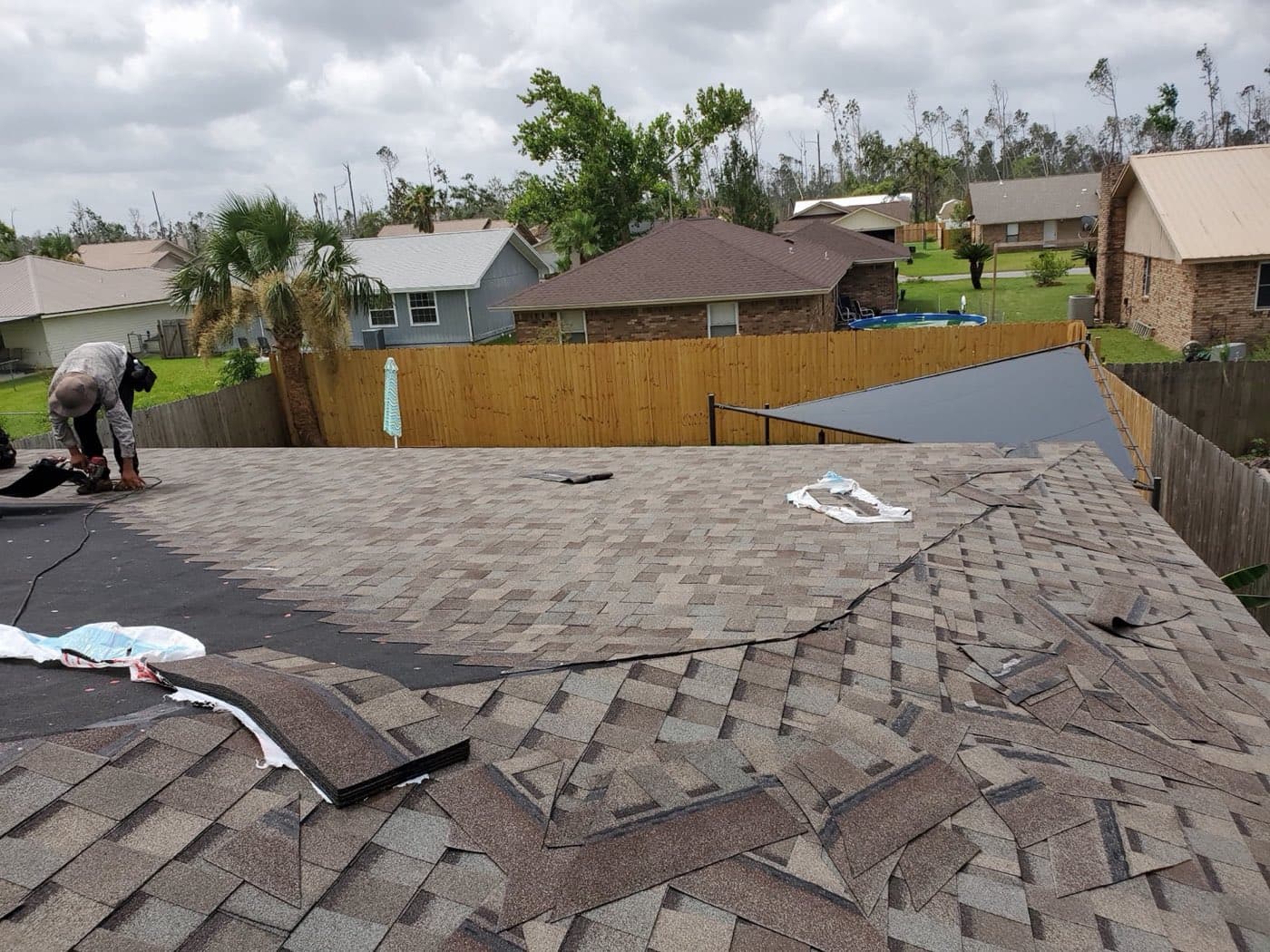
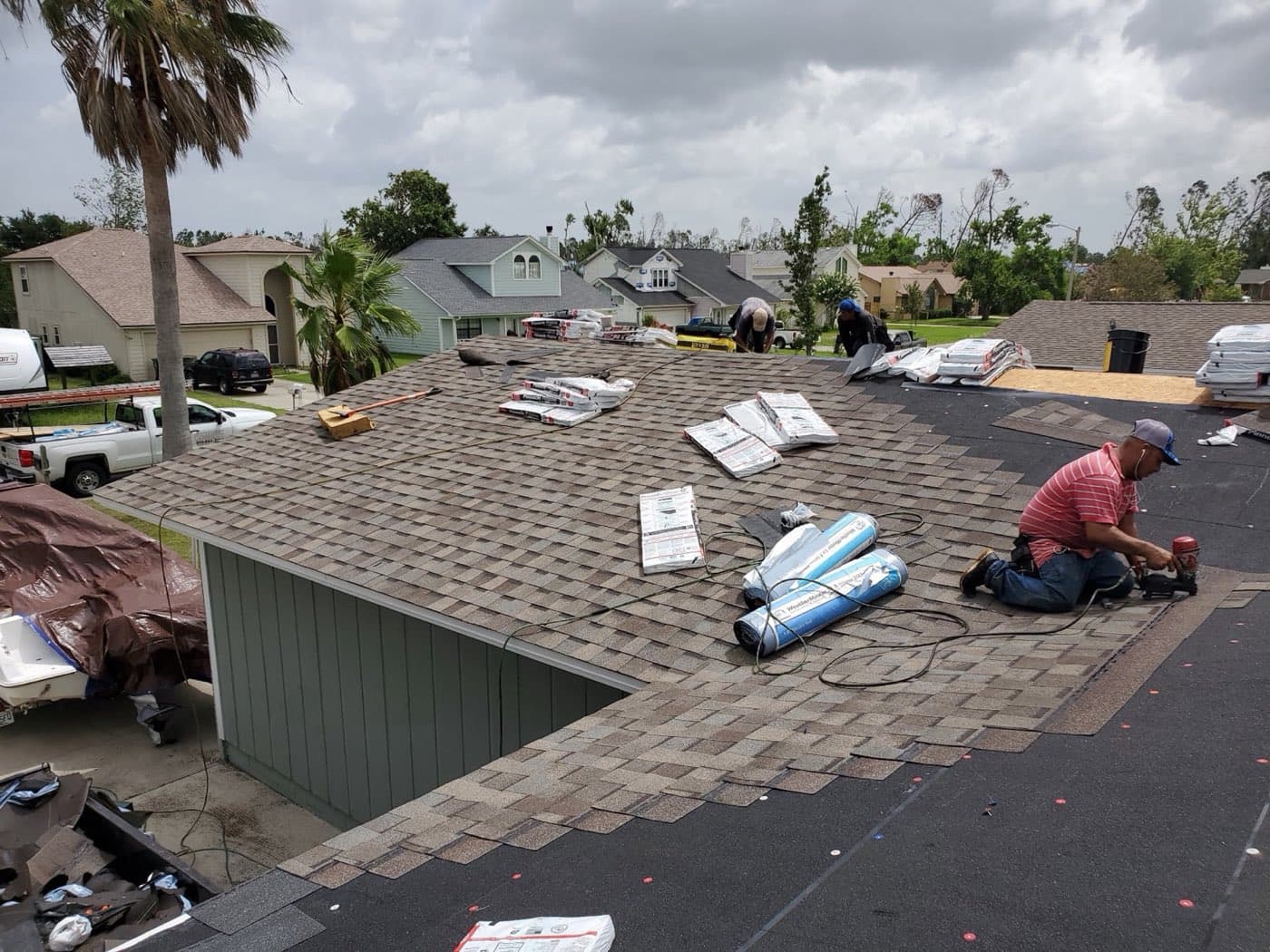
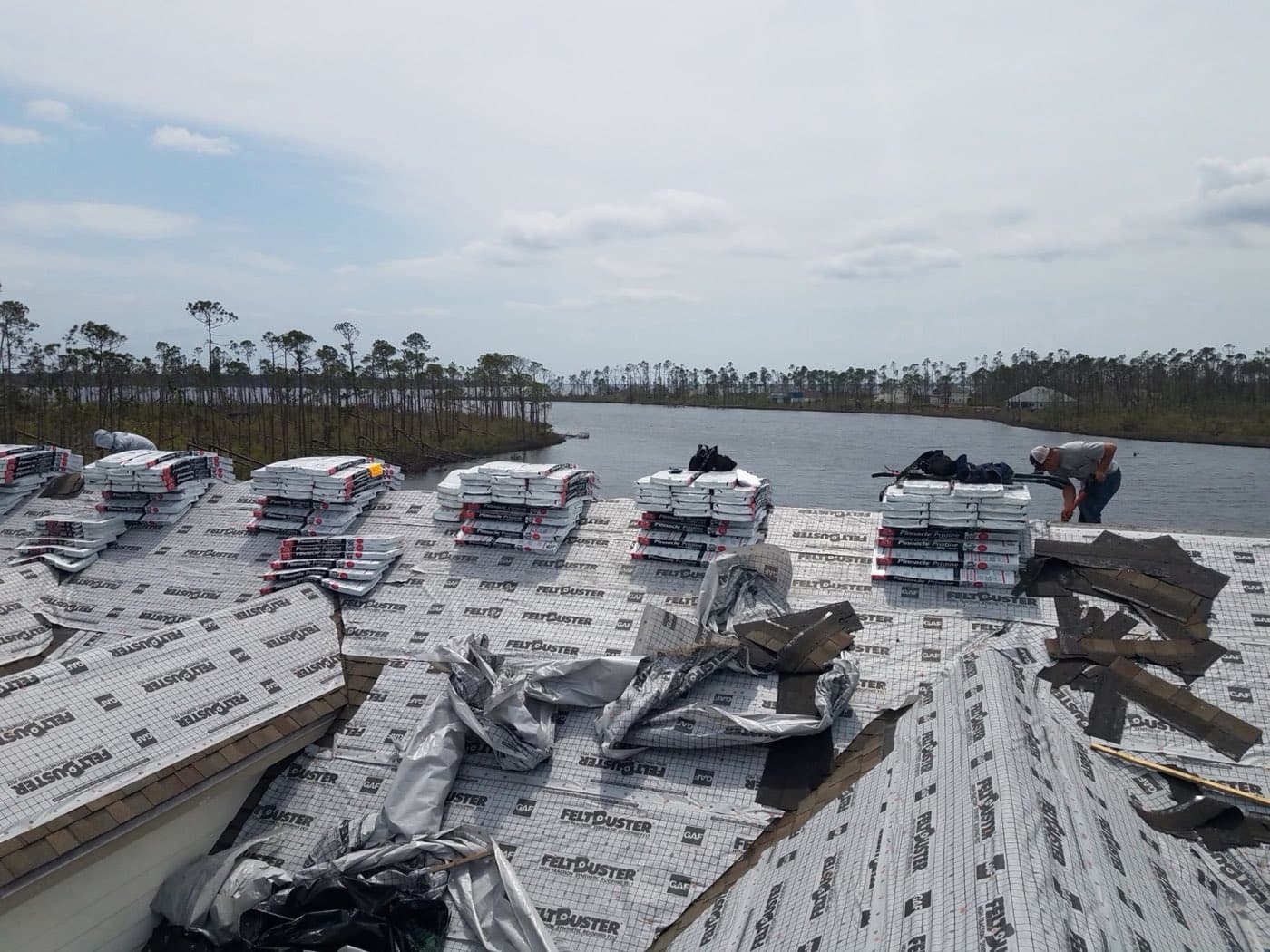
Storm Damage jobs around the panhandle
What affects the cost of storm work
On a claim, your out-of-pocket is typically just your deductible, and the rest is between you and your carrier per your policy. If you're paying out of pocket (the damage was below your deductible, or you're choosing not to file), we'll quote a normal repair or replacement.
Either way, we walk you through the line items so you understand what you're paying for and why.
- Extent of damage: single missing shingle vs. half the roof lifted
- Roof material: shingle repair is faster and cheaper than tile or metal
- Decking condition: water-damaged plywood adds tear-off and replacement
- Code upgrades required since the original install (drip edge, ice and water shield, FBC wind requirements)
- Whether you're filing a claim or paying out of pocket
- Permit fees, which vary by city and county
Why call us for storm work
We've worked every major storm here for nearly 40 years
Erin, Ivan, Dennis, Katrina rain bands, Ida, Sally, Michael, Idalia. That's not a marketing line. It's why we know which decking issues will surface once the tear-off starts, and how panhandle roofs actually fail in a storm.
Roofing is the only thing we do
We're a Certified Roofing Contractor, not a general contractor with a roofing tab. The whole operation is built around roofing: the estimator, the project manager, the crews, the warranty followup. That focus shows up in the work.
Ready to tarp, day one
We keep tarp materials, fasteners, and lath on the trucks all hurricane season. When a roof is open, getting it covered fast is what stops the water from doing more damage inside, so that's the first thing we handle.
We don't disappear after the storm
Storm-chaser outfits roll into town after a hurricane, bid every roof they can, do mediocre work, and vanish before the warranty calls start. We've been at the same Fort Walton Beach address for decades. If something's wrong with the work in five years, you can still call us.