Gulf Breeze sits on the peninsula between Pensacola Bay and Santa Rosa Sound (technically Santa Rosa County, but tied to Pensacola economically), about 30 miles and 40 minutes west of our shop. Its roofs have been part of our regular work for nearly 40 years. We've replaced and repaired roofs across the whole peninsula: the 1970s and 80s ranches up the original Gulf Breeze Parkway, the newer subdivisions in Tiger Point, the waterfront homes on Bayou Texar and along Soundside Drive.
The roof stock here is mixed in an interesting way. There's a substantial 1970s and 80s ranch-home base from when Gulf Breeze grew into the bedroom community it is today, and those roofs have typically been replaced once or twice already and are hitting another cycle. Newer construction in the eastern Gulf Breeze and Tiger Point areas tends to be from the early 2000s onward with current-code framing. And the waterfront tier (Bayou Texar side, Soundside, and the Pensacola Beach-adjacent properties along the southern edge) needs the same coastal-grade specifications we use for actual barrier-island work.
What we know about Gulf Breeze roofs
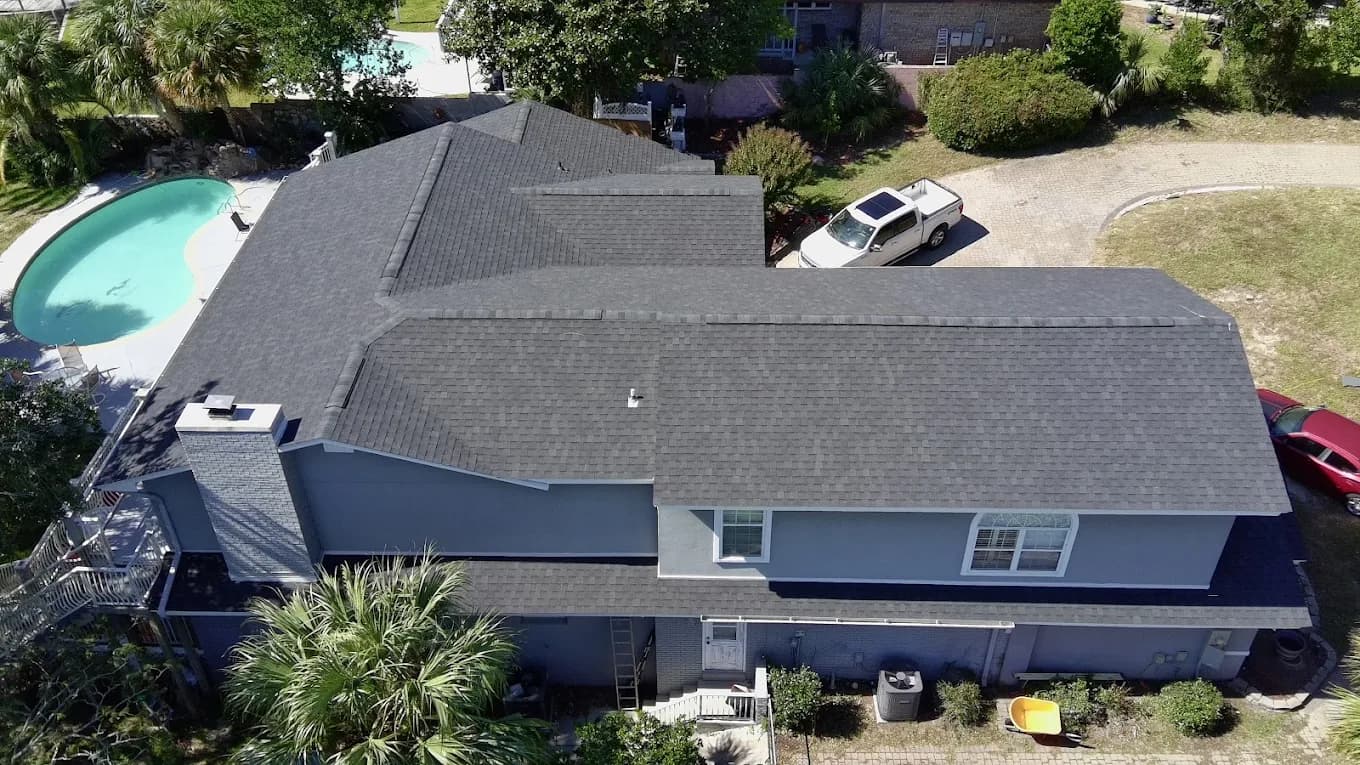
The original Gulf Breeze city limits sit between Highway 98 and the Sound, with the older neighborhoods on the south side near Shoreline Park and the bayfront properties on the north toward Pensacola Bay. Most of those homes are 1960s-80s ranch with 4:12 to 6:12 pitch shingle roofs, straightforward replacements with architectural shingle, though we upgrade fasteners and flashing for the homes closest to the water.
Move east on Highway 98 through the Tiger Point area and out toward the Navarre boundary and the housing gets newer: 1990s through 2010s subdivisions, taller pitches, more architectural complexity, and a mix of shingle and some tile on the higher-end builds. Tiger Point in particular has a lot of homes around the golf course that fall into this category.
Waterfront homes anywhere on Bayou Texar, Santa Rosa Sound, or the bayfront streets get the salt-air spec we'd use on Pensacola Beach. Stainless or coated fasteners, hurricane-rated underlayment, sealed penetrations, and metal as a strong option over shingle. Salt exposure here is real even though you're across the bay from the Gulf. The wind comes off the water from every direction at some point in the year.
Roof pitches across Gulf Breeze are mostly walkable (4:12 to 8:12), which keeps installation cleaner than steep work. The exception is some of the more recent custom homes with steeper architectural pitches. Those get a different production rate and sometimes call for tile or upgraded shingle to match the design.
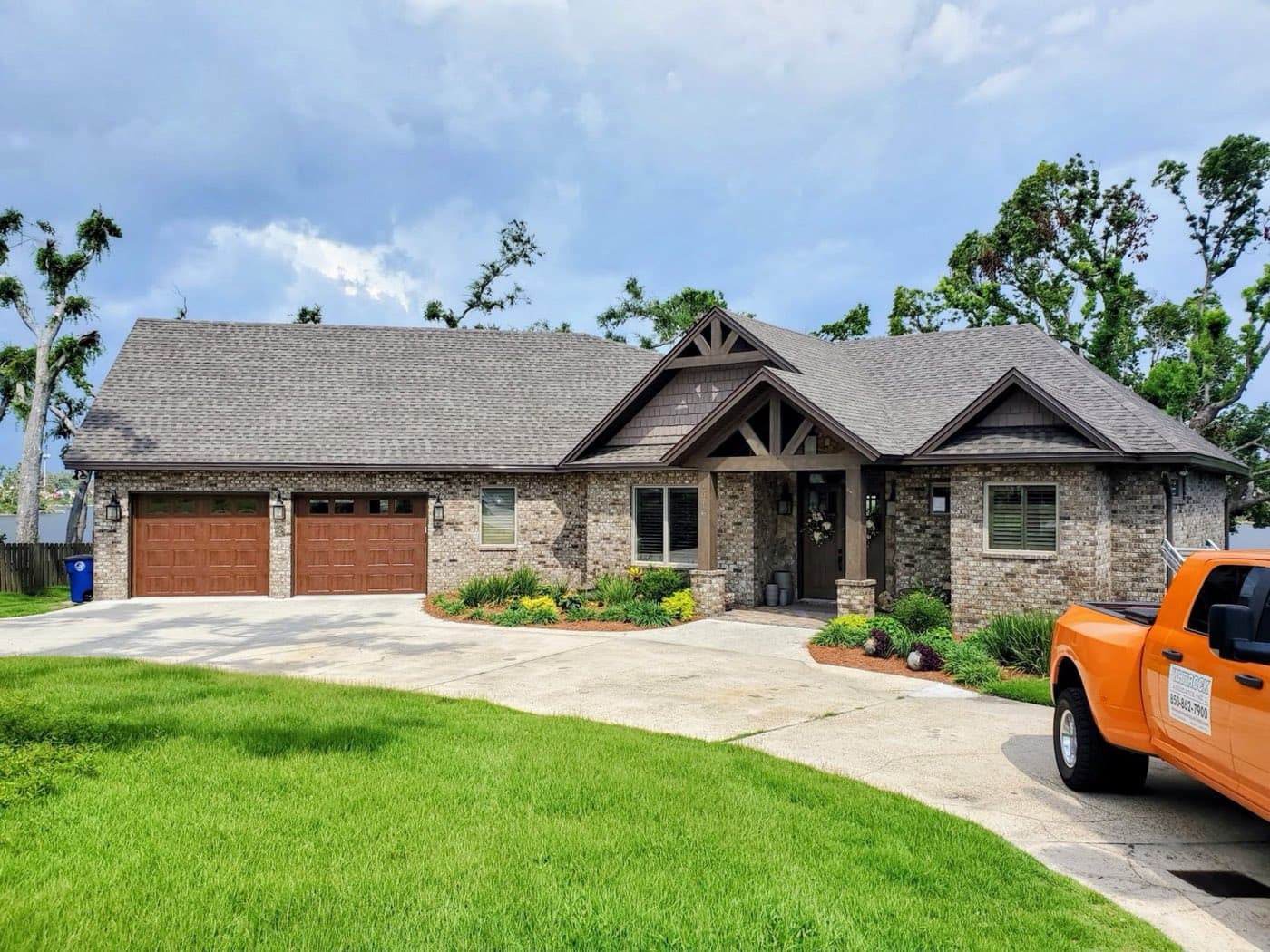
Recent roofing jobs in Gulf Breeze
Roofing services we provide in Gulf Breeze
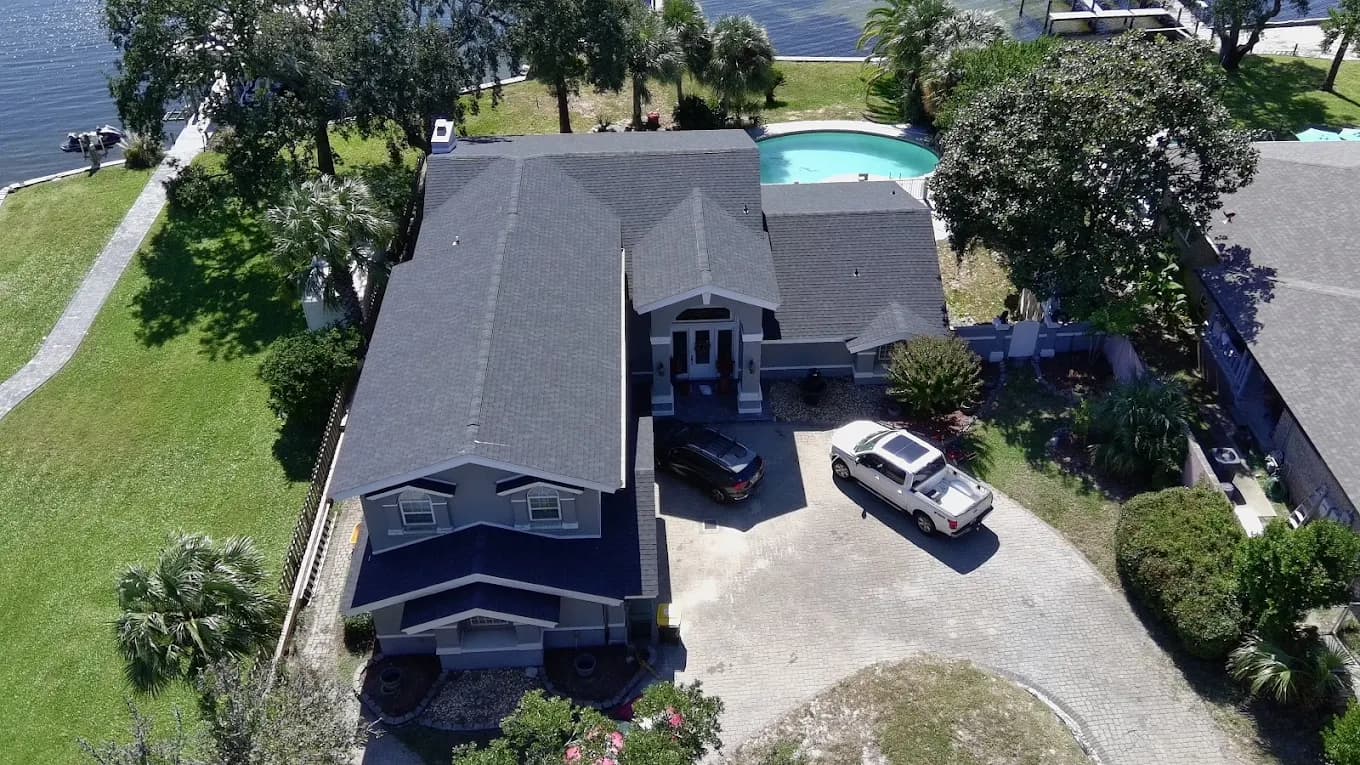
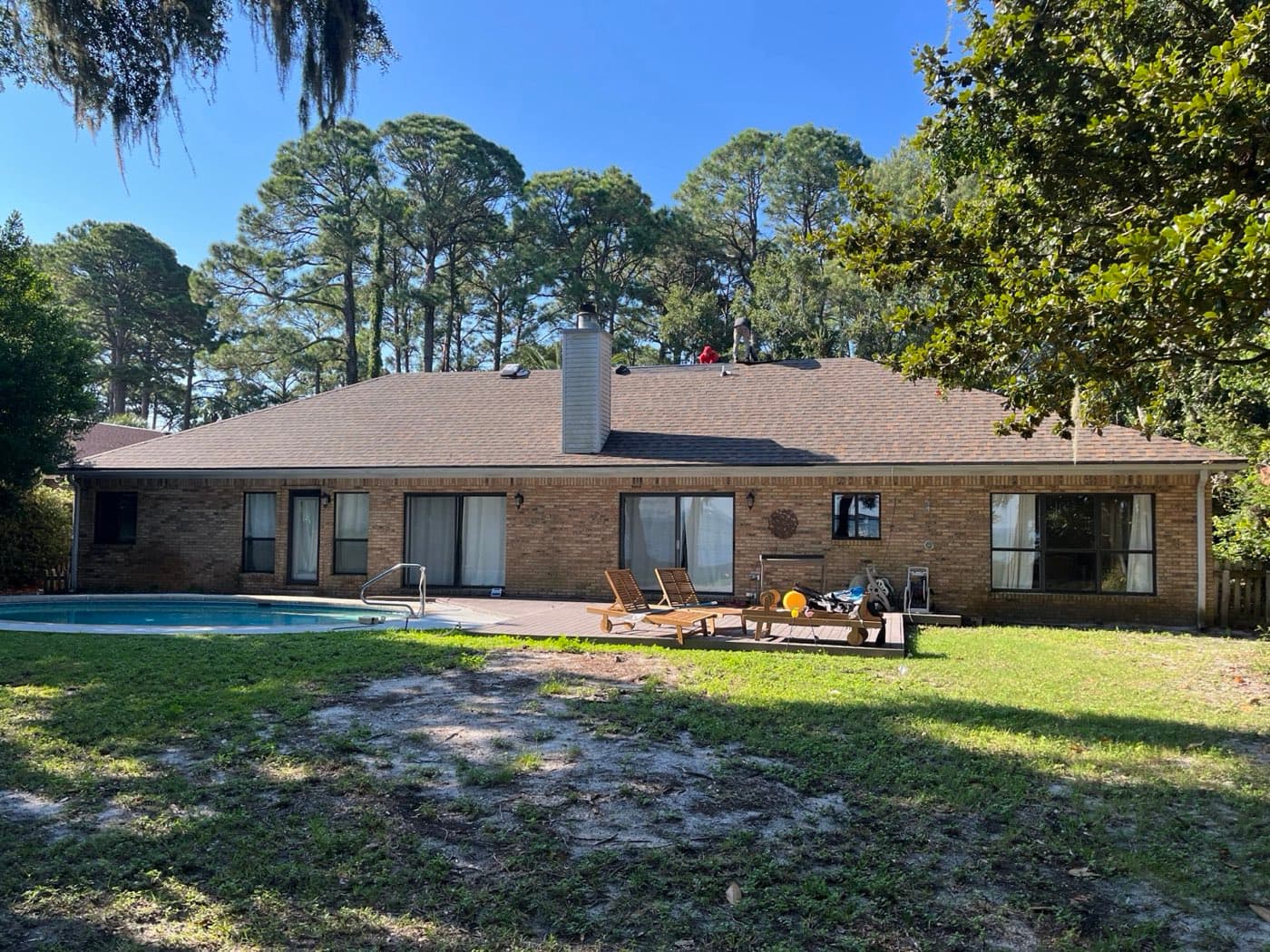
The Gulf Breeze workload is heavy on residential roof replacement (a lot of original-construction roofs from the 70s and 80s reaching end of life, plus the 90s-era roofs starting to age out), storm and hurricane restoration on both sides of the peninsula, and roof inspections for real estate transactions in a market with steady turnover. We also handle the small commercial work along Highway 98: strip centers, professional offices, restaurants.
Hurricane history in Gulf Breeze
Gulf Breeze takes named storms hard because the peninsula is exposed on three sides: Gulf to the south through Pensacola Beach, bay to the north, Sound to the east. Ivan in 2004 hit Gulf Breeze with the full Cat 3 wind field. We did years of restoration work on the peninsula after that storm, including a lot of full replacements where decking had lifted along with the roof covering.
Sally in 2020 was the more recent wake-up call. A slow-moving Cat 2 with extreme rainfall, it left Gulf Breeze with bayfront flooding, downed trees on roofs throughout the city, and weeks of secondary leak damage from saturated decking. The work after Sally ran into 2022 in some cases, partly because supply chain was tight and partly because the damage scope kept revealing more issues as roofs were opened up.
Insurance carriers treat Gulf Breeze similar to Pensacola for wind exposure: high premiums, percentage deductibles on wind, and a shrinking list of admitted carriers. Homeowners here carry policies across the major insurers and Citizens. If a storm damages your roof, we'll assess it and give you a quote, and we can coordinate with your insurance company's process as needed.
Gulf Breeze codes and permits
Roofing permits in Gulf Breeze city limits go through the City of Gulf Breeze building department. Outside city limits (Tiger Point, Midway, and the unincorporated stretches along Highway 98) permits go through Santa Rosa County. Both are responsive and the inspectors are professional; we pull and close out every permit on every job.
Florida Building Code applies the same way it does in Pensacola, with coastal exposure factoring into the wind requirements. Homes on the bay or Sound side need products rated for the relevant exposure zone, which restricts the shingle and metal options to those with the right Florida Product Approval. We use approved products on every job and provide documentation at close-out.
Wind mitigation in Gulf Breeze can lower insurance premiums noticeably. The same features that matter in Pensacola apply here, and several are common in the newer eastern Gulf Breeze housing stock (hip geometry, secondary water barrier on more recent reroofs, proper roof-to-wall connections in post-2002 construction). A wind mitigation inspection can lower premiums, and we can point Gulf Breeze homeowners to trusted inspectors who handle the form.
Why a Fort Walton Beach-based roofing contractor works for Gulf Breeze
Some Gulf Breeze homeowners assume they need a Santa Rosa County contractor to work in Santa Rosa County. They don't. The Florida roofing license covers the whole state, and what actually matters is whether the contractor knows the codes, has a relationship with the inspectors, and can mobilize quickly when something goes wrong. Whitrock has been running crews into Gulf Breeze for nearly 40 years.
After a storm, the same dynamic on Pensacola Beach plays out in Gulf Breeze. Out-of-state trucks descend, bid hard, do quick work, and disappear. They're not coming back when a fastener pops or a flashing fails in year two. We are: we'll be 40 minutes east in Fort Walton Beach for the same reason we have been for nearly 40 years.
Practically, our home base in Fort Walton Beach also means warehouse access, supplier relationships, and crew depth that smaller Santa Rosa County operations can't always match. We stock the Atlas lines we install, we have multiple crews active simultaneously during peak season, and we don't have to wait on parts shipments from distant distributors.