
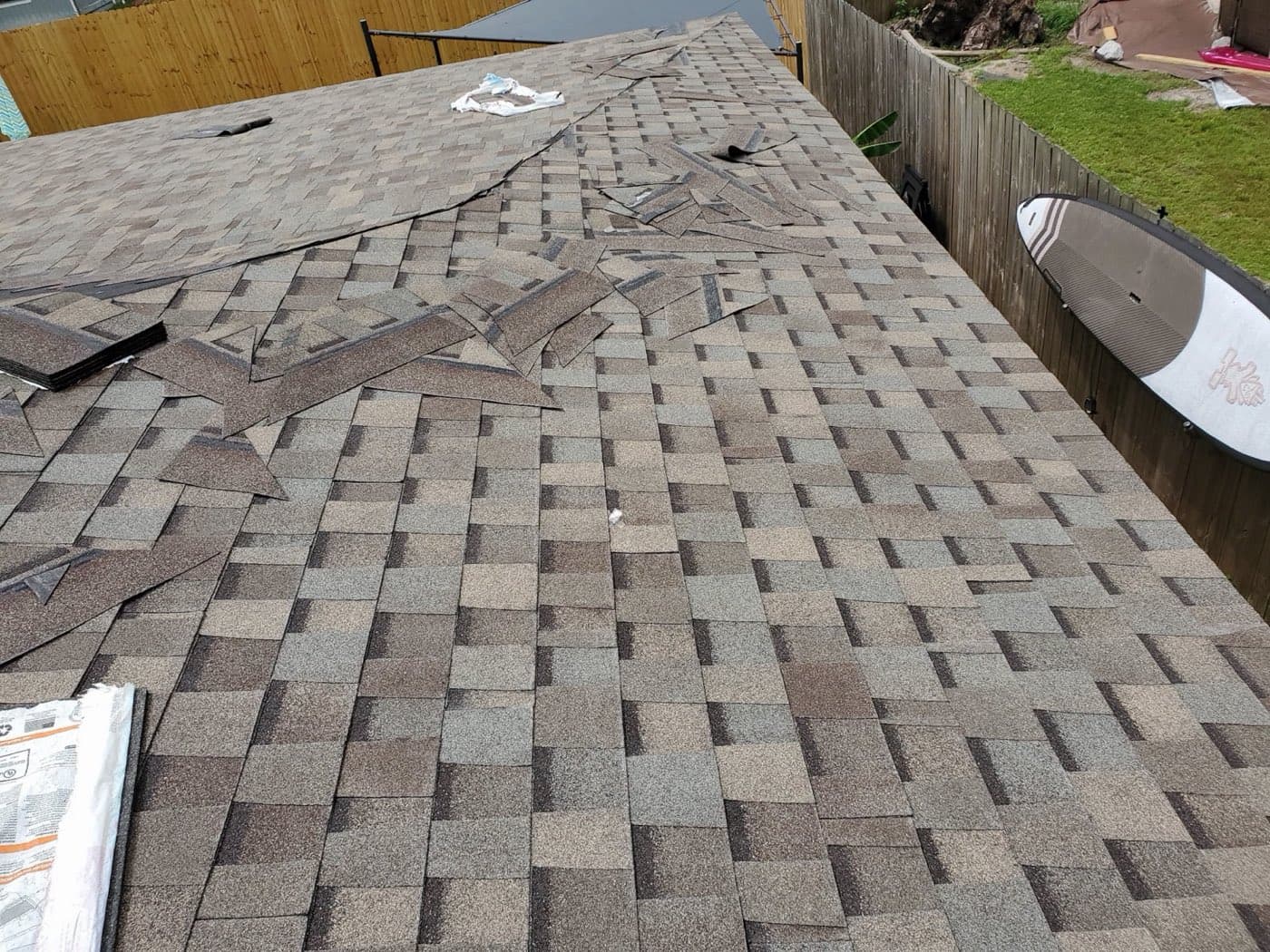
We've been on roofs across Northwest Florida for nearly 40 years, which means we've climbed up after most of the storms people around here still talk about. Opal in 1995. Ivan in 2004. Dennis the next summer. Michael flattening Bay County as a Cat 5 in 2018. Sally parking herself over Pensacola in 2020. After every one of them we saw the same kinds of failures, in the same order, on the same parts of the roof. None of it is mysterious. A roof fails in a hurricane for reasons you can mostly see coming, and a lot of those reasons are fixable before the next named storm shows up in the National Hurricane Center cone.
Here is the straight version: what wind and water actually do to a panhandle roof, which parts go first, and what you can check yourself this summer.
Uplift starts at the edges
Wind doesn't crush a roof. It peels one. As air moves over the ridge and around the corners, it creates suction (the same lift that gets an airplane off the ground), and the strongest suction lands on the perimeter: eaves, rakes, hips, and the ridge line. That's why almost every wind-damaged roof we inspect starts losing shingles at the edges, not in the middle of the field.
Once that first course of shingles or that first run of ridge cap lifts, the wind gets underneath and the failure runs. We've seen a single peeled corner turn into half a slope gone in one afternoon. The fix is unglamorous: properly sealed starter strip at the eaves and rakes, hand-sealed ridge cap, and a drip edge that's actually fastened down. If your roof predates roughly 2007, there's a good chance the edge details were never built for the wind speeds we get here.
Water finds the seams, not the shingles
Here's the part homeowners underestimate. Most hurricane water damage doesn't come through a hole in the shingles. It comes through wind-driven rain, rain pushed sideways at 40 or 50 mph, finding every seam the shingles were never meant to seal. Flashing at walls and chimneys. Pipe boots that have dried and cracked. Plumbing vents. Skylights. The valleys where two slopes meet.
A shingle is built to shed water running downhill. It is not built to hold back water being driven up and under it. During Sally, plenty of roofs in Pensacola that looked fine from the street were soaked in the attic, because the flashing and penetrations gave the water a way in. This is exactly the kind of damage a careful roof inspection catches and a wind-driven leak hides until your ceiling stains.
Debris, decking, and what's underneath
Then there's impact. A hurricane is a sandblaster loaded with branches, fence boards, a neighbor's loose shingles, and the occasional patio chair. Debris strikes crack tiles, bruise asphalt shingles, and puncture the membrane. You often can't see it from the ground, which is why post-storm storm damage assessments matter even when the roof looks intact.
Underneath all of it is the decking, the plywood the whole roof is nailed to. If that decking is soft from old leaks, or if it was under-fastened when the house was built, the wind can lift entire sheets. We've pulled up nails during tear-offs that were barely biting the rafter. When Michael came through Bay County in 2018 as a Cat 5, the homes that lost roof structure usually had a decking and fastening problem long before the storm, not just bad luck. FEMA post-storm surveys here have shown the same thing for years.
What the building code actually changed
Florida tightened its roofing requirements hard after Andrew, and again over the years since. The current Florida Building Code asks for things older roofs simply don't have: a sealed roof deck (taped seams so the plywood itself sheds water if the shingles blow off), enhanced nailing patterns, a secondary water barrier, and that properly fastened drip edge we keep mentioning.
These aren't upgrades for their own sake. The sealed deck alone is the difference between a peeled roof that stays dry inside and a peeled roof that rains in your living room. If you want the full version, IBHS spells it out well through their FORTIFIED program, and we'll tell you straight which pieces are worth it for your house and which aren't.
What you can check before the next storm
You don't need to climb up. From the ground with binoculars, look for lifted or curling shingles along the edges and ridge, missing ridge cap, and any shiny exposed nail heads. Check the pipe boots if you can see them: cracked rubber collars are one of the most common leak sources we find, and they fail quietly. Inside, look at attic sheathing for old water stains, which tell you the roof has been letting water in before any storm arrived.
If your roof is more than 15 years old, or you've never had a wind mitigation inspection, that's the place to start. We do those in-house, and they often lower your insurance premium while documenting exactly what your roof has and doesn't have. We walk through how it works in wind mitigation, explained.
Where to go from here
Not every storm-worn roof needs replacing. Sometimes a targeted roof repair on the flashing and a few slopes buys you years. Sometimes the decking and the age make a full roof installation the honest call, and we'll show you the photos so you can decide for yourself. If you're weighing it, repair vs. replace lays out how we think about that, and if a storm has already hit, our insurance claim walkthrough covers what to do next.
Whether you're in Panama City, Fort Walton Beach, or anywhere along the coast, we'll come look before hurricane season gets serious. A roof inspection and estimate are free. Get in touch and we'll get you on the schedule.