Pensacola roofing is a core part of what we do, and has been for nearly 40 years. We're a Northwest Florida company with deep roots across the panhandle, and there's no out-of-town division to hand your job off to. When you call, you're talking to people who know the difference between a roof on East Hill versus one on Pensacola Beach versus one in Ferry Pass.
We work the full city: every neighborhood from downtown to the suburbs, from waterfront homes on Bayou Texar to ranch homes in Warrington to new construction in Beulah and Pace-adjacent areas. We handle residential roofs, commercial flat roofs, and hurricane restoration, and if a storm damages your roof we can coordinate with your insurance company's process as needed. Nearly 40 years in the same zip codes means we've usually seen your specific street, your specific roof style, and your specific stormwater drainage pattern before.
What we know about Pensacola roofs
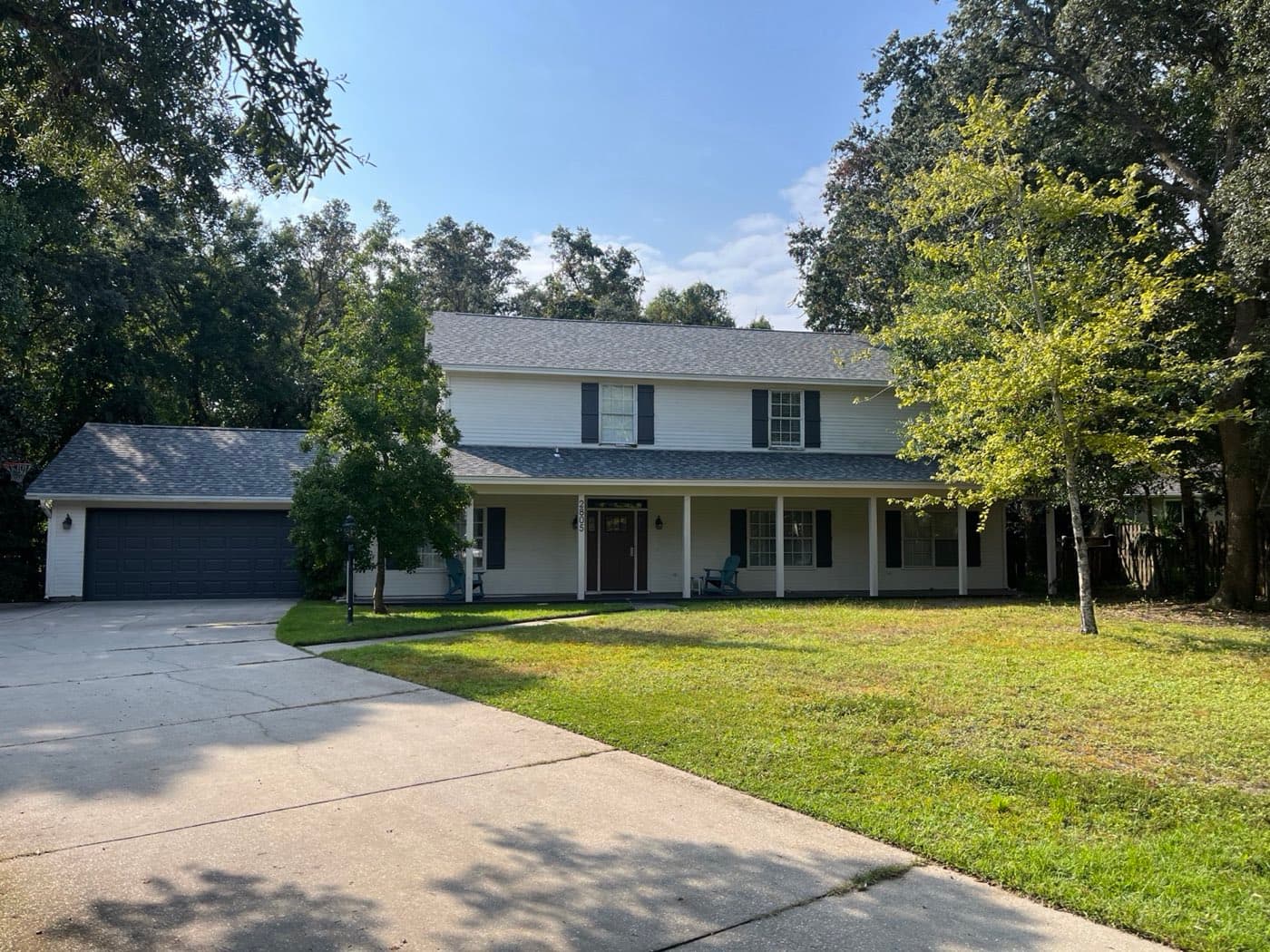
Pensacola spans a lot of construction eras. Downtown has homes that predate the Civil War, wood-frame, original cypress shingles often, replaced over generations. East Hill and North Hill have 1920s-1940s bungalows with steep pitches that look great with architectural shingle. The 1960s and 70s ranches across Bellview, Brent, and Ferry Pass tend to have 4:12 to 6:12 pitches and need standard shingle or metal. New construction in Beulah and out toward Cantonment is mostly architectural shingle on truss-built roofs, current-code framing.
The pitch ranges in Pensacola affect material recommendations. Low-slope roofs (under 4:12) need different underlayment and often benefit from metal or modified bitumen. Steep-pitch decorative roofs downtown sometimes call for tile or upgraded shingles to match historical character. We adjust our quotes for what makes sense on your specific roof, not what we sell the most of.
Salt air matters more in Pensacola than people think. The closer you are to the water (anywhere south of Cervantes is touched by it, anywhere near Bayou Chico or Bayou Texar or the bay itself definitely is), the faster fasteners corrode, asphalt granules wash, and exposed metal pits. We use higher-grade fasteners and prefer stainless or galvanized over standard for coastal-side installs, and we coat exposed metal trim. That stuff costs a little more upfront and saves a lot of replacement headaches in year 8.
Building permits in Pensacola go through the City of Pensacola Permits and Inspections department for jobs inside the city, and Escambia County for unincorporated areas. We pull and close out every permit. You should never be hired by a contractor who says permits aren't necessary. They are, and your homeowners insurance can refuse to cover storm damage on un-permitted work.
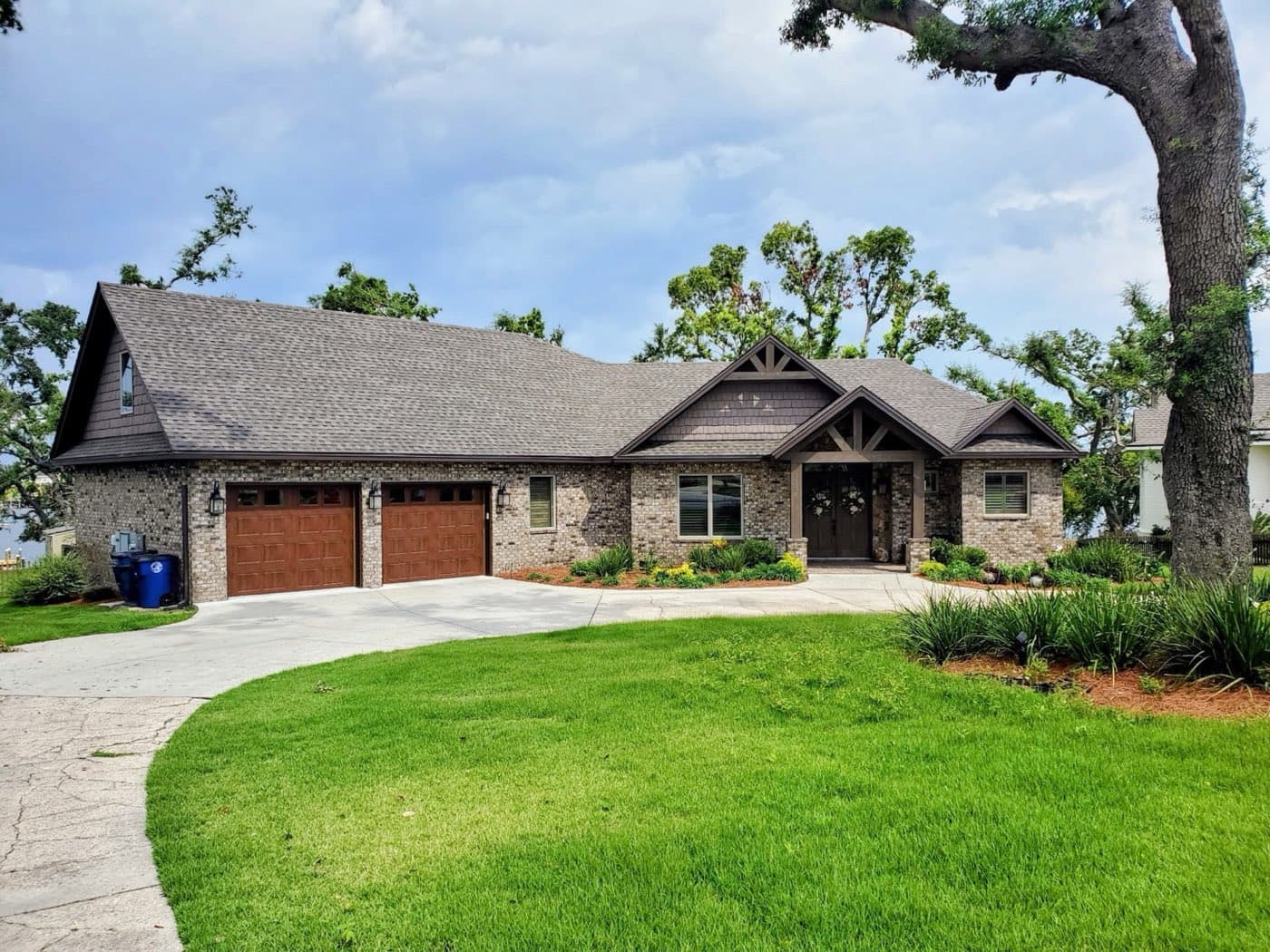
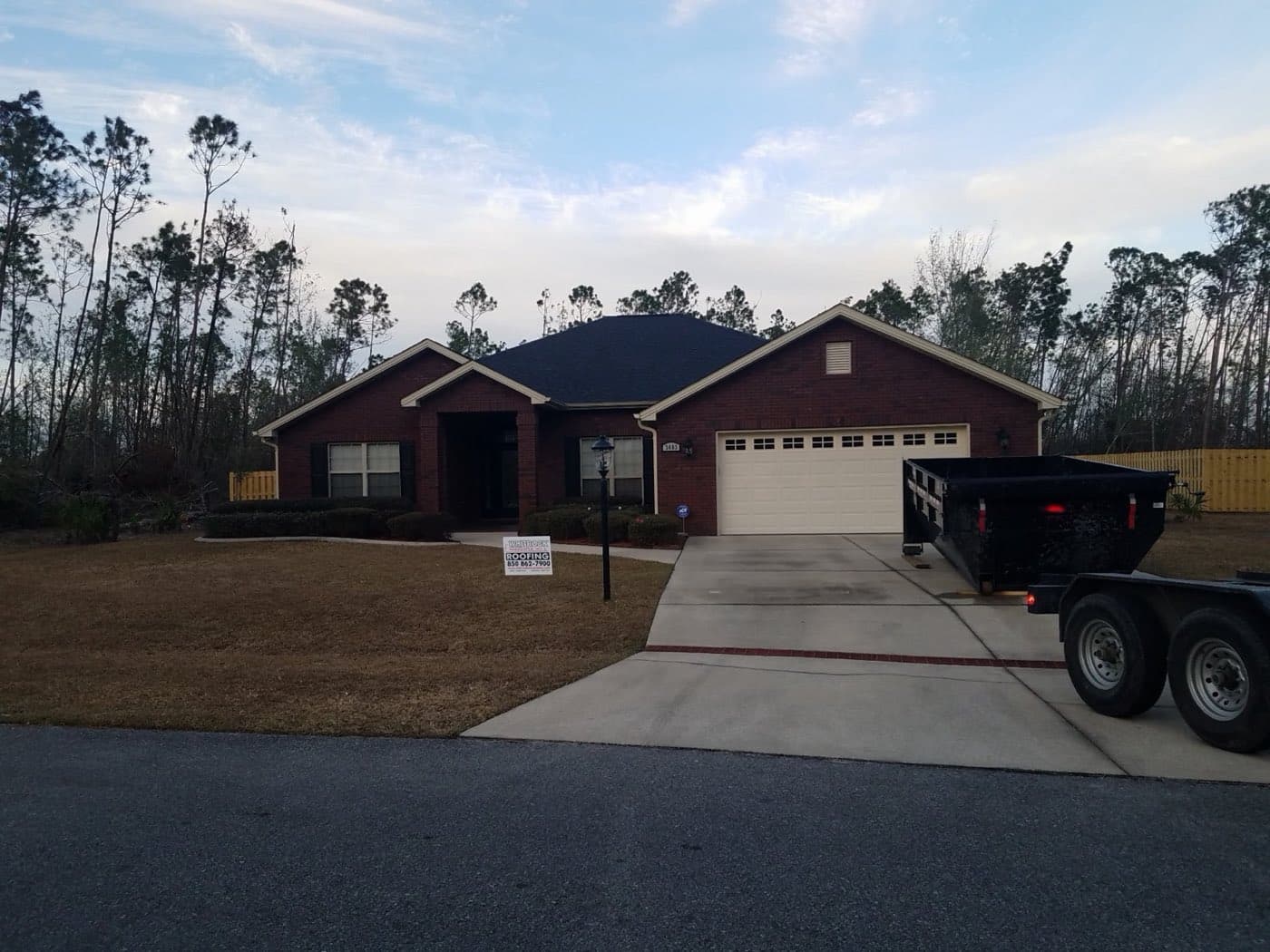
Recent roofing jobs in Pensacola
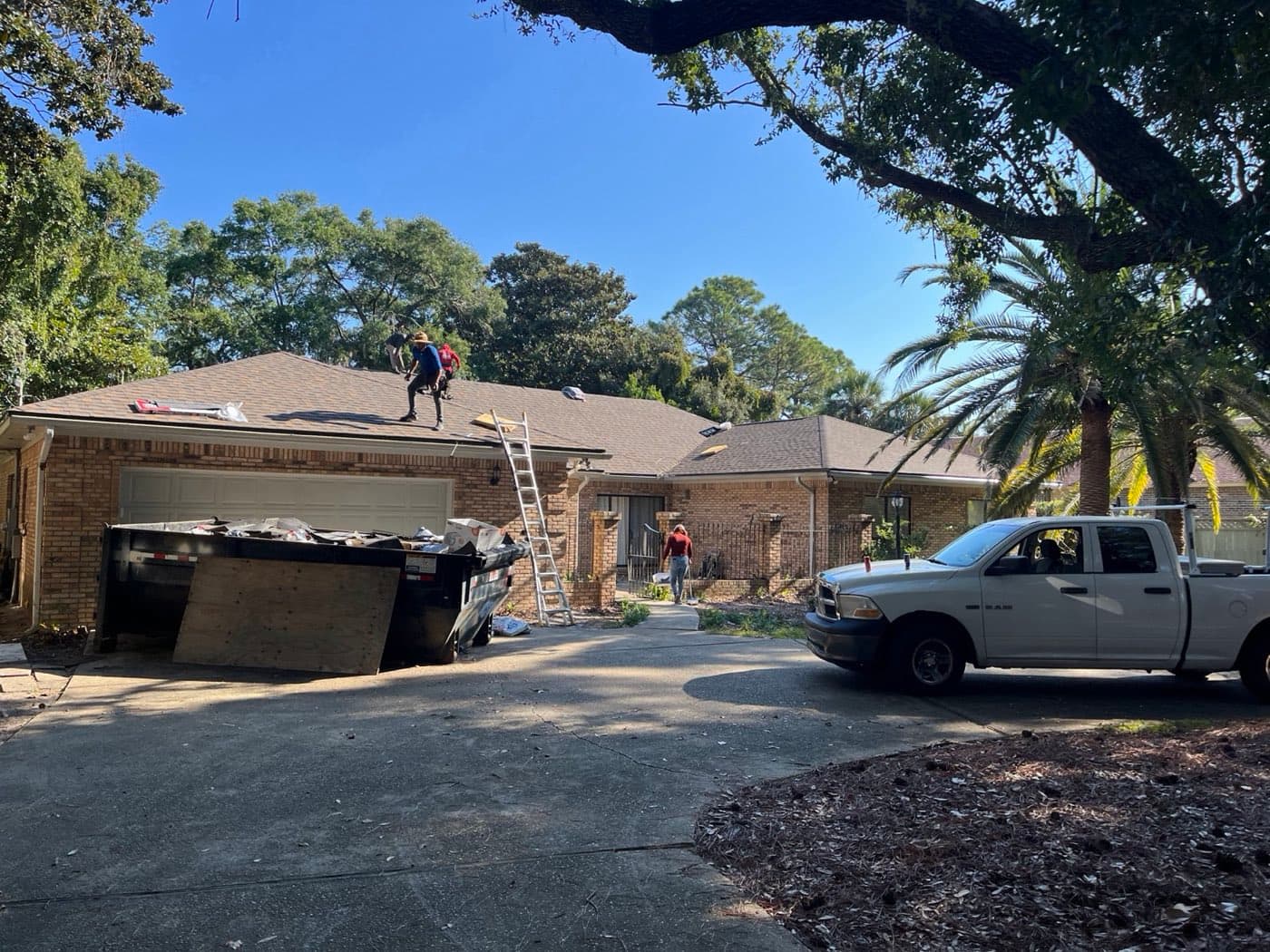
Roofing services we provide in Pensacola
Everything we offer is available in Pensacola, one of the markets we've worked longest. The mix of work we see here leans heavily on residential roof replacement (the city has a lot of 20-25 year old roofs hitting their useful life), storm and hurricane restoration during and after named storm seasons, and commercial flat-roof work for the businesses along Davis Highway, Bayou Boulevard, Nine Mile, and downtown. We also build new commercial buildings across Northwest Florida from the ground up under our general contractor license.
Hurricane and storm history in Pensacola
Pensacola sits at the western end of the Florida panhandle and catches Gulf storms that turn north or northeast. Ivan in 2004 was the defining storm for the modern era: a Cat 3 landfall just west of here, with sustained winds that lifted shingles across the entire city and decking on a lot of older homes. Dennis followed in 2005 with another direct hit. Katrina that same year wasn't a direct hit but the rain bands dumped on us. Sally in 2020 was a slow-moving Cat 2 that put 24+ inches of rain on the city and flooded parts of downtown.
Roofs that survived all of those have usually been replaced at least once. Roofs older than that are operating on borrowed time. We've replaced thousands of Pensacola roofs after named storms, and the approach is simple: if a storm damages your roof, we'll assess it and give you a quote, and we can coordinate with your insurance company's process as needed.
Florida's property insurance market has been turbulent, with carriers leaving, premiums climbing, and AOB and 25%-rule changes. We've worked in this market long enough to know how it moves. Whether you have a Citizens policy, a non-admitted carrier, or one of the bigger national carriers, we can assess the roof, give you a quote, and coordinate with your carrier's process as needed.
Pensacola building codes and permits
Roofing work inside Pensacola city limits requires a permit from the City of Pensacola. Permits in unincorporated Escambia County go through the county. We handle pulling, posting, and closing out the permit on every job. You don't have to deal with the city portal.
Florida Building Code governs all roof construction here, including hurricane-resistant fastening schedules, ice and water shield around penetrations and eaves, drip edge requirements, and underlayment standards. These have tightened over the years; a roof installed pre-2007 likely doesn't meet current FBC requirements, which matters for insurance claims (sometimes the carrier has to pay for code upgrades when a roof is replaced after damage). We'll tell you what code-upgrades your job triggers and what they cost.
A wind mitigation inspection can lower premiums for Pensacola homeowners, and we can point you to trusted inspectors who handle the form. The savings can be meaningful, sometimes significant on the wind portion of a Florida policy, when your roof has the right features (secondary water barrier, hip vs gable, fastening type, etc.).
Why a long-tenured roofing contractor matters in Pensacola
After a hurricane, out-of-state storm chasers roll into Pensacola in droves. They bid every roof they can in the first two weeks, do mediocre work as fast as they can, and disappear before the warranty calls start. They're not licensed in Florida. They don't have the city permit relationship. They won't be here in 18 months when a fastener pops or a flashing fails.
A Northwest Florida contractor with nearly 40 years in this market doesn't operate that way because we can't. Reputation across the panhandle travels. The handful of long-tenured roofing companies that actually do the work right are known, and doing a bad job in one city means losing referrals in the next one six months later. So we don't.
Practically, this also means we know the city's permit inspectors by name. We know which materials suppliers actually stock the Atlas lines we install. We know that warranty claims to a manufacturer go faster when filed by an authorized Atlas Pro Plus Diamond installer. None of that is dramatic; all of it adds up.