Panama City Beach is the easternmost roofing market we run regularly. The drive from our shop in Fort Walton Beach is about 45 miles, roughly 55 minutes east on US-98, and we've been working PCB jobs for as long as the city has been a serious residential market, which is, give or take, about as long as we've been in business. The market here is heavily coastal: condos and high-rises along Front Beach Road, vacation rentals and short-term properties through the Pier Park corridor and Thomas Drive, and single-family residential running west toward Laguna Beach.
PCB is a different town from Panama City proper. It's coastal, it runs along Front Beach Road and Thomas Drive on a narrow strip of land between the Gulf and West Bay, and the building mix is heavy on vacation rentals, condo towers, hospitality, and a smaller permanent-resident base. Pier Park, the Hathaway Bridge area, and Laguna Beach to the west each has its own character. Hospitality and short-term rental owners need roofs that don't fail in the middle of a busy season, and the cost of a failure during peak weeks is brutal.
What we know about Panama City Beach roofs
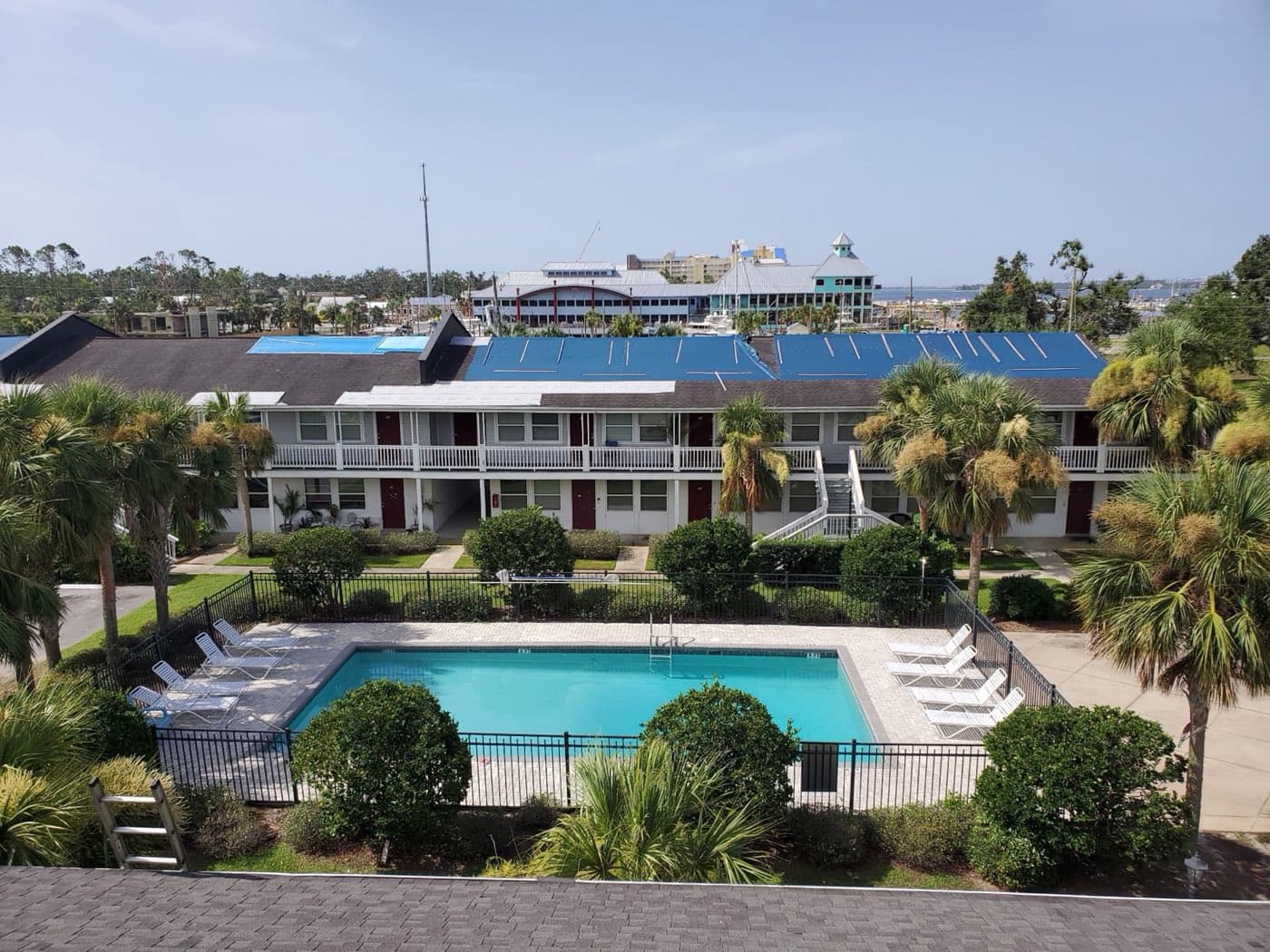
PCB building stock falls into three rough categories. Single-family residential, much of it 1970s through 1990s, some of it newer rebuild after Michael, runs to a typical 4:12 to 6:12 pitch shingle or metal sitting in direct salt-air exposure. Mid-rise and high-rise condos along the beach side are mostly commercial flat or low-slope roof assemblies, often with significant mechanical equipment penetrations, that need proper commercial expertise. And short-term-rental homes scattered across the area are a hybrid problem: single-family construction but commercial-grade scheduling needs, because a leak during a booked week is a real revenue problem.
Metal roofing is more common in PCB than in inland markets and for good reason. Standing-seam metal has long service life, strong wind resistance, and holds up to coastal exposure when installed with the right substrate and underlayment. We install a meaningful amount of metal here. Shingle is still the workhorse for most single-family, but we lean toward upgraded architectural lines with high wind ratings.
Salt air is at full intensity on the beach. South of Front Beach Road you are taking direct Gulf exposure. Fasteners corrode fast, exposed steel rusts, asphalt shingle granule loss accelerates, and any cheap component fails earlier than its spec sheet says. We use stainless flashing, upgraded fasteners, and coastal-grade underlayment on PCB jobs. That adds cost up front and adds years of service life on the back end.
Building permits in Panama City Beach go through the city. The wind code here is in one of the higher zones in Florida: fastening schedules, uplift resistance, and component approvals are scrutinized hard. We handle pulling and closing out every permit and we know the inspector schedule.
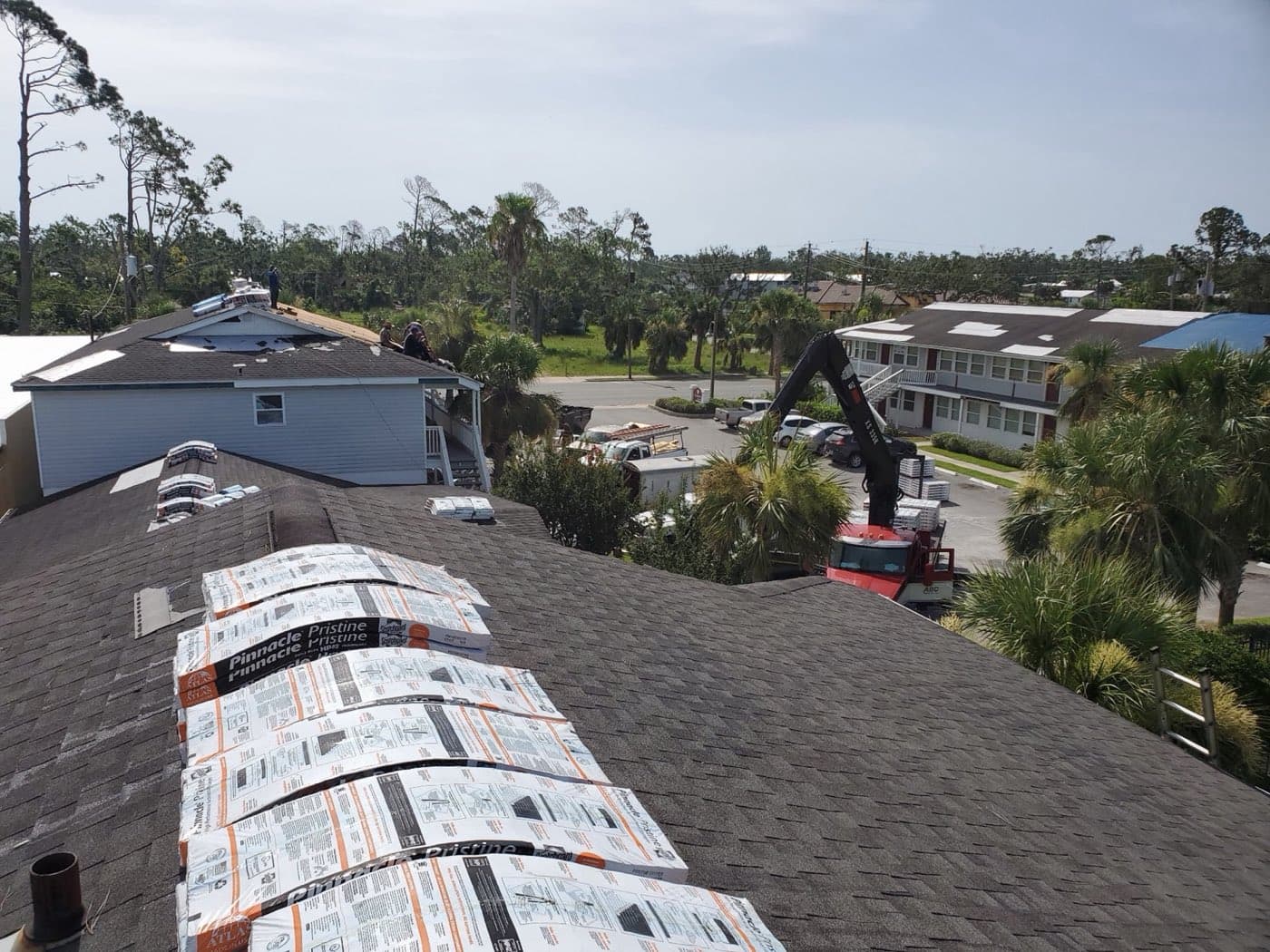
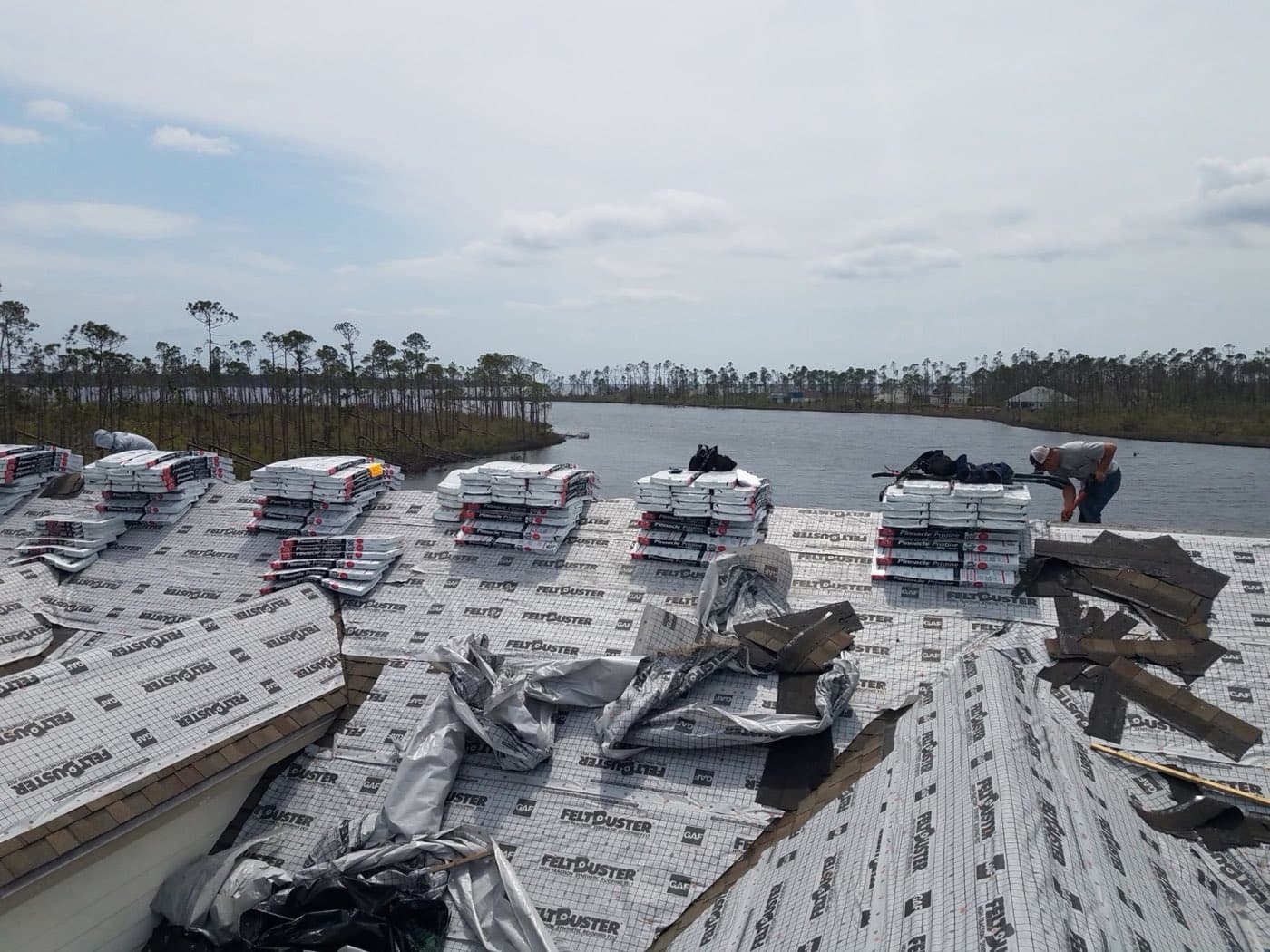
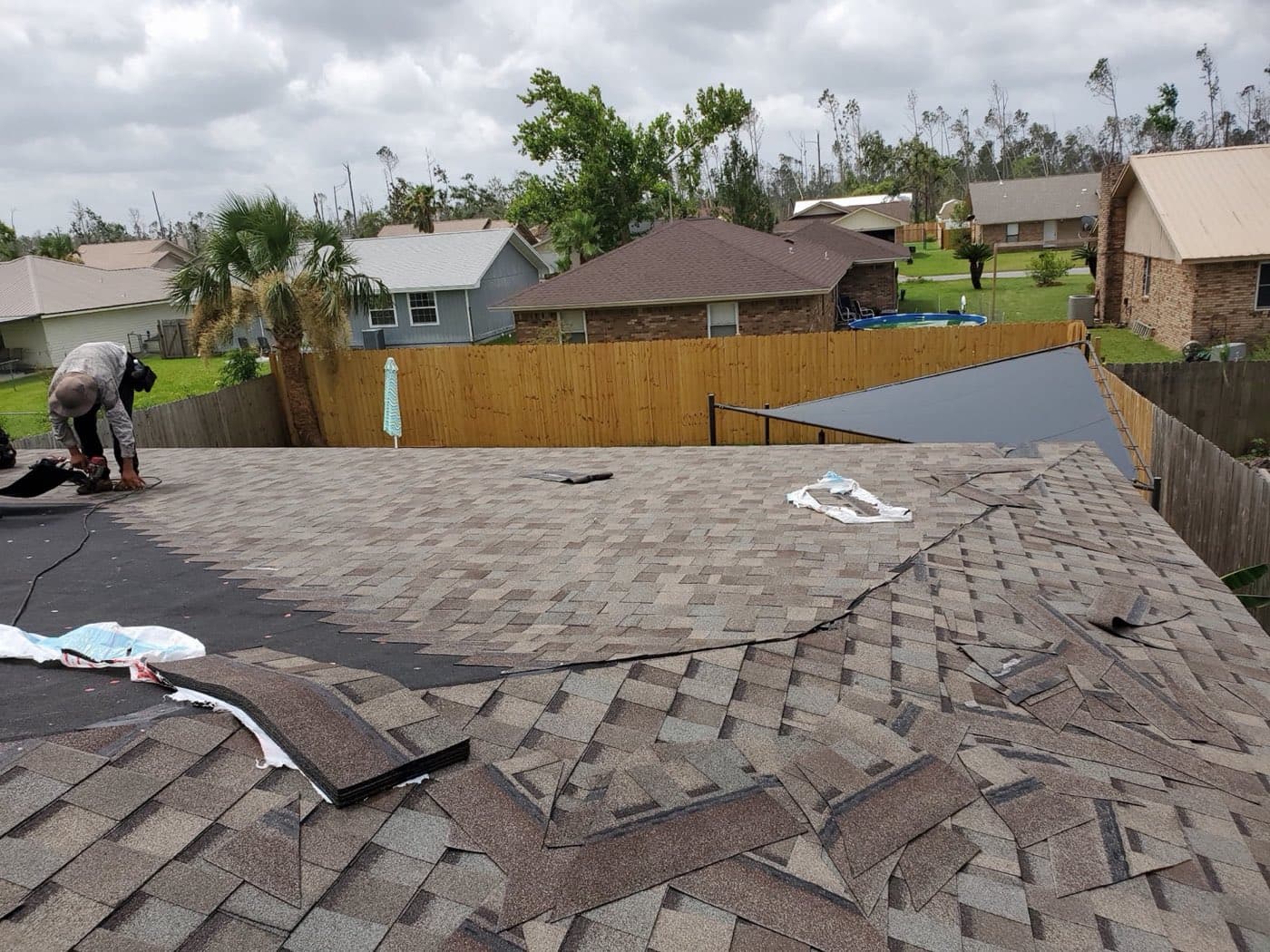
Recent roofing jobs in Panama City Beach
Roofing services we provide in Panama City Beach
The work mix in PCB skews toward metal roof installation and replacement, commercial work on the condo and hospitality side, storm restoration that's been steady since Michael, and inspection work driven by the tight insurance market for coastal Bay County. We do residential shingle replacement here too, but the coastal mix pulls us toward metal more than it does in the inland markets.
Hurricane Michael and the PCB insurance market
Michael came ashore at Mexico Beach on October 10, 2018 as a Category 5, the third-most-intense hurricane to strike the continental US by pressure. PCB took the western side of the eyewall, which is the lower-damage side of a hurricane, but lower-damage on a Cat 5 still means catastrophic. Roofs failed across the beach. Condo towers took widespread damage. The hospitality industry shut down significant capacity. The rebuild ran for years.
What we still see in PCB today: roofs that were partially repaired in 2018 and 2019 and are finally giving out; storm-chaser work from 2019 and 2020 that's now leaking and has no warranty backing; and original Michael damage that was scoped low at the time and is surfacing in attic stains, soffit damage, and interior leaks. We've been on Bay County roofs since the months after Michael and the storm work has not really stopped, it's just spread out.
The insurance market for coastal Bay County is one of the tightest in the state. Carriers are scrutinizing roof age, condition, and wind features hard, and non-renewals are common on older roofs or roofs without documentation. If a storm damages your roof, we'll assess it and give you a quote, and we can coordinate with your insurance company's process as needed. If your PCB property has not had a roof inspection in the last few years, that's worth doing before your next renewal.
Panama City Beach building codes and permits
Reroofs in Panama City Beach require a permit from the city. We pull and close out every permit on every job. PCB sits in one of the higher wind-load zones in Florida and the city has tightened enforcement since Michael: fastening schedules, uplift component approval, and inspection compliance are taken seriously here.
Florida Building Code applies and the coastal wind requirements are the strict version: secondary water barrier, code-fastened deck attachment, high-wind-rated components throughout. A roof installed before 2007 will not meet current code; a roof installed before 2018 may not meet current wind requirements depending on its specific assembly. We tell you what your job triggers in code upgrades before you sign, and the carrier sometimes covers a portion of those upgrades on a storm-related replacement under the law-and-ordinance provision.
Wind mitigation inspections matter a lot in PCB. The wind portion of a coastal homeowners or condo policy here is a large premium line, and documenting features your roof actually has can pull it down meaningfully. We can point you to trusted inspectors who handle the form, and the savings on a typical PCB single-family roof are often a multiple of the inspection cost.
Why a panhandle roofing contractor matters in PCB
PCB had as much storm-chaser activity after Michael as anywhere in the state. Out-of-state contractors worked the beach for years, signed thousands of contracts, did fast work, and left. The legacy is showing up now as warranty issues nobody answers for, work that doesn't meet code, and homeowners who have learned that license verification and physical-address verification matter more than the door-knock price.
We're not based in PCB. We're about 45 miles east of our Fort Walton Beach shop, roughly 55 minutes on US-98, and we are honest about that. What we are is a Florida-licensed roofing contractor working the panhandle for nearly 40 years, with a publicly verifiable permit and insurance trail, a real Fort Walton Beach address, and a business that will still be operating when a warranty call comes in.
Practically: warranty work on our installations comes back to us and we will be reachable. Atlas Pro Plus Diamond certification means the manufacturer's product warranty sits on top of our workmanship warranty, both meaningful only because we are still in business to honor them. Our PCB crews run the route routinely and know the city inspector schedule, the materials suppliers stocking what we install, and the difference between a beach-side roof and a bay-side roof.