
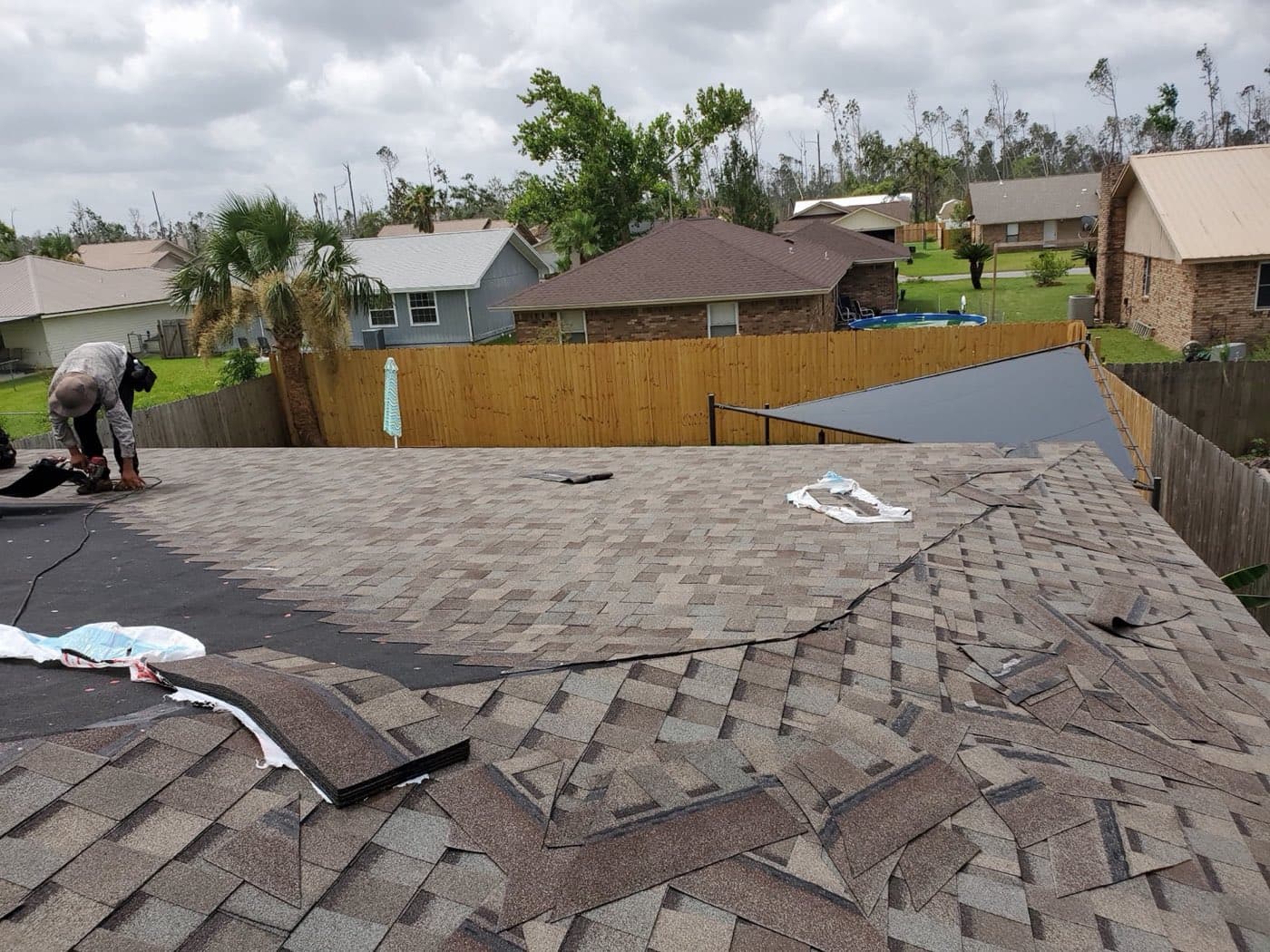
After a storm, the roof is only half the job. The other half is the claim. We have watched good families in Fort Walton Beach and Pensacola lose thousands of dollars they were owed, not because the damage was not there, but because the claim was worked in the wrong order. Sally in 2020 taught a lot of folks that lesson the hard way. Michael in 2018 did the same to the Panama City side.
We are a roofing contractor, and we are licensed in Florida (CCC1326942). We are not your lawyer and we are not your public adjuster. But we have stood on a few thousand storm-damaged roofs in Northwest Florida, and we will tell you straight how a Florida roof claim should go, step by step. Get the order right and you give yourself the best shot at a full, fair payout.
First, document everything before you touch it
The day the storm passes, get pictures. Wide shots of the whole roof, close shots of the damage, the soft spots, the lifted shingles, the missing ridge cap. Photograph the inside too: ceiling stains, wet insulation, drips. Date everything. Your phone does this automatically, so leave the timestamps on.
Carriers will argue your roof was already worn out before the storm. The best answer to that is proof of pre-loss condition: old inspection reports, photos from a past repair, the receipt from when it was installed. If you have a recent roof inspection on file, this is where it pays off. No history? Document hard now anyway.
Get it secured before more water gets in
Florida law expects you to prevent further damage. If water is coming in, you tarp it. A square of blue tarp and a few furring strips today can save a ceiling, drywall, and a moldy attic next week. Keep the receipts; emergency mitigation is usually reimbursable.
This is also the moment most people get pressured into signing something they should not. Securing the roof and hiring the permanent repair crew are two separate decisions. Tarp now, decide on the storm damage repair after the claim is scoped. We will tarp a roof and walk away if that is all you need that week.
File promptly, and actually read your policy
Report the claim quickly. Florida tightened its claim windows in recent years, and waiting can sink an otherwise valid claim. Then sit down and read the policy before the adjuster shows up, because the policy decides the money, not the damage.
Know these terms cold. Your standard deductible versus your hurricane deductible, which is usually a percentage of the home's insured value and can be far larger. Ordinance and law coverage, which pays for code-required upgrades. ACV versus RCV: actual cash value pays depreciated value, replacement cost value pays to actually replace it, often in two checks. And know the newer Florida roof rules, where carriers can offer ACV-only or stated-value settlements on older roofs depending on age and condition. If your policy reads like a foreign language, the Florida Department of Financial Services has free consumer help, and Citizens Property Insurance publishes plain-language guides on how these settlements work.
Be there when the adjuster comes
When the carrier sends an adjuster, do not let the inspection happen without you, and do not let it happen only from the driveway. Real damage is on the roof and in the attic, not visible from the ground.
If you can, have a knowledgeable roofer there with you. They can point out the bruised shingles, the creased tabs, the cracked boots, the damaged flashing, and an honest adjuster welcomes that. The goal isn't to inflate anything; it's to make sure nothing real gets missed.
When the first estimate comes back low
Sometimes the first estimate comes back low. A few shingles instead of a slope. Repair instead of replace. That is where a detailed scope and a supplement come in: a documented request, with photos and code references, to correct what the first estimate missed.
This is a paperwork process, not a shouting match, and it's handled between you and your carrier. What we can do is give you a clear, well-documented quote for the roof work itself; if a repair will not honestly hold, we say so, and if it will, we say that too. Our repair versus replace breakdown walks through how that call gets made. If a carrier is acting in bad faith, the Florida Office of Insurance Regulation is who you escalate to.
Code upgrades, your deductible, and the final payout
Northwest Florida sits in a high-wind zone, and the code has tightened since Ivan came through in 2004. When you replace a roof here, you often have to bring it up to current code: secondary water barrier, better fastening, upgraded underlayment. That is what ordinance and law coverage is for, and it is money many homeowners leave on the table.
On payout: with RCV you usually get an ACV check first, then the recoverable depreciation once the work is done and invoiced. You pay your deductible. That is your share, by law. A wind-resistant rebuild can also lower future premiums, which is one reason a wind mitigation inspection is worth doing while you are already up there.
Red flags: the scams that follow every storm
After Sally, the storm-chasers showed up in Okaloosa County within days, out-of-state plates and door-to-door pitches. Watch for the contractor who wants you to sign an Assignment of Benefits on the first visit, handing your claim rights over to them. Watch for anyone who promises to 'waive your deductible' or eat it for you. That is insurance fraud, and you can be on the hook for it.
Never sign a contract before the claim is scoped, and never sign one tied to 'whatever insurance pays.' And verify the license before anyone touches your roof. You can check any Florida contractor's license in about a minute at the Florida DBPR. If they dodge that question, that is your answer.
Need a straight read on storm damage?
If a storm has hit your roof from Pensacola to Panama City, we will come look, document it honestly, and tell you whether you have a claim worth filing. No pressure, no inflated scopes. Get a free estimate through our contact page, or read our hurricane roof prep guide before the next one spins up in the Gulf.