Roof inspections used to be a quick-look item. Walk the roof, eyeball the shingles, write 'roof appears to be in serviceable condition,' move on. That changed when Florida's insurance market got serious about wind mitigation in the mid-2000s and again after Sally and Michael. Now the inspection is the document that decides whether you get an insurance policy at all, what you pay for it, whether your lender will close, and what a buyer is willing to pay for your house. The stakes on a one-page form are higher than they sound.
We don't do inspections in-house. What we can do is tell you which inspection you actually need, what a strong report looks like, and connect you with FL-certified inspectors we trust across Northwest Florida. It matters, because a wind mitigation report is only as good as the inspector's documentation: the photos of the truss-to-wall connection, the underlayment, the roof deck attachment, and the secondary water resistance. A report with weak documentation gets rejected by the carrier or sets you up for a denial later, so we'll steer you to someone who does it the way the carrier wants to see it.
This page covers the four kinds of inspections that come up most: wind mitigation, 4-point, pre-purchase real-estate inspections, and annual maintenance walks. Here's what each one is for, why it matters on the panhandle, and how to get a solid one.
Why inspections matter so much on the panhandle
Florida's homeowner insurance market has been in turmoil for over a decade: carriers leaving the state, premiums climbing 30-50% in single renewal cycles, the assignment-of-benefits reforms changing how claims work. The wind mitigation report is one of the few levers a homeowner has to pull premium down. A well-documented report with credits for roof deck attachment, secondary water resistance, gable end bracing, and opening protection can knock a meaningful chunk off the wind portion of the premium, which is the biggest line item on most panhandle policies. That's real money, every year, for the life of the policy.
Lenders run on 4-point inspections (roof, electrical, plumbing, HVAC) to confirm the major systems have remaining useful life. Florida carriers now require 4-point reports on most policies for homes older than 30-40 years (some carriers want them on anything over 20). If your roof comes back marked as 'less than 5 years of useful life' on a 4-point, you can lose the policy at renewal regardless of whether the roof actually leaks. The inspector's call matters.
Real-estate transactions on the panhandle live and die on the roof condition. A 15-year-old shingle roof on a Pensacola home was insurable five years ago and now might not be. Carriers have tightened roof-age underwriting significantly since 2022. Buyers come in with a roof inspection in hand, sellers come in with a roof inspection in hand, and the negotiation that follows is grounded in what those reports say. A vague inspection report ('roof in generally good condition') doesn't survive scrutiny in a tight market. A specific one ('3-tab shingles installed 2008, minor granule loss at south slope, no active leak, 4-7 years of remaining useful life') does.
The inspections you may need on a panhandle home
- Wind mitigation inspection (OIR-B1-1802 form): the report that determines your insurance wind credits
- 4-point inspection: roof, electrical, plumbing, HVAC, for insurance underwriting on older homes
- Pre-purchase real-estate roof inspection, for buyers, sellers, and listing agents who want a roof-specific report
- Annual maintenance inspection: a visual condition walk with photos of any issues and a recommended action list
- New-construction final roof inspection, for builders, GCs, and owners closing on a new build
- Post-storm roof assessment: that one we do ourselves as part of storm damage work
- For any of the above, tell us what you need and we'll point you to a trusted FL-certified inspector
How to get an inspection
- 01
Tell us what you need
Call or use the quote form and tell us which inspection you're after (wind mit, 4-point, real estate) and any deadline you're working against: closing date, policy renewal, carrier reinspection. We'll point you to a trusted, FL-certified inspector who covers your area, and if you send us the report afterward, we're glad to help you make sense of it.
- 02
The on-site inspection
A thorough inspector walks the roof, accesses the attic to document the underside of the deck and the truss-to-wall connections, and photographs everything the form requires. The attic work is where a wind-mit report is won or lost. The truss-to-wall connection has to be documented at multiple points, and the good inspectors don't skip it, even when it means crawling through insulation on an older home.
- 03
The report
A wind mit report (OIR-B1-1802) documents every credit the roof qualifies for, with labeled photos. A weak report gets rejected by the carrier or sets up a denial later, so the documentation has to be complete. A good inspector claims every credit you're entitled to (which is often more than a quick-look inspection finds) without padding credits that a carrier reinspection would catch.
- 04
What to do with it
You hand the report to your insurance carrier, lender, or buyer. If it turns up roof work that needs doing (a deficiency the carrier will flag, a remaining-useful-life concern, a roof that needs attention before a closing), that's where we come in. We'll give you a straight repair-or-replace quote, kept completely separate from the inspection.
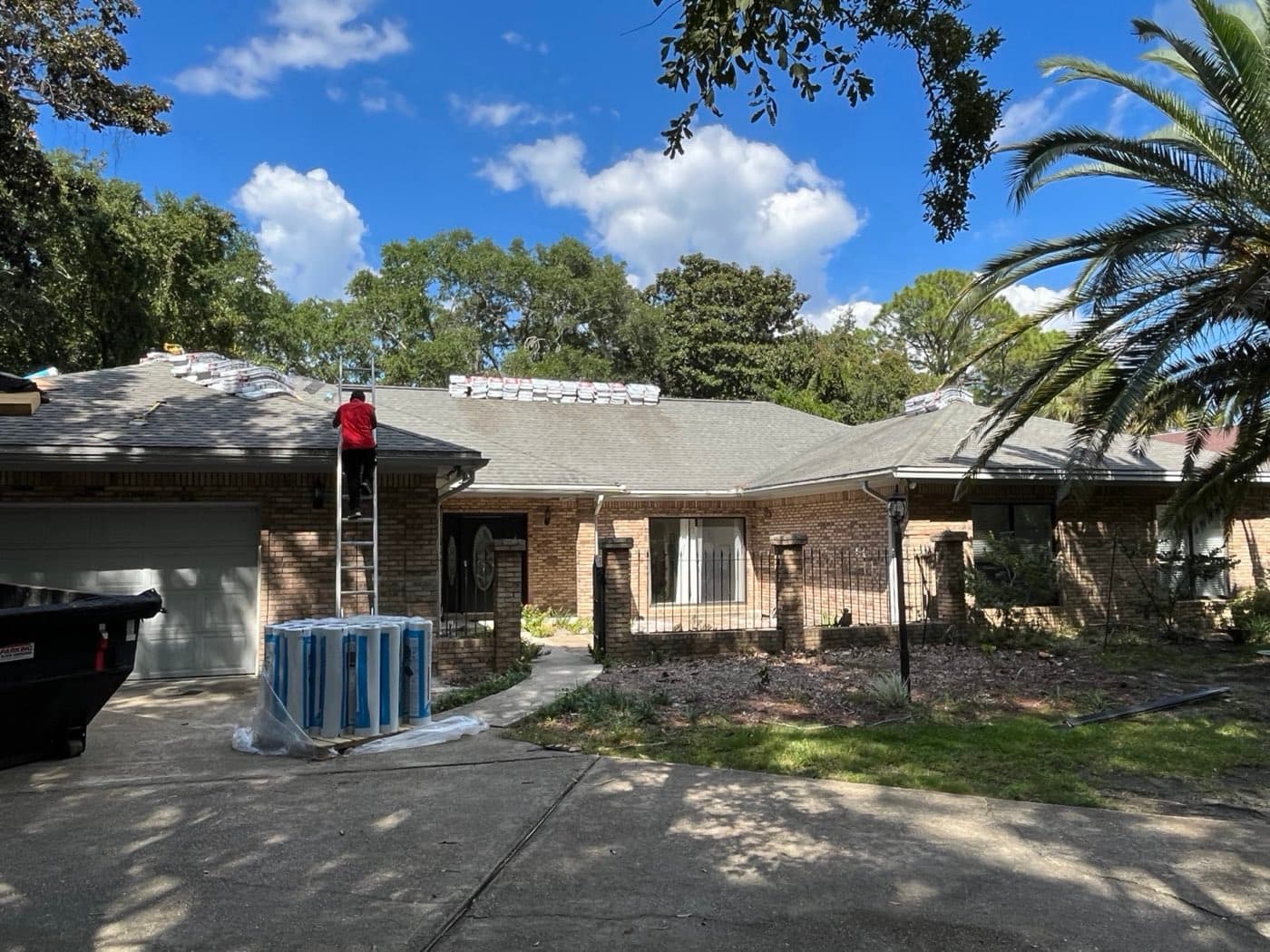
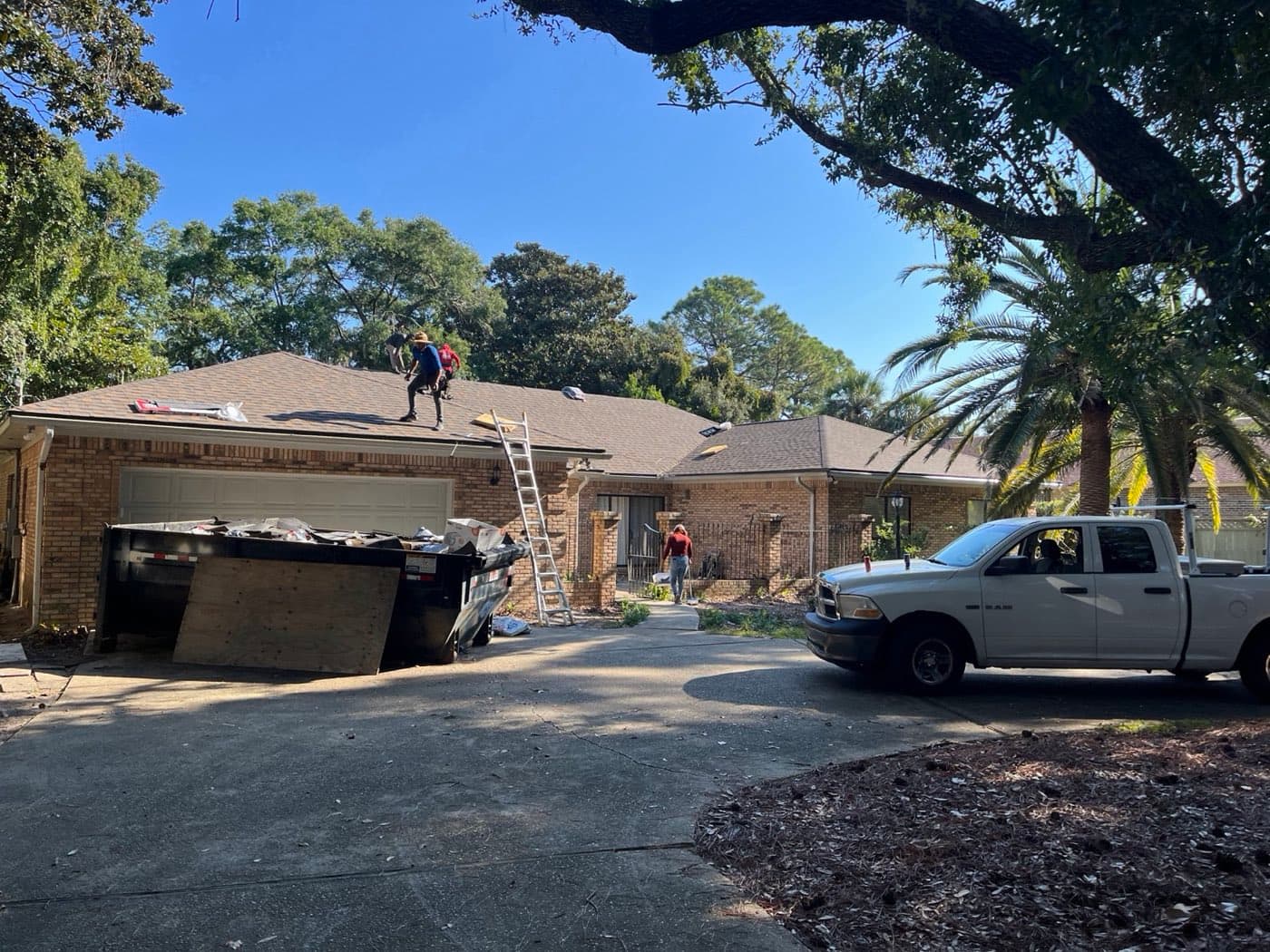
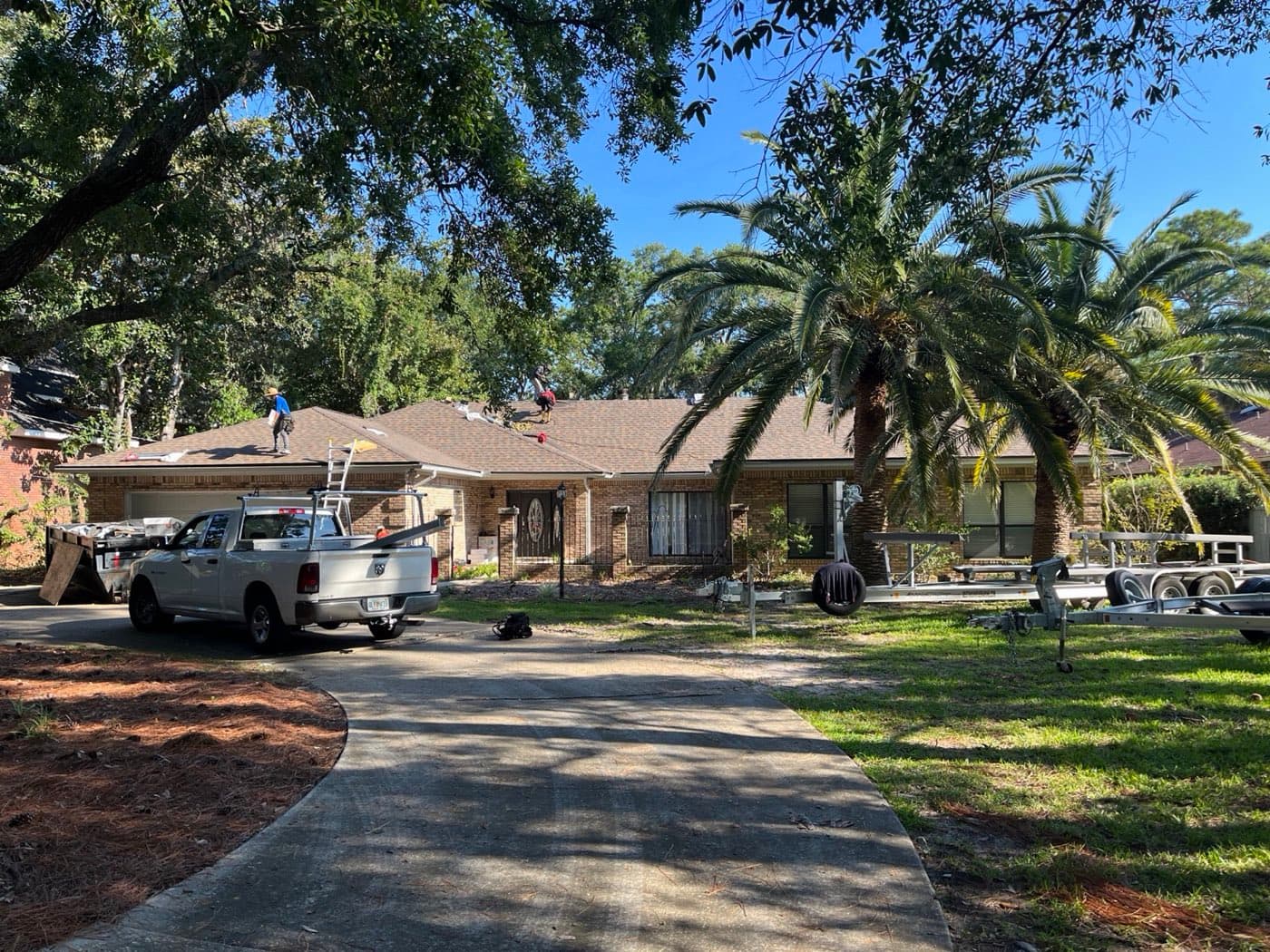
Roof Inspections jobs around the panhandle
What inspections cost
Inspection pricing is usually flat-rate by type, not by the hour. A wind mitigation inspection typically runs in the low hundreds of dollars depending on home size and access; a 4-point roof portion is similar; a real-estate roof inspection is a bit more because the report depth is greater. The inspector quotes you directly, and a reputable one won't turn a 'free inspection' into a sales pitch for a re-roof.
The financial case for a wind mitigation inspection is straightforward: for most panhandle homes it pays for itself quickly through the wind-credit savings on your premium. Plenty of homeowners pay full wind premium for years simply because no one ever did the wind mit. The first report can unlock real annual savings.
- Inspection type: wind mit, 4-point, real estate, maintenance
- Home size and number of stories
- Attic accessibility: sealed attics or crawl-only access take longer
- Roof complexity: number of slopes, valleys, dormers
- Whether photos need to support a specific insurance carrier's documentation standard
- Rush turnaround for a closing or carrier deadline
How we can help with inspections
We'll point you to a trusted inspector
We don't perform inspections, but we know the FL-certified inspectors across the panhandle who do them right: thorough attic documentation, every credit claimed, no shortcuts. Tell us what you need and we'll connect you with someone we'd use on our own house.
We help you read the report
Nearly 40 years on panhandle roofs means we can look at an inspection report and tell you what it actually means for your roof, your insurance, and your timeline: not just what the form says, but what to do about it.
No inspection-to-sell-you-a-roof games
Some contractors offer 'free roof inspections' that are really sales calls. We don't play that game, because we don't do the inspection. If a report turns up work, we'll quote it honestly and separately, and we'll tell you if it can wait.
Nearly 40 years of context on panhandle roofs
We know what a 2003-built Pensacola subdivision home is supposed to look like in the attic, what underlayment got installed in Destin spec homes during the 2005-2008 boom, where the 1985 East Hill houses tend to leak. That context is the difference between a report you can act on and one that just sits in a drawer.