A Pensacola Beach roof has almost nothing in common with a mainland one. Full Gulf exposure, sand and salt on every fastener, and a Cat 5 design wind-speed map that drives the spec on every install. We've crossed the bridges onto the island for barrier-island roofs more times than we can count, for nearly 40 years. Beach houses on the Sound side, Gulf-front rentals along Via De Luna, stilt homes out toward the National Seashore: it's about 37 miles west of our Fort Walton Beach shop, roughly 45 minutes via Gulf Breeze and the Bob Sikes Bridge, and a roof that lives in a completely different environment than the ones back home.
Almost everything on the island is some combination of high wind exposure, raw salt air, and short-term-rental wear. The roofs that hold up here were built or replaced with that in mind. The ones that didn't get replaced after Ivan or Sally, we still find them, and the news is rarely good.
What we know about Pensacola Beach roofs
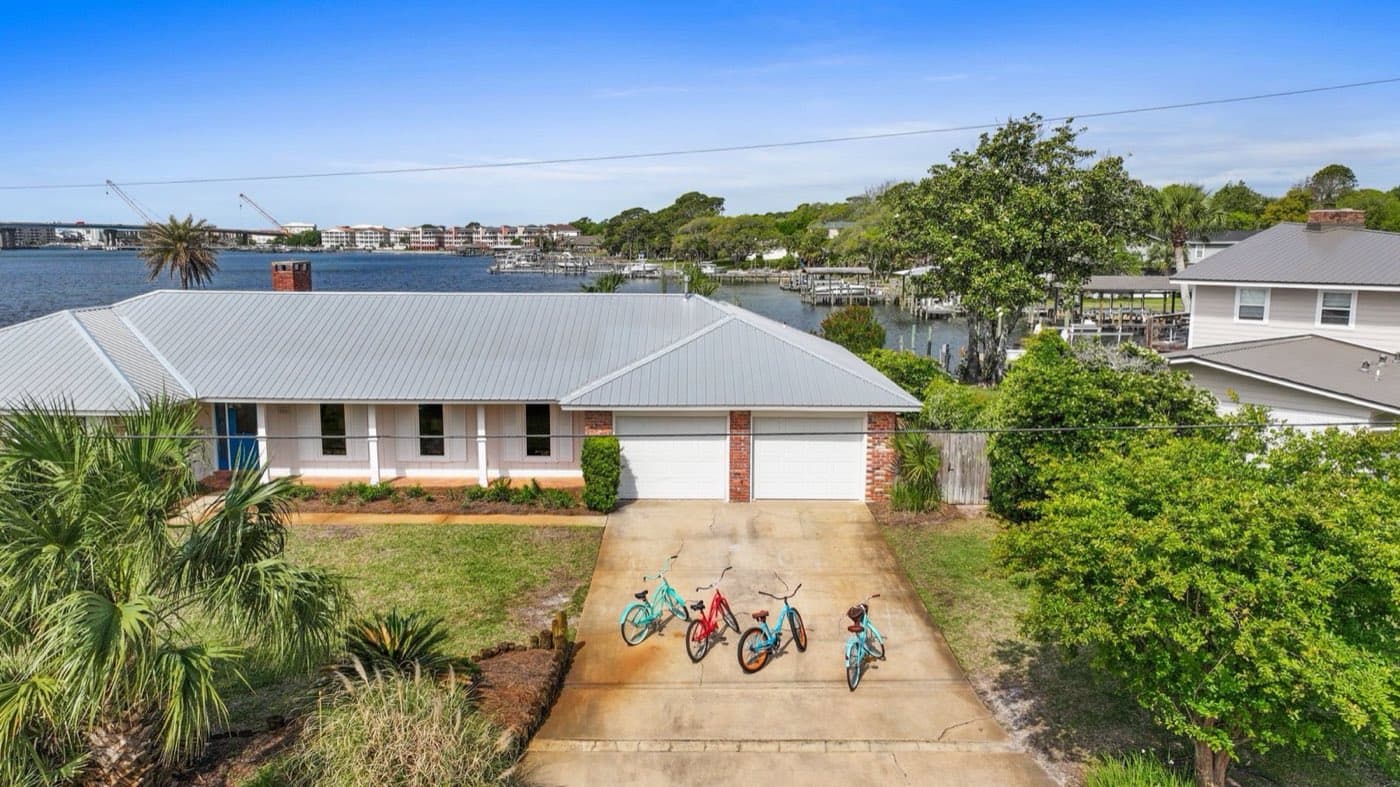
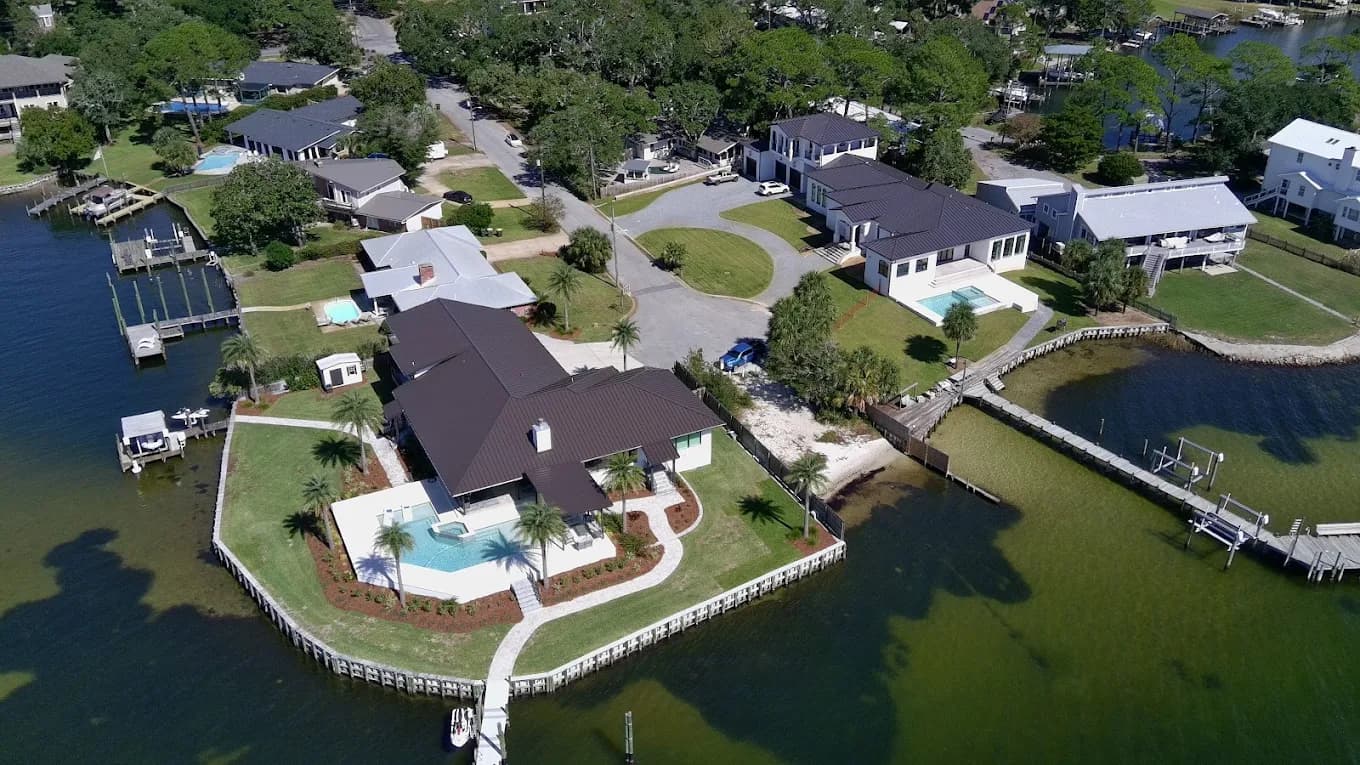
The island has three rough zones from a roofing perspective. Gulf-front (south side of Via De Luna and the Fort Pickens Road corridor) takes the worst of the salt spray and the highest sustained winds. Sound-side (north side, looking back at Gulf Breeze) gets a little buffering from the dunes but still sees serious wind events and almost the same salt load. The commercial core around Casino Beach and Quietwater Boardwalk has its own mix of flat membrane roofs and metal-clad commercial that needs different attention than residential.
Construction is predominantly stilt-built, with pilings or piers raising the living floor 10-15 feet above grade for storm surge. That means the roof is often 30-40 feet up, exposed on all four sides with no neighboring structures to break the wind. We bring the right equipment for that height; it's not a job for a crew that mostly works ranch homes.
Metal is the dominant residential roof material on the island, and for good reason. Standing-seam aluminum or coated steel handles salt air better than asphalt shingle, sheds wind-driven rain, and the panel attachment systems hit the higher wind ratings the code requires here. We still install architectural shingle on some beach homes, usually inland-of-the-dune properties where the owner wants the look, but we spec a hurricane-rated product with enhanced fastening when we do.
Granule loss on shingles accelerates on the beach. A 30-year shingle inland might be a 15-18 year shingle here, depending on exposure. We tell owners that up front rather than letting them think they're getting the marketing life out of the product. Same for any exposed steel flashing: it needs to be coated, stainless, or coated aluminum, never bare galvanized.
Recent roofing jobs in Pensacola Beach
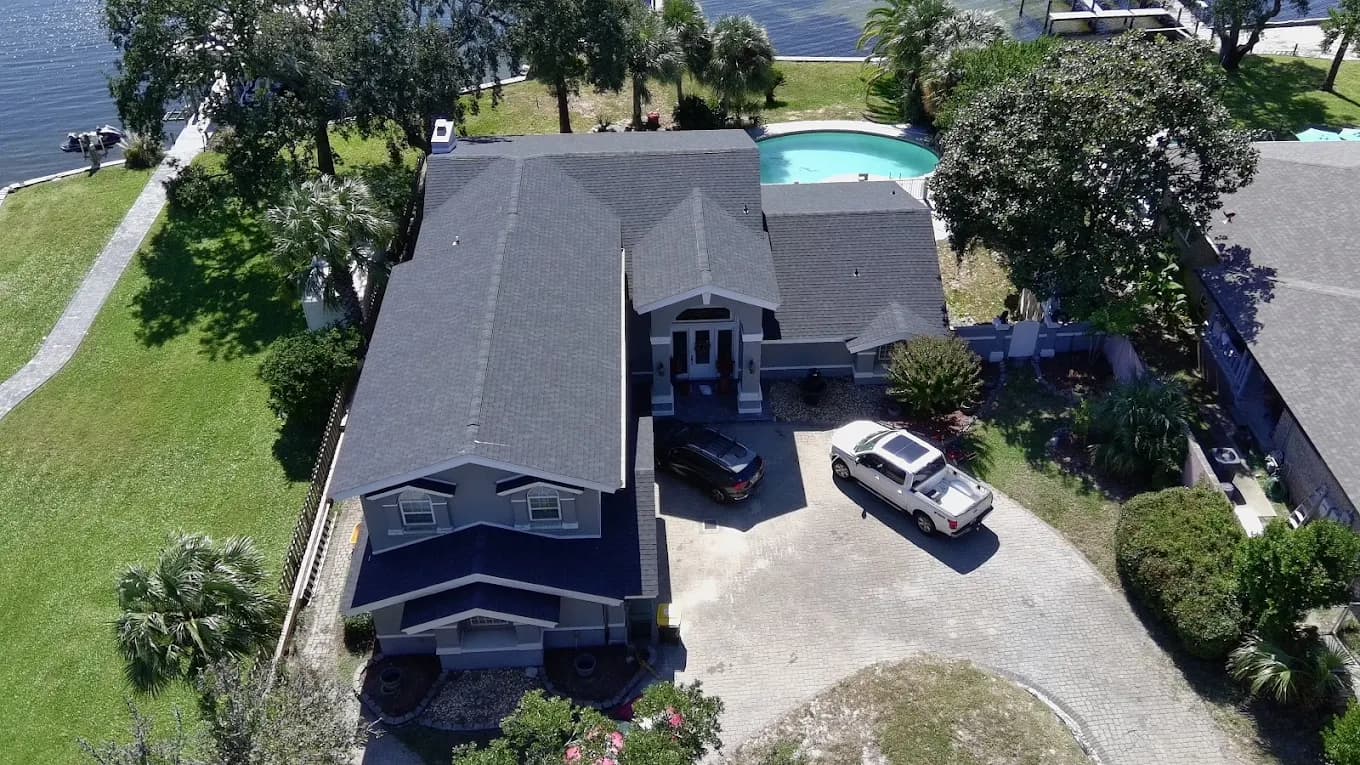
Roofing services we provide on Pensacola Beach
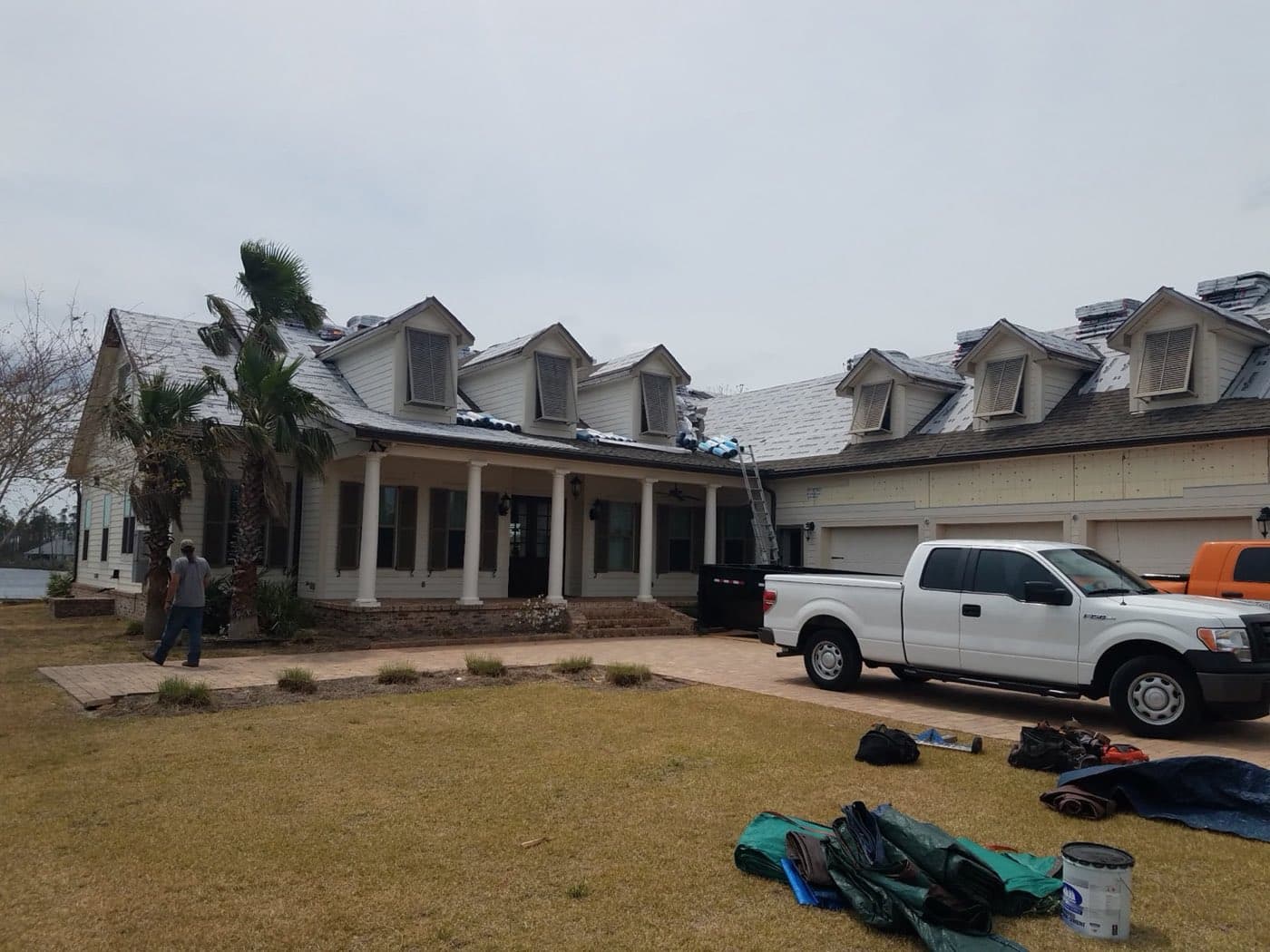
The work mix on the island leans heavily on metal roof installation and replacement, hurricane and storm restoration (every named storm in the Gulf brings a wave of damage assessments here), and detailed roof inspections, both for buyers during real estate transactions and for owners trying to get ahead of an aging roof before the next storm. We also handle the commercial flat roofs along the boardwalk and the larger rental properties.
Hurricane history on Pensacola Beach
Ivan in 2004 is still the reference point. Cat 3 at landfall just to the west, but the storm surge and wind on the island were catastrophic. Entire sections of Fort Pickens Road were rebuilt, and a lot of older pre-code beach houses simply didn't survive. The rebuild that followed is most of what you see on the island today, which is part of why the housing stock skews newer than the mainland.
Sally in 2020 was the next major event. A slower-moving Cat 2 with an enormous rain footprint, it had us doing months of work on island roofs that took wind damage at the same time the rain was driving water under flashing and through any seam that wasn't sealed properly. A lot of what we replaced after Sally were roofs that had been patched after Ivan and were running on borrowed time anyway.
Insurance on barrier-island property is its own conversation. Wind premiums are high, deductibles are typically a percentage of insured value rather than a flat dollar amount, and the carrier list keeps shrinking. If a storm damages your roof, we'll assess it and give you a quote, and we can coordinate with your insurance company's process as needed. A wind mitigation inspection can move the needle on premiums when the roof has the right features, and we can point you to trusted inspectors who handle the form. It's worth running the numbers before assuming you can't lower the premium.
Building codes on Santa Rosa Island
Pensacola Beach permitting goes through Escambia County, since the island is unincorporated. The Santa Rosa Island Authority has its own role for leases and certain approvals, but the building permit itself is a county document. We pull, post, and close out every permit; on the island this is non-negotiable, both for code compliance and for your insurance to recognize the work.
Florida Building Code applies with high-velocity wind requirements specific to coastal exposure zones. That means enhanced fastening schedules, secondary water barrier under the primary roof covering, drip edge and flashing standards above the inland baseline, and product approval for any roof component installed. Every shingle, metal panel, or membrane has to have a Florida Product Approval or Miami-Dade NOA on file. We use approved products on every island job and provide the documentation as part of close-out.
Wind mitigation features are worth more on island roofs than almost anywhere in our service area. Secondary water barrier, hip roof geometry (rare on stilt homes, but worth noting when present), and the right roof-to-wall connections can substantially reduce the wind portion of an island insurance premium. A wind mitigation inspection captures all of it, and we can point you to trusted inspectors who handle the form.
Why a local roofing contractor matters on the island
After every Gulf storm, the bridges fill up with out-of-state roofing trucks. Pensacola Beach is a magnet for storm chasers because the damage is concentrated, the houses are valuable, and the owners are often out of town and easy to pressure. We've spent a lot of years cleaning up after that crowd: work that wasn't permitted, products that weren't code-approved, fasteners that failed in the first salt season.
Nearly 40 years of crossing the bridge means we know which suppliers actually stock the metal panel profiles we install, which inspectors handle island jobs, and which routes get our trucks and materials onto the island fast during peak rental season without disrupting the property. None of that shows up in a marketing pitch; it shows up in how quickly we can mobilize and close a job.
We're an Emerald Coast contractor based about 45 minutes east in Fort Walton Beach. If a fastener pops or a ridge cap lifts in year three, we're a short drive away and we answer the call. The out-of-state crews aren't.