
Milton sits north of Highway 98 on the Blackwater River, one of our regular weekly stops. It's far enough inland that the salt-air conversation we have on the coast doesn't dominate the job, but close enough that the same storms still hit. We've been on Milton roofs for nearly 40 years: the historic downtown homes around Berryhill and Caroline, the mid-century ranches scattered through the older neighborhoods, the rural acreage properties out toward East Milton, and the newer subdivisions that have filled in along Avalon and Highway 90.
We work Milton from our Fort Walton Beach base, a 45-to-50-minute drive up Interstate 10 or Highway 90 depending on which side of the city the job is on. It's a regular route for our crews, and we've worked the older downtown blocks, the rural-acreage homes outside the city limits, and the newer subdivisions north and east of the courthouse. The Santa Rosa County seat status means we're also at the county building department here regularly for permitting on jobs across the broader county.
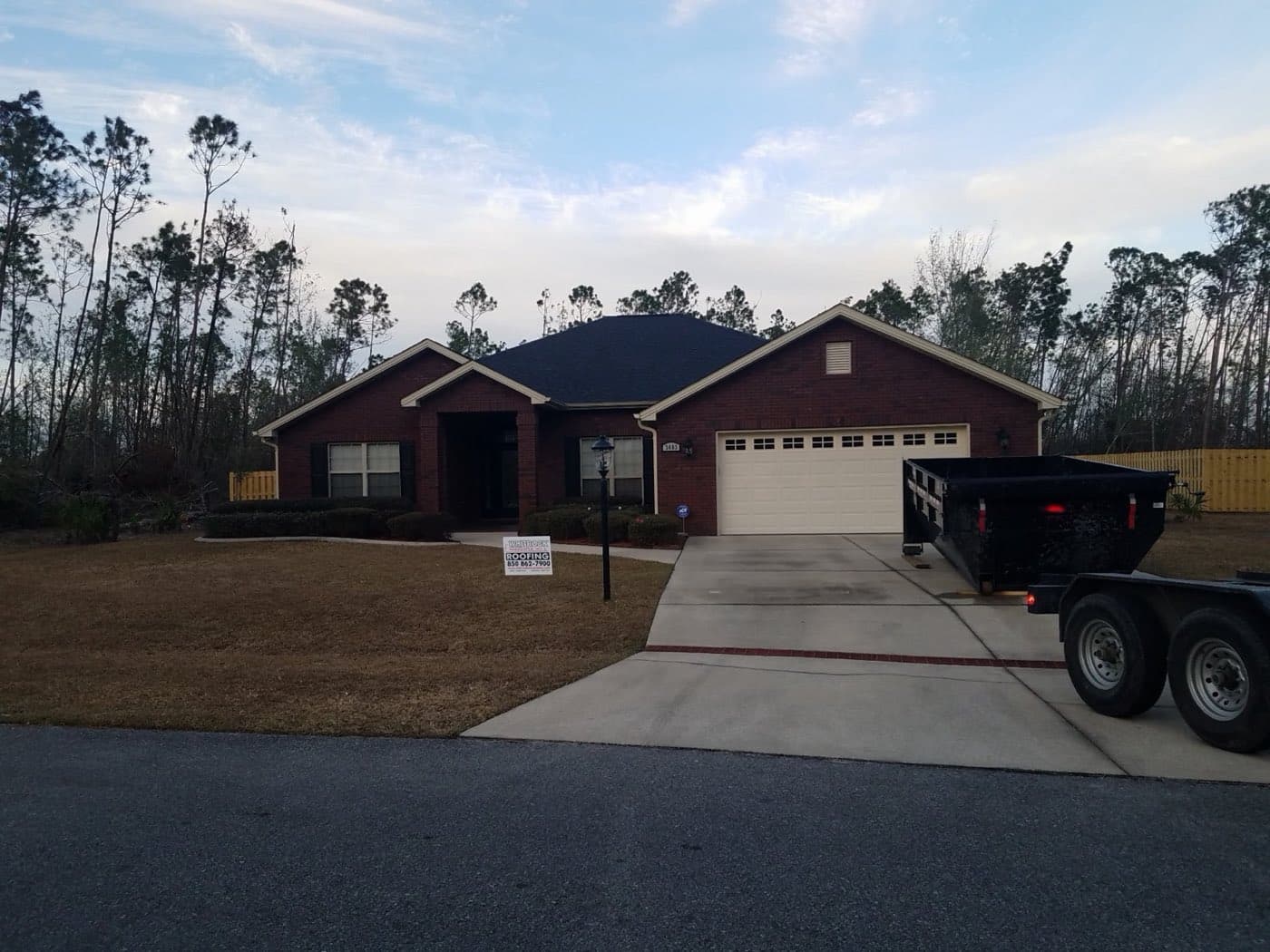
What we know about Milton roofs
Downtown Milton has a meaningful stock of older homes: some pre-1900 in the historic district near the river, more 1920s-1950s on the residential streets around the courthouse. These often have steeper pitches and more architectural detail than the suburban stock; replacements here sometimes call for upgraded shingles or careful attention to historical character. We've reroofed houses where the existing decking was tongue-and-groove plank and the framing was full-dimension lumber, different work than a modern truss roof, and worth knowing about going in.
Mid-century ranches and 1970s-80s suburban homes make up a lot of the central Milton housing. Standard 4:12 to 6:12 pitch, three-tab or early architectural shingle on the original roofs, mostly replaced once or twice by now. These are the most common reroof jobs we do in Milton: straightforward architectural shingle on a typical residential roof, with code upgrades pulled in where the existing assembly doesn't meet current FBC.
Outside the city, the rural-acreage homes spread across northern and eastern Santa Rosa County toward Bagdad, Pace, and east toward Holt are a different category. Long driveways, sometimes detached structures we end up looking at too (barns, workshops, pole buildings), and a mix of shingle and metal depending on the property style. Metal is more common out here than it is downtown. The look fits the rural setting and the longer service life appeals to homeowners on acreage who'd rather not replace a roof every 20 years.
Inland location means salt air is much less of a factor than on the coast, but the inland exposure brings its own issues. More tree cover means more debris and more chance of impact damage during storms, and pollen and biological growth (algae streaks on the north slope, moss in shaded areas) is more visible in Milton than on coastal homes. We address both during inspections.
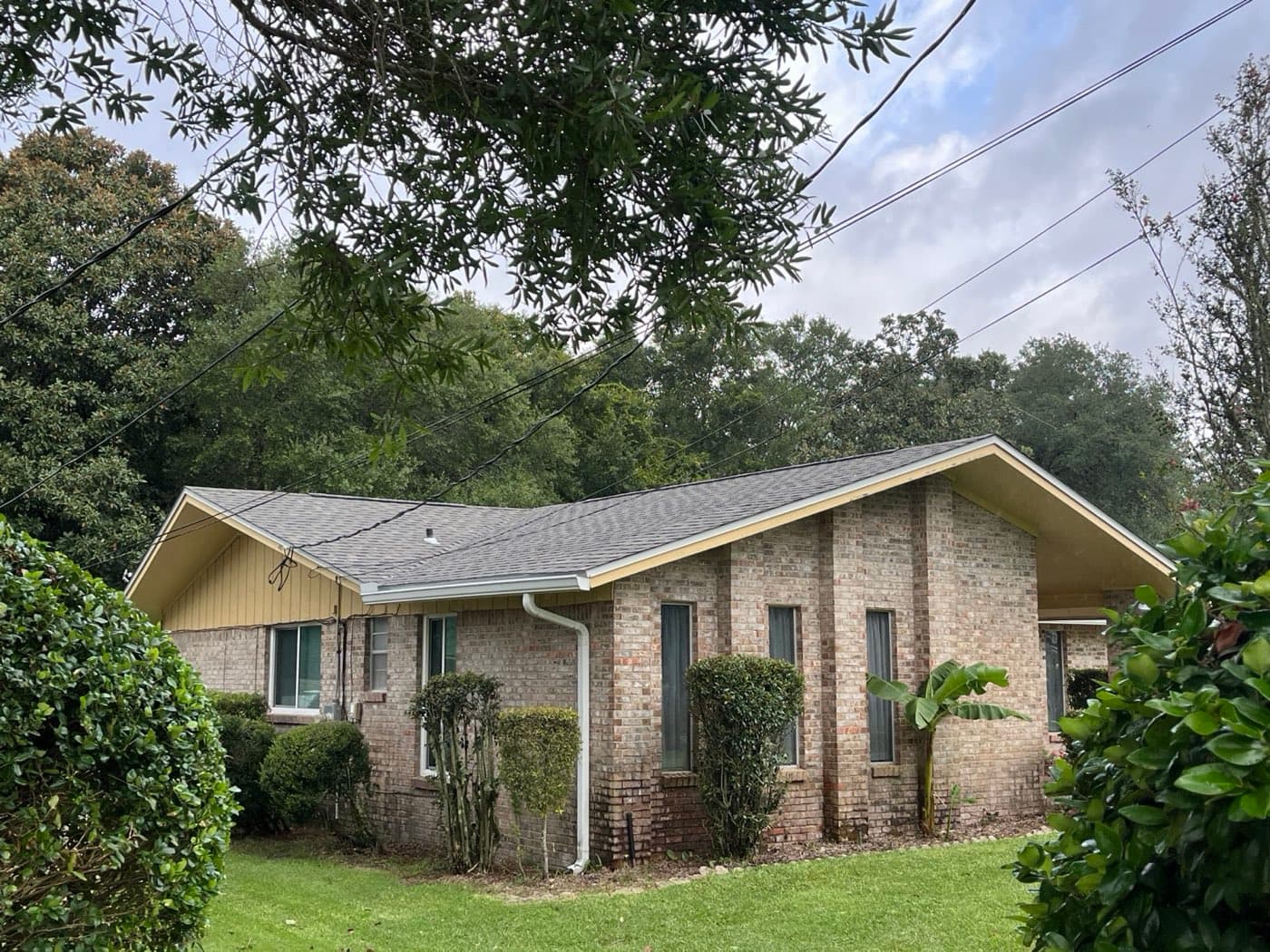
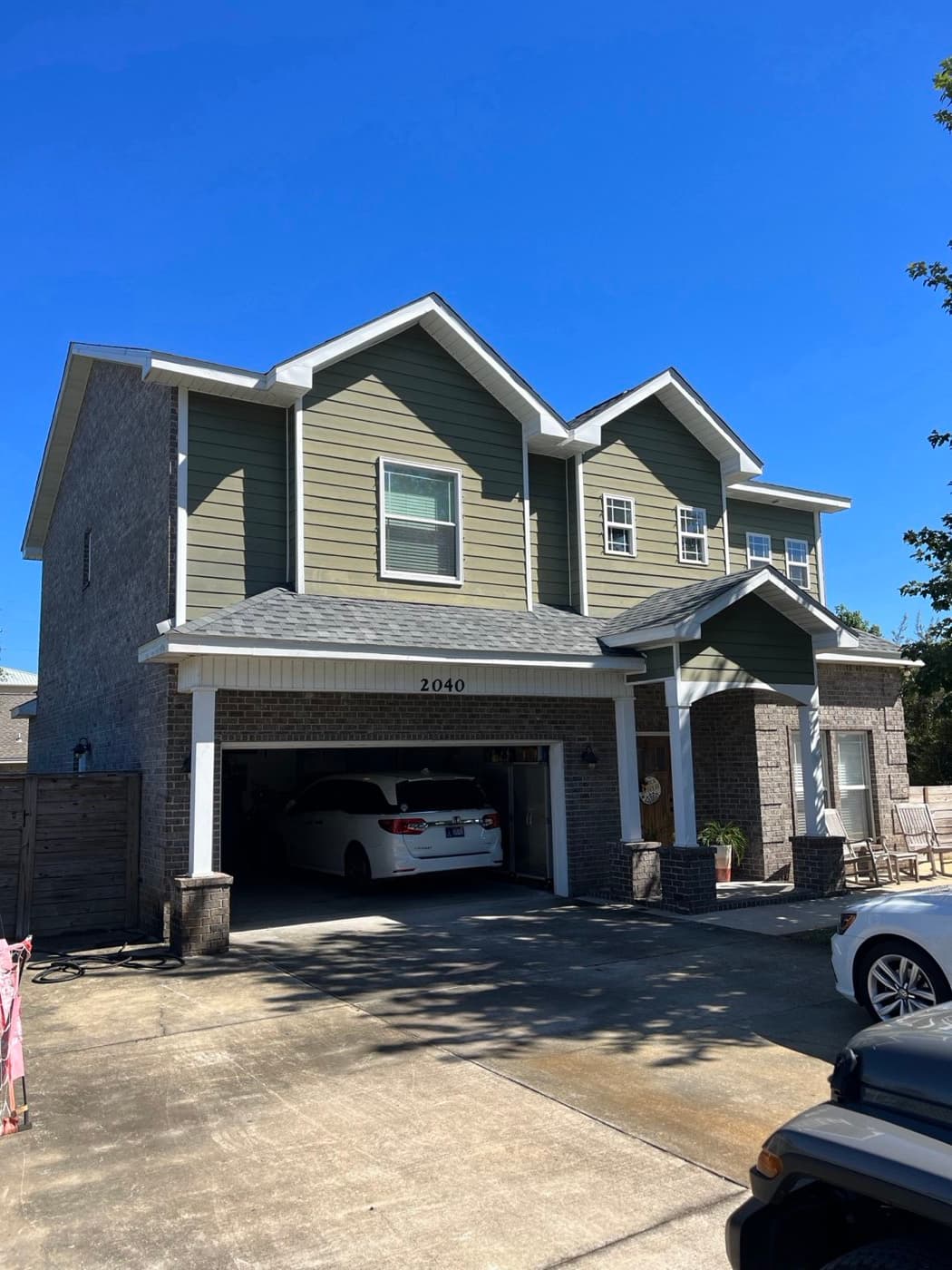
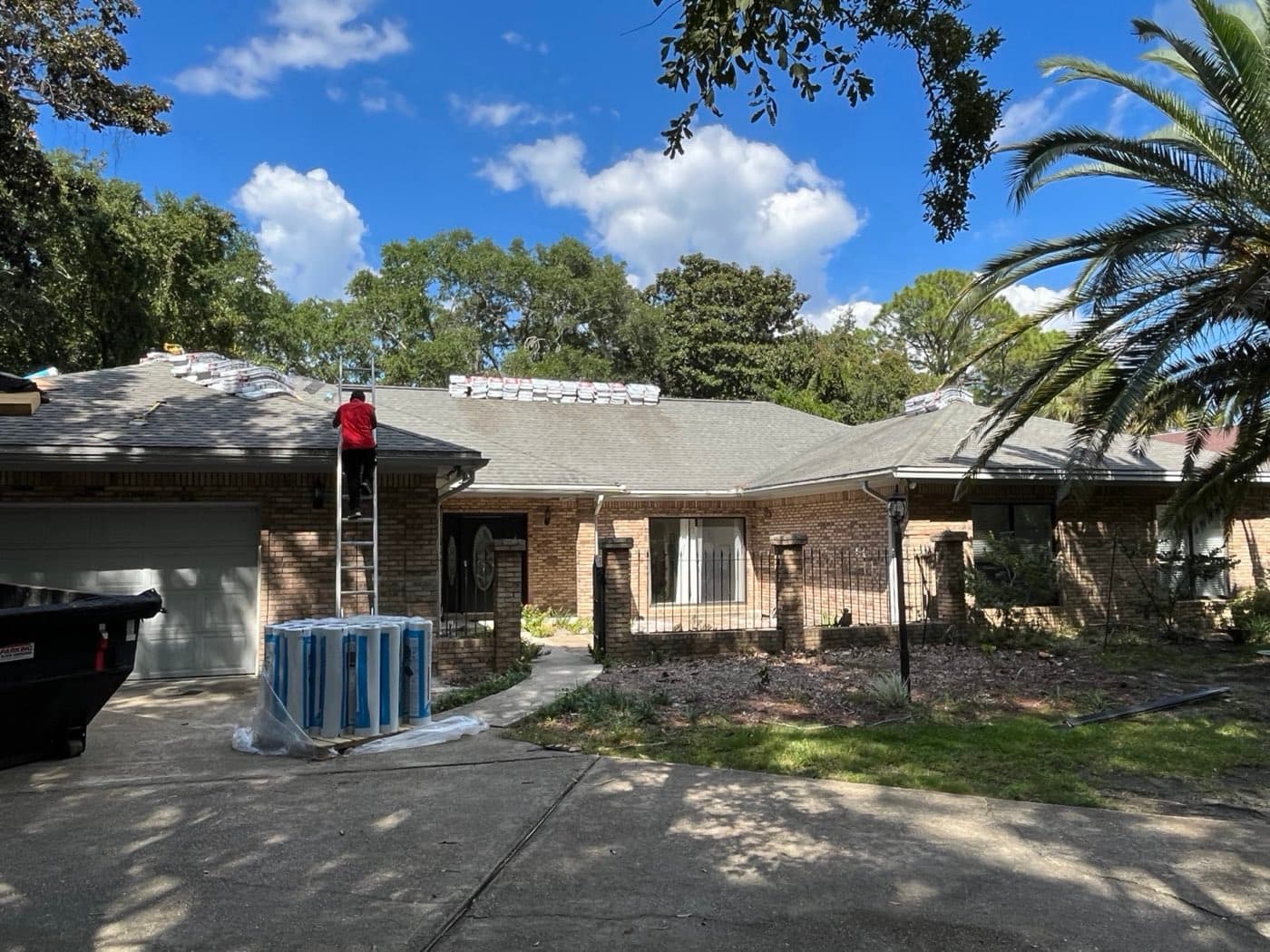
Recent roofing jobs in Milton
Roofing services we provide in Milton
The Milton workload is mostly residential roof replacement and repair: architectural shingle on standard pitches, with the occasional metal install on rural-acreage homes and the older downtown roofs that warrant the upgrade. We also do storm restoration after named storms reach inland (Sally reached well into Milton), roof inspections for real estate transactions, and small commercial work along Highway 90 and downtown.
Hurricane and storm history in Milton
Inland location doesn't mean storm-free. Ivan in 2004 reached Milton with sustained tropical-storm-force winds and substantial rain after weakening from its Cat 3 landfall, and we did meaningful restoration work in Milton in the months that followed. Trees on roofs were a major contributor: Milton's tree cover is heavier than the coast, and Ivan brought down a lot of pines onto roofs.
Sally in 2020 was worse for Milton than people sometimes remember. The storm stalled over the area with Cat 2 sustained winds, and the rainfall was extreme: Blackwater River flooding, downed trees on roofs throughout the city and rural areas, and weeks of leak repair as decking dried out and homeowners discovered damage they hadn't initially seen. We worked Milton heavily through 2021 on Sally-related claims.
Insurance in inland Santa Rosa County is generally less expensive than coastal coverage but still subject to the broader Florida market turbulence. Wind premiums are lower than the coast but not low; carriers still want to see wind mitigation features documented. Wind premiums are lower than the coast but not low, and a wind mitigation inspection (we can recommend an inspector) can reduce premium even for inland Milton homes when the roof has the right features.
Milton codes and permits
Roofing permits inside Milton city limits go through the City of Milton building department. Permits in unincorporated Santa Rosa County, which is where most of the rural-acreage and outside-city Milton-area work happens, go through Santa Rosa County. We pull, post, and close out every permit, and we're at both departments often enough that the process is routine.
Florida Building Code applies inland the same as on the coast, with the wind exposure category set lower than coastal sites. That doesn't mean it's a weaker spec. Fastening schedules, drip edge, ice and water shield around penetrations, and proper underlayment all still apply. A roof installed in Milton pre-2007 likely doesn't meet current FBC, which matters for insurance claims where carriers sometimes pay for code-required upgrades during a storm replacement.
Wind mitigation for inland Milton homes is still worth running. The credits are smaller in absolute dollars than they are on the coast because the underlying wind premium is lower, but the form items still matter, and a lot of Milton homeowners have never had a current inspection done. If you want the form handled, we can point you to trusted inspectors who cover the Milton area.
Why a Fort Walton Beach-based roofing contractor works for Milton
Milton is the county seat and has its share of local handyman-style roofers and small operations. Some of those do solid work; some don't. The challenge in any smaller-market roofing landscape is that a roof installed today might outlive the contractor who installed it, and the warranty becomes worthless when the company is no longer around in year 8.
Nearly 40 years roofing the panhandle means we've been on Milton roofs since before some of the current housing existed. We have manufacturer warranty authority as an Atlas Pro Plus Diamond installer (the top Atlas contractor tier), supplier depth that smaller operations can't always match, and the capacity to mobilize quickly after a storm.
Practically, a 45-to-50-minute drive from Fort Walton Beach is short enough that we operate Milton like a routine market, not a one-off. If a flashing fails or a fastener pops in year three, we're under an hour away. That's not always true of out-of-state crews who show up after a storm and disappear when the season ends.