DeFuniak Springs anchors our inland Walton County roofing work. The town sits about 43 miles northeast of our shop, roughly a 50-minute run up Highway 85 to I-10 and east, inland from the 30A coastal market, with a different housing stock and a different storm exposure than what we see on the beach side. We've been working Walton County roofs for a long time, but the inland half of the county has its own logic: smaller-town construction, historic homes around the Lake DeFuniak Circle Drive Chautauqua district, rural acreage out toward US-90 and US-331.
The town sits around Lake DeFuniak, one of only two perfectly circular natural lakes in the world depending on who you ask, and the historic district that wraps the lake has homes going back to the Chautauqua era of the 1880s and 90s. Those roofs have their own considerations. The newer subdivisions out toward US-331 and the rural housing scattered through the county are a different conversation entirely.
What we know about DeFuniak Springs roofs
The historic district around Lake DeFuniak is the most distinctive housing stock in the panhandle. Victorian and turn-of-the-century homes on Circle Drive and the streets fanning off it have steep pitches, complex roof geometries with multiple gables and dormers, and original wood underneath layers of asphalt that's been laid over the decades. These roofs need real planning. Tearing one off can reveal decking that's been compromised by years of water intrusion at valleys that were never flashed properly. We approach historic district work with that expectation built in.
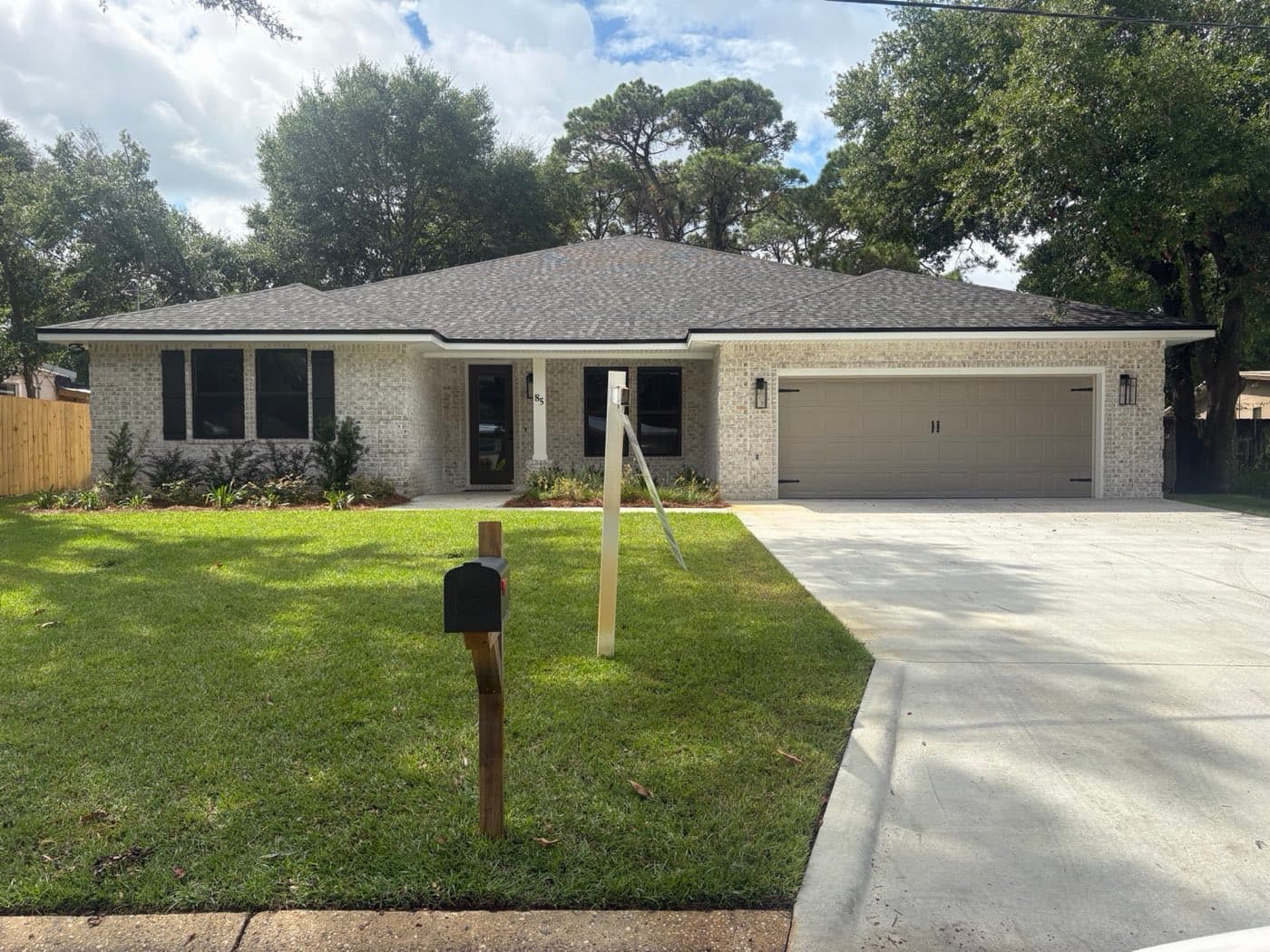
Outside the historic core, the 1960s through 1990s housing along US-90 and the side streets is typical inland Florida: single-story with 4:12 to 6:12 pitches, gable or simple hip, shingle. The newer construction out toward the I-10 exit and US-331 is current-code architectural shingle on engineered trusses. We work all three types.
Rural Walton County is its own thing. You have farmhouses, manufactured-home additions, pole barns being converted to living space, agricultural buildings with metal roofs that have been on there for thirty years. Some of these properties are a long drive off the paved road. We do that work (it's part of being a panhandle contractor) but we route it carefully so the truck time pencils out.
Salt air isn't a factor in DeFuniak. You're well inland. What you do get is intense summer heat, heavy rain events, and attics that often need better ventilation than they have. Older homes especially tend to be under-ventilated and the shingles pay for it.
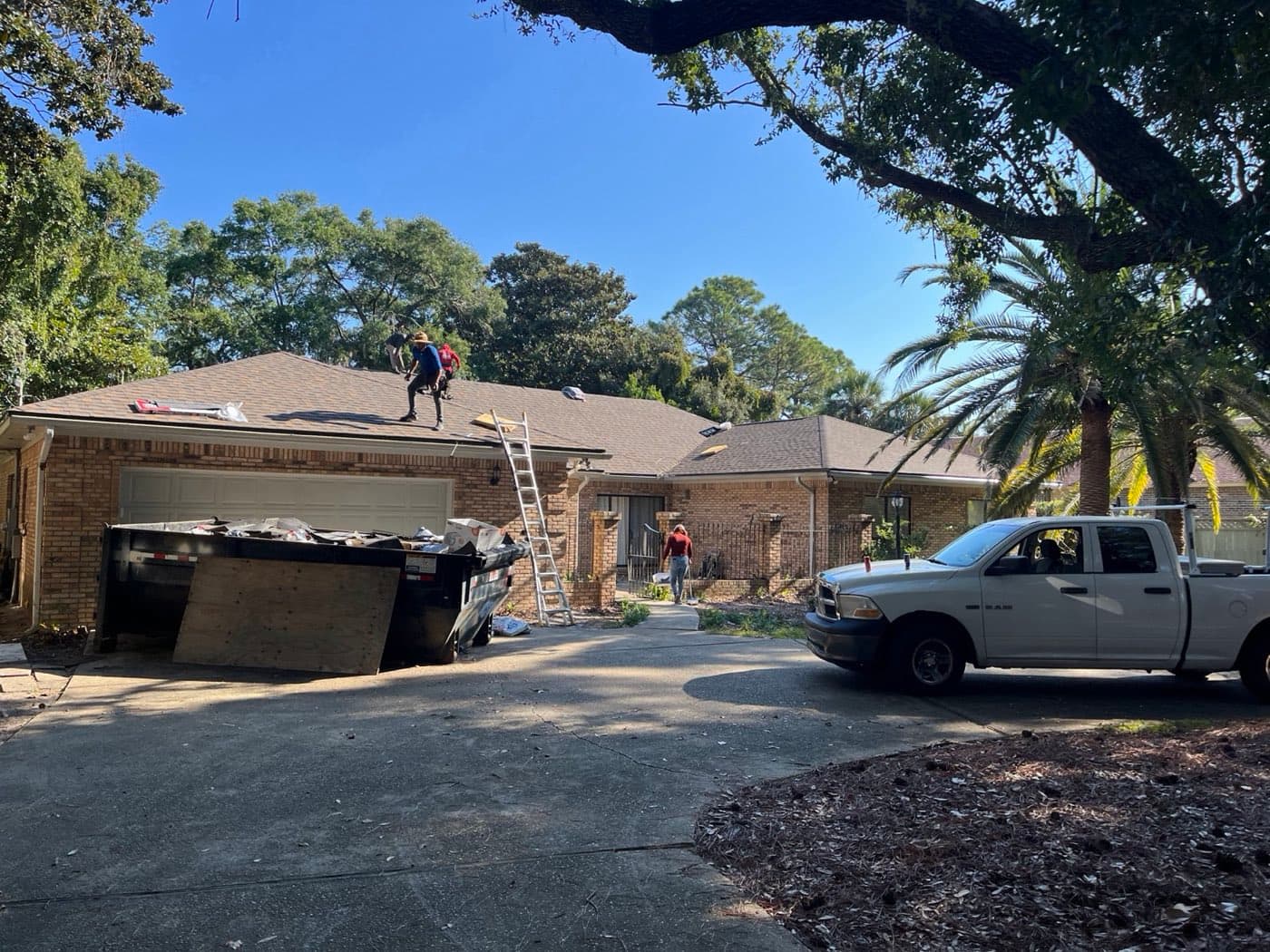
Recent roofing jobs in DeFuniak Springs
Roofing services we provide in DeFuniak Springs
The work mix here leans toward shingle replacement on aging housing stock, careful repair work on historic district roofs where matching profile and detail matter, and insurance restoration after the inland wind-and-rain events that hit the county. We also do a steady amount of inspection work, both for homeowners shopping coverage and for buyers and sellers during real estate transactions.
Storms and insurance in DeFuniak Springs
Inland Walton County takes storms differently than the coast does. No storm surge, generally lower peak wind speeds than the coast at landfall, but plenty of sustained tropical-storm-force wind and rain volume. Hurricane Michael in 2018 came through this part of the state as a still-organized strong hurricane after slamming Bay County, and inland Walton took real damage: uprooted trees, blown-off shingles, sustained rain that found every weak flashing and pipe boot in the county. Sally in 2020 dropped massive rain totals across the inland panhandle. Idalia and a string of named storms since have added wear.
The damage pattern on a DeFuniak roof from a typical inland event is shingle uplift on aging roofs, granule loss accelerated by hard rain, and a lot of leaks from flashing and penetrations that were marginal already. Tree damage is a bigger factor here than it is on the coast. There are a lot of large oaks and pines in the historic district and across rural Walton, and a single limb through a roof during a storm is a not-uncommon claim.
Florida's insurance market is the same shifting picture in Walton as everywhere else. Carriers are pulling back, premiums are climbing, and roofs over fifteen years old are being scrutinized at renewal. If a storm damages your roof, we'll assess it and give you a quote, and we can coordinate with your insurance company's process as needed. If your roof has been through Michael, Sally, or both and hasn't been replaced or looked at since, that's worth doing before your next renewal.
Walton County building codes and permits
Reroofs inside DeFuniak Springs city limits require a permit from the city. Jobs in unincorporated Walton County go through the county building department in DeFuniak. We pull and close out every permit. Historic district work in DeFuniak can have additional review depending on what's being changed visually from the street, and we coordinate on those when they come up.
Florida Building Code applies inland the same way it does on the coast: current fastening schedules, drip edge, underlayment standards, ice-and-water around penetrations. A roof installed before 2007 likely doesn't meet current FBC, and code upgrades on a storm replacement are something we'll walk you through before the carrier sees the scope.
A wind mitigation inspection matters just as much here as on the coast for the wind portion of your homeowners premium, and we can point you to trusted inspectors who handle the form. The savings on a documented hip-roof, well-fastened, secondary-water-barrier roof can be meaningful, and a lot of newer DeFuniak homes qualify for discounts they're not currently getting because nobody's done the inspection.
Why a panhandle roofing contractor matters in DeFuniak
After every named storm, out-of-region storm chasers work their way into rural Walton County. They target older homeowners, push fast signatures, do mediocre work, and roll out before warranty season. They are not Florida-licensed half the time, they have no relationship with the Walton building department, and they will not be reachable when something they did wrong starts leaking in 2027.
We're not based in DeFuniak. We're about 50 minutes west in Fort Walton Beach. What we are is a Florida-licensed roofing contractor that's been working the panhandle for nearly 40 years, with a verifiable permit and insurance history with the City of DeFuniak Springs and Walton County. Anybody can verify our license at the state portal and the BBB record at bbb.org before they sign anything. That matters more on a rural job than people think.
Practically: warranty claims on our work go to us, and we will be reachable. Atlas Pro Plus Diamond certification means the manufacturer's warranty sits on top of our workmanship warranty, which is the better arrangement than a one-warranty-only deal. And the long-haul nature of the inland route means our crews who do DeFuniak work do it routinely. They know the lumberyards, the inspector schedule, and the rural addresses that GPS doesn't always find.