Hurricane Opal put Fort Walton Beach on the map for our generation of contractors in 1995, the storm that defined what 'serious roof damage' meant on the Emerald Coast. This is our home base, so our crews are on Eglin Parkway and Cinco Bayou every week, not just after storms. The market here is a mix: mid-century ranches in Garniers Beach and along Beal Parkway, military families cycling through PCS moves at Eglin and Hurlburt, the older commercial flat roofs running the length of Eglin Parkway.
The city has a mix that doesn't really exist anywhere else on the panhandle: tight downtown blocks with mid-century commercial, military housing patterns shaped by Eglin Air Force Base and Hurlburt Field, mid-century single-family neighborhoods like the older sections of Garniers Beach and Cinco Bayou, and modern infill on the north side toward Wright. Each one needs a different conversation about materials and pitch.
What we know about Fort Walton Beach roofs
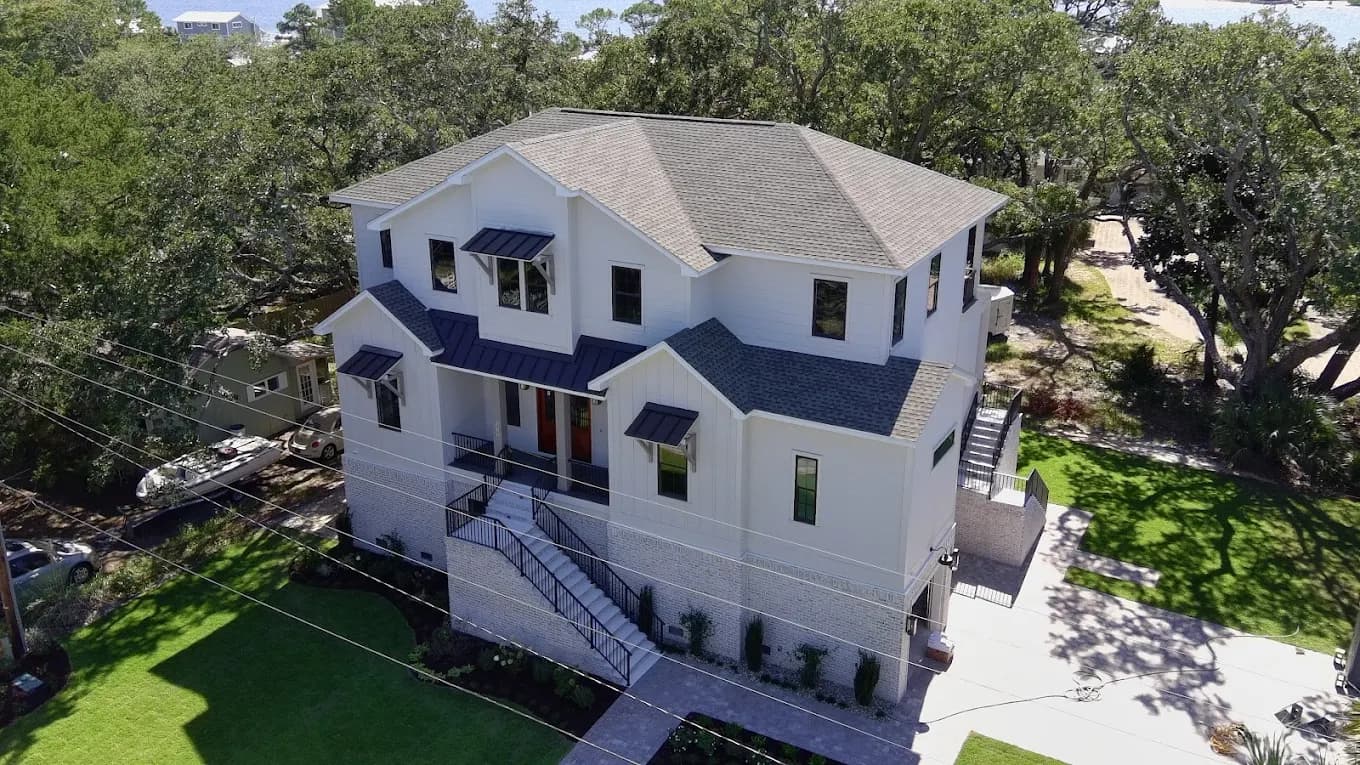
The 1950s-60s ranches that fill out neighborhoods like Garniers Beach, Cinco Bayou, and parts of the central city tend to share a profile: low pitch (often 3:12 to 4:12), plank decking under the original shingle, sometimes layered roofs from the 70s and 80s on top of original work. When we tear those off we frequently find a deck that needs partial replacement, original drip edge that's pitted from salt, and fastening patterns that don't meet current Florida Building Code. We document what's underneath before we close it in, and we price the deck repair separately so there are no surprises.
Downtown commercial and the strip along Eglin Parkway is mostly low-slope and flat: modified bitumen, TPO, the occasional aging built-up roof. Coatings and overlay work make sense on some of these; full tear-off and reroof on others. We do both.
The newer construction on the north side and out toward Wright is the truss-built, OSB-decked, architectural-shingle pattern that's standard across the panhandle since the late 90s. Simpler jobs, faster turnaround, fewer surprises.
Salt exposure varies a lot inside Fort Walton city limits. Homes south of Hollywood Boulevard, anything on Cinco Bayou, and the Garniers Beach side see real salt-air wear: fasteners corrode faster, exposed metal pits, granule loss accelerates. Homes north of the bayou get meaningfully less of it. We adjust the spec accordingly rather than running the same upgrades on every job.
Recent roofing jobs in Fort Walton Beach
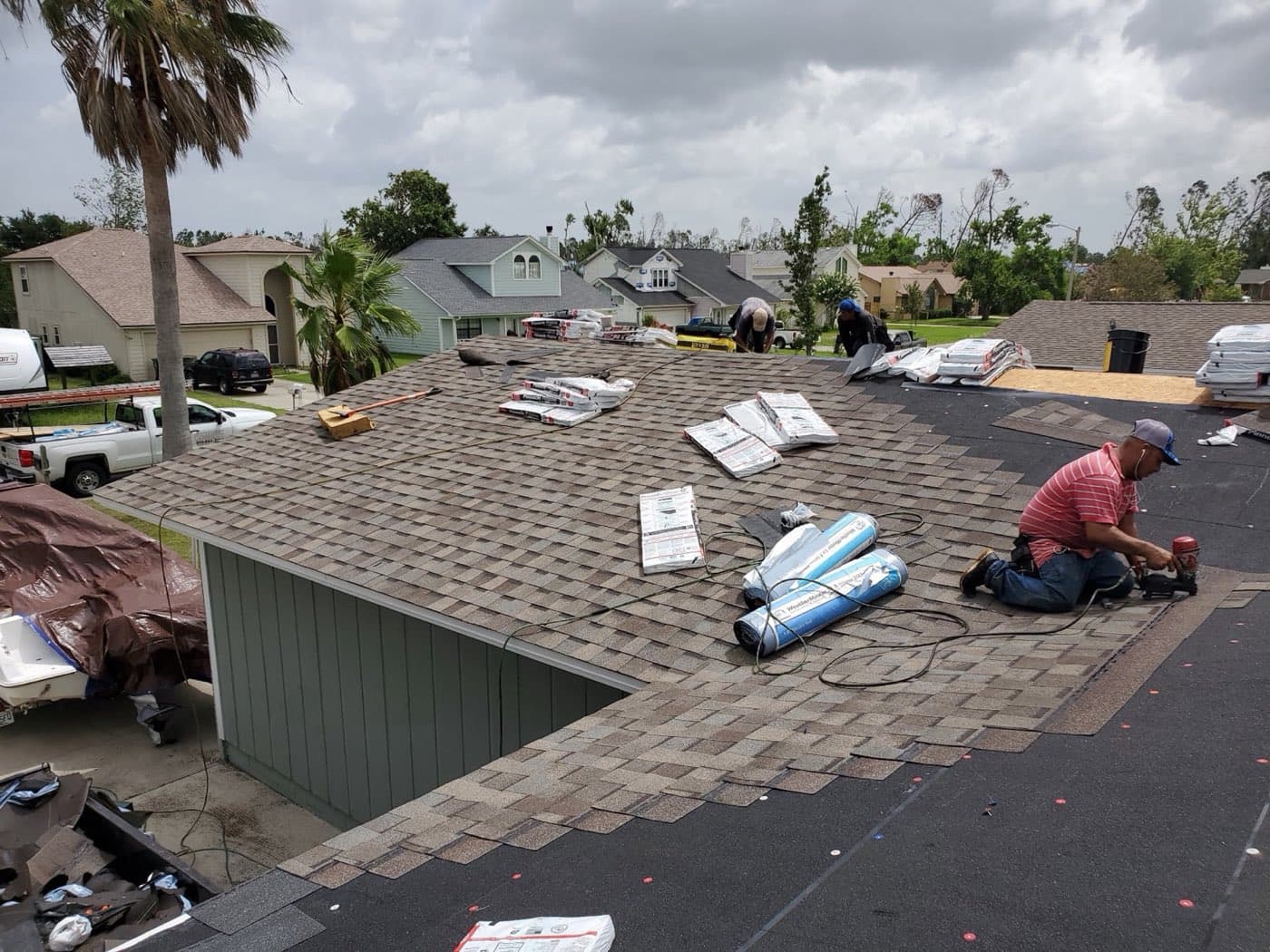
Roofing services we provide in Fort Walton Beach
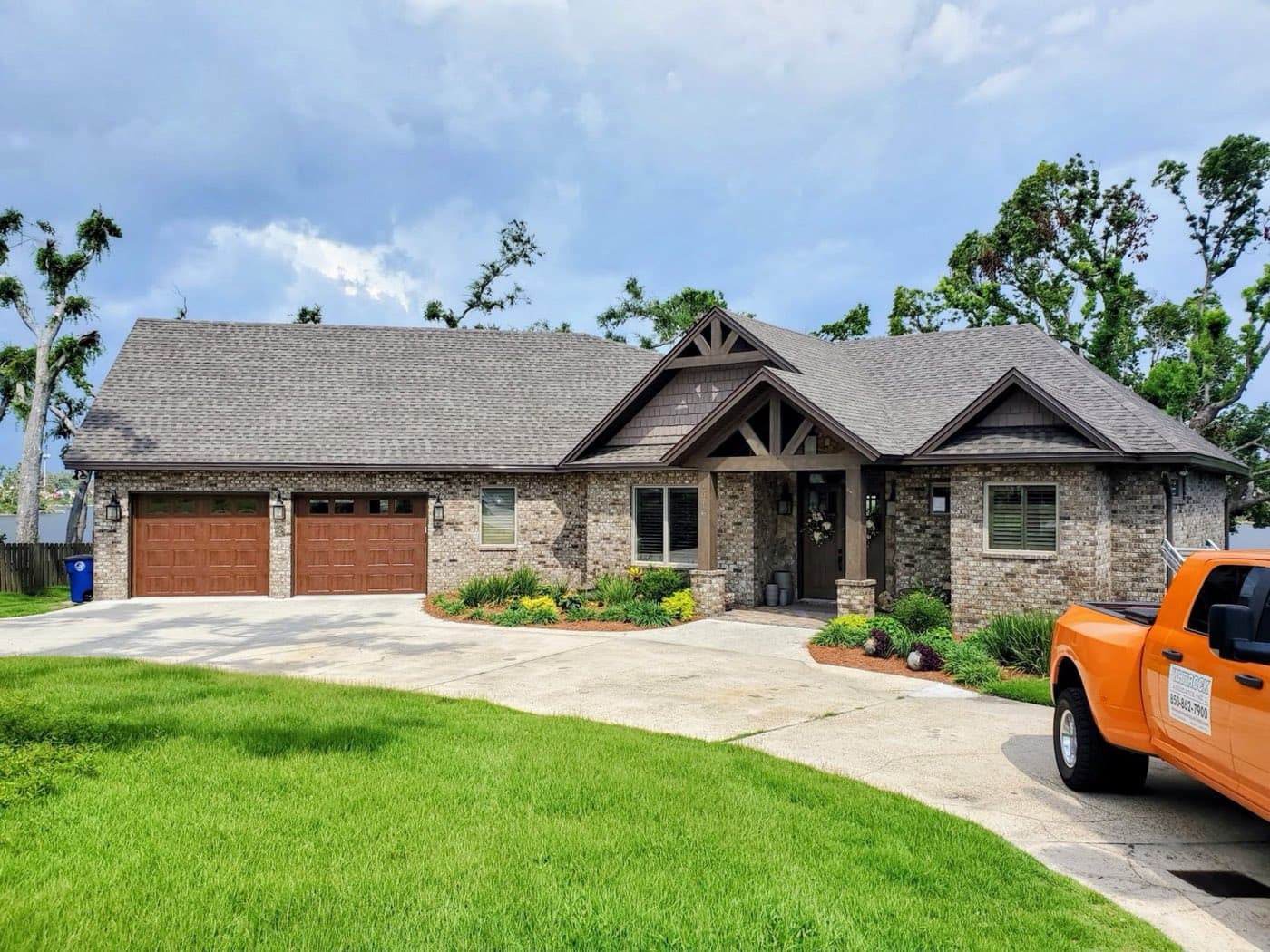
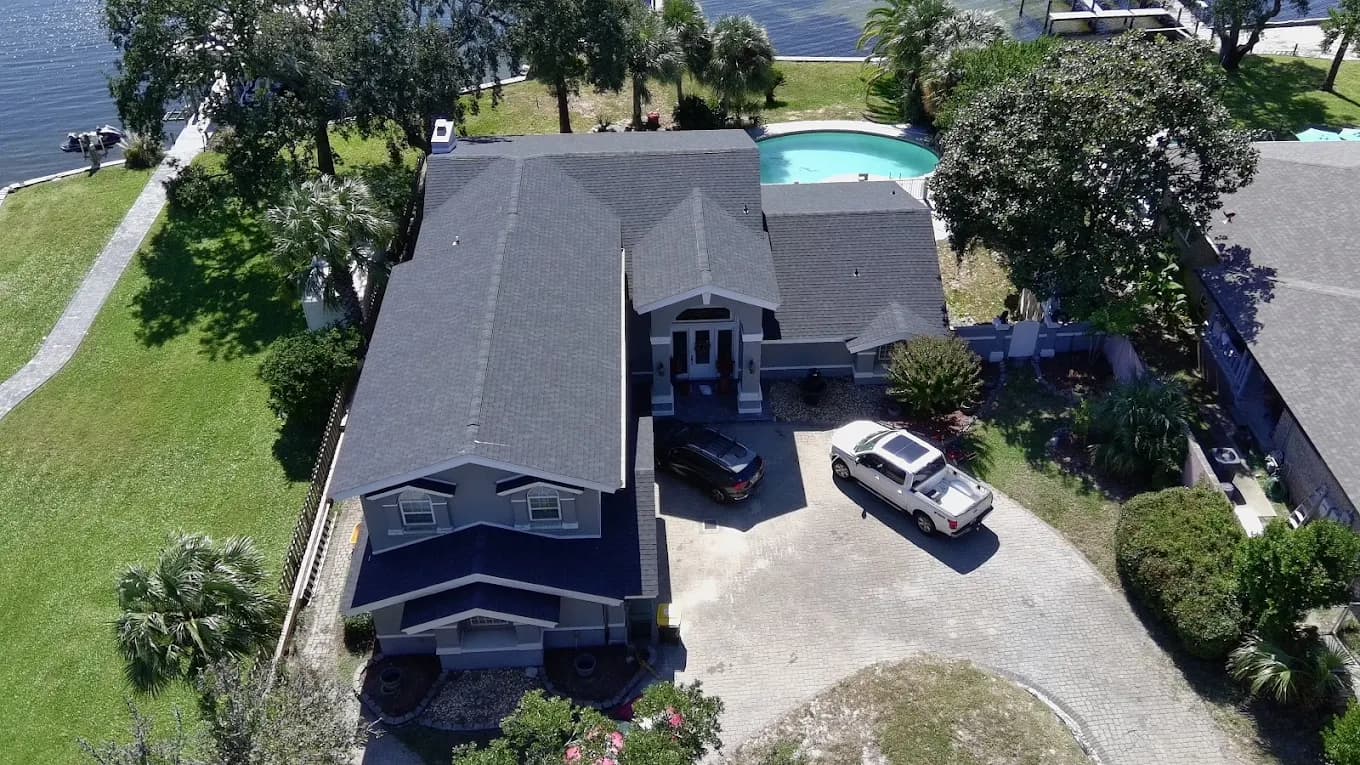
We do the full range of our work in Fort Walton Beach: residential roof replacement on the older ranches and newer infill, commercial flat-roof work along Eglin Parkway and downtown, storm restoration after named storms, and inspections (a lot of inspections, because military PCS moves drive a steady stream of buyer/seller inspections in this market). Beyond the roof, we also build new commercial buildings in Fort Walton Beach from the ground up under our general contractor license.
Hurricane and storm history in Fort Walton Beach
Hurricane Opal in 1995 was the defining storm for Fort Walton Beach: a Cat 3 landfall just east of here with massive wind damage across Okaloosa County. A lot of the roofs that were on the city's older housing stock at that time were destroyed or substantially damaged, and the rebuild cycle through the late 90s shaped a generation of the building stock. Ivan in 2004 and Dennis in 2005 hit Fort Walton with significant wind and rain, though the worst of Ivan was further west. Michael in 2018 was the catastrophic Cat 5 landfall at Mexico Beach, and while Fort Walton was on the weaker west side, plenty of roofs took damage from the outer bands.
Sally in 2020 and a string of weaker named storms since have added incremental wear. The roofs we replace in Fort Walton today are often on their second or third cycle since Opal, which is meaningful for code compliance: pre-2007 roofs almost never meet current FBC fastening and underlayment requirements.
On the insurance side, Okaloosa County operates in the same turbulent Florida market as Escambia and Santa Rosa. Homeowners here carry policies with Citizens, the national carriers, and the non-admitted markets. If a storm damages your roof, we'll assess it and give you a quote, and we can coordinate with your insurance company's process as needed.
Fort Walton Beach building codes and permits
Roofing inside Fort Walton Beach city limits requires a permit from the City of Fort Walton Beach Building Department. Work in unincorporated Okaloosa County around the city goes through Okaloosa County Growth Management. We pull, post, and close out the permit on every job in either jurisdiction.
Florida Building Code governs construction here with the same wind-zone fastening schedules, underlayment standards, and drip-edge requirements that apply across the panhandle. Fort Walton is in a high-wind zone, the inland edge of HVHZ-adjacent territory, and inspectors here are appropriately strict on fastening patterns and secondary water barriers. That's a good thing for roof durability and for insurance documentation.
A wind mitigation inspection can lower premiums, and we can point Fort Walton homeowners to trusted inspectors who handle the form. With Florida property insurance premiums where they are, documenting your roof's wind-resistive features (secondary water barrier, roof geometry, fastening type, opening protection) can meaningfully reduce the wind portion of your premium.
Why a local roofing contractor matters in Fort Walton Beach
Fort Walton Beach is our home turf. Our shop is here, our crews are on Okaloosa County roofs daily, we have established supplier relationships, we know the city's inspectors, and we have a track record on enough Fort Walton roofs that referrals carry across neighborhoods. After named storms, this stretch of the panhandle draws an out-of-state storm-chaser influx like everywhere else on the coast. The same caution applies: companies without a local license, without a Florida insurance market relationship, without a Florida-based warranty footprint shouldn't be touching your roof.
We work with a lot of military families here. PCS moves drive tight timelines: sellers needing a clean inspection report to close, buyers needing a roof condition assessed before signing. We're used to that pace and we can usually turn an inspection report around in a couple of days when the timeline is real.
Nearly 40 years of working Northwest Florida means we've handled every major insurance carrier that operates in this market, every storm pattern that affects Okaloosa County, and most of the construction era quirks that come up in Fort Walton's older neighborhoods. That experience travels.