Panama City roofing changed permanently after Hurricane Michael. The Cat 5 landfall on October 10, 2018 leveled neighborhoods, stripped roofs to the decking across a 30-mile swath, and reset the local roofing market for at least five years. Panama City sits about 48 miles east of our Fort Walton Beach shop, roughly an hour on Hwy 98 through Destin and 30A, and we've been running crews east to Bay County jobs since the immediate aftermath of Michael, and on a regular basis ever since.
Bay County is its own market. Coastal exposure on the south side, military presence with Tyndall Air Force Base just east (Tyndall took catastrophic Michael damage and the rebuild reshaped the area for years), downtown Panama City around Harrison Avenue, the marina district, and older neighborhoods like St. Andrews with housing stock going back to the early twentieth century. Commercial work along 23rd Street, US-98, and the Beach Drive corridor is a real part of the market here.
What we know about Panama City roofs
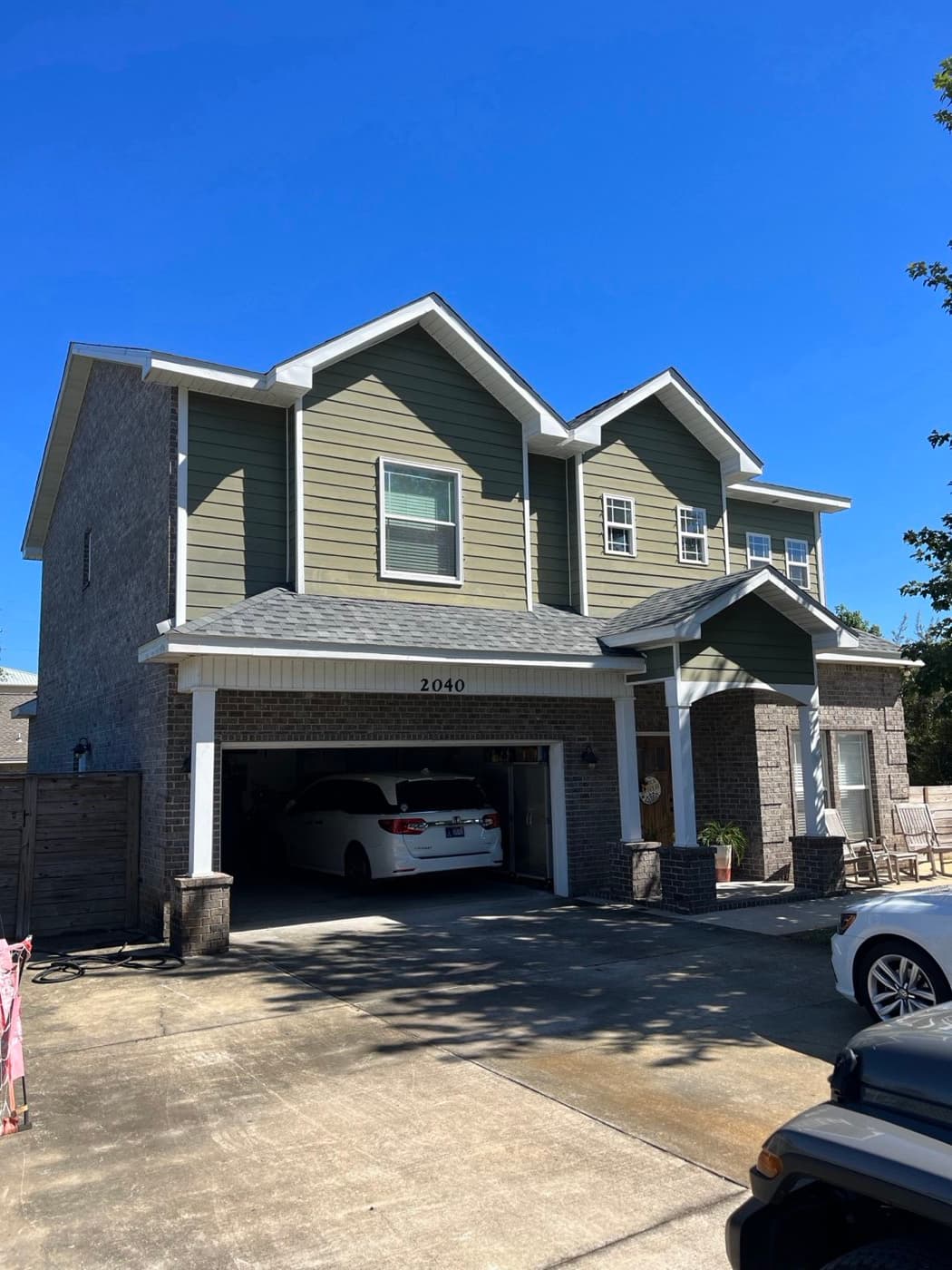
St. Andrews is some of the oldest housing stock in Bay County: early twentieth century cottages and bungalows, low to medium pitch, a lot of them rebuilt or substantially restored after Michael. The Cove neighborhood east of downtown has a mix of older waterfront homes and rebuilt construction. Downtown Panama City around Harrison Avenue is commercial and mixed-use with flat and low-slope roofs that need real flat-roof expertise: modified bitumen, TPO, and single-ply. Lynn Haven on the north side and Callaway to the east are mostly post-war residential, much of it either rebuilt or substantially repaired after Michael.
What you see across Panama City is a roof age cluster. A huge percentage of roofs in the county are six or seven years old now because they were all replaced in the Michael aftermath. That's a useful thing for homeowners: most of those roofs are in good shape with twenty-plus years of useful life left. It's also a complicated thing for the insurance market because a lot of those replacements were done fast, by contractors who were not necessarily here for the long haul, and quality varies enormously from job to job.
Salt air is a factor in Panama City the closer you get to the bay and to the south side of the city. Fasteners corrode faster, exposed metal pits, and asphalt granule loss accelerates. We use upgraded fasteners and stainless or galvanized flashing on coastal-side installs, and metal roofs hold up well here when a homeowner wants to make that investment.
Building permits in Panama City go through the City of Panama City. Permits in unincorporated Bay County go through the county. Lynn Haven, Callaway, and Springfield each have their own city processes. We handle pulling and closing out the permit on every job. We're not asking you to navigate the portal.
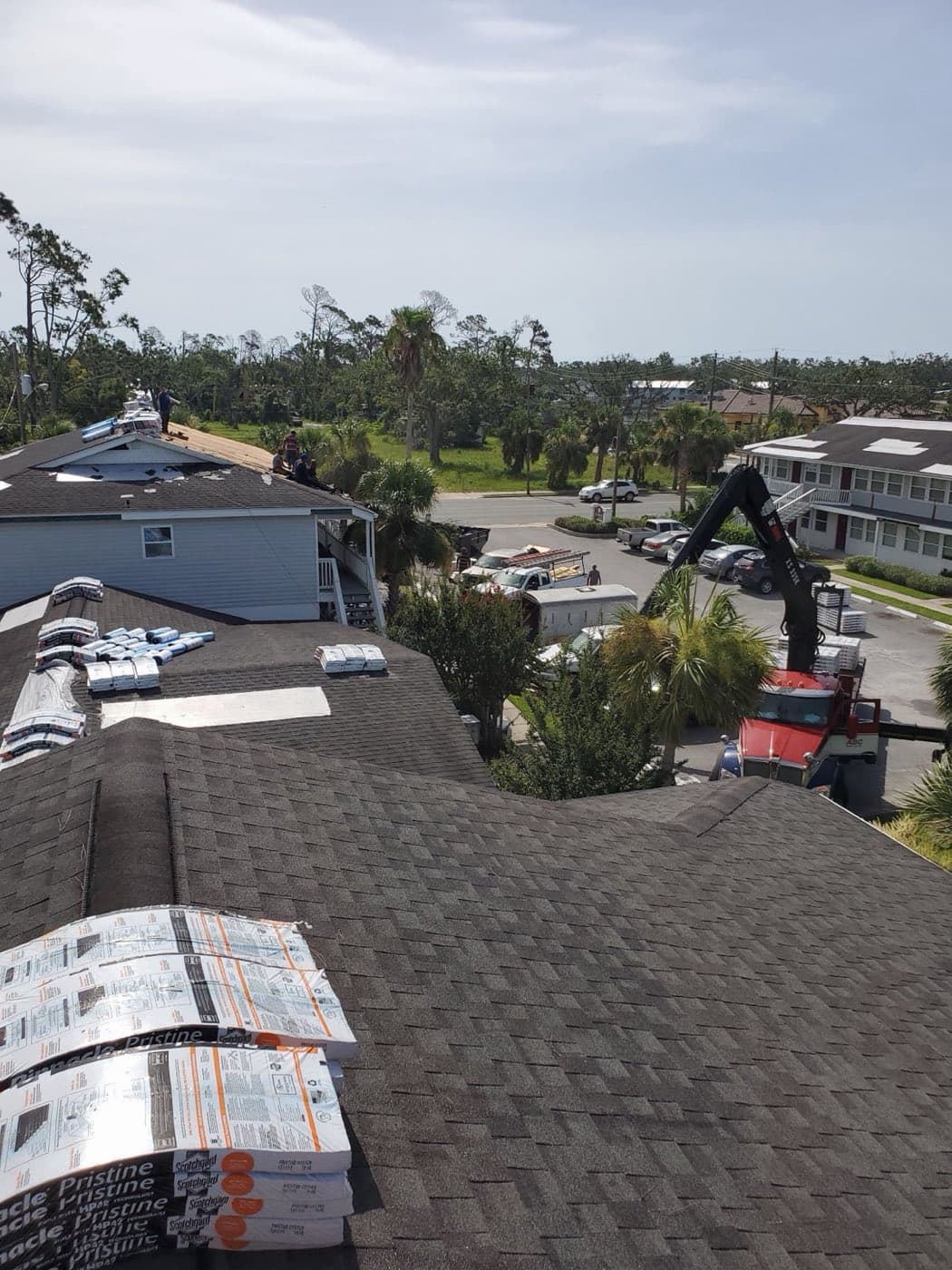
Recent roofing jobs in Panama City
Roofing services we provide in Panama City
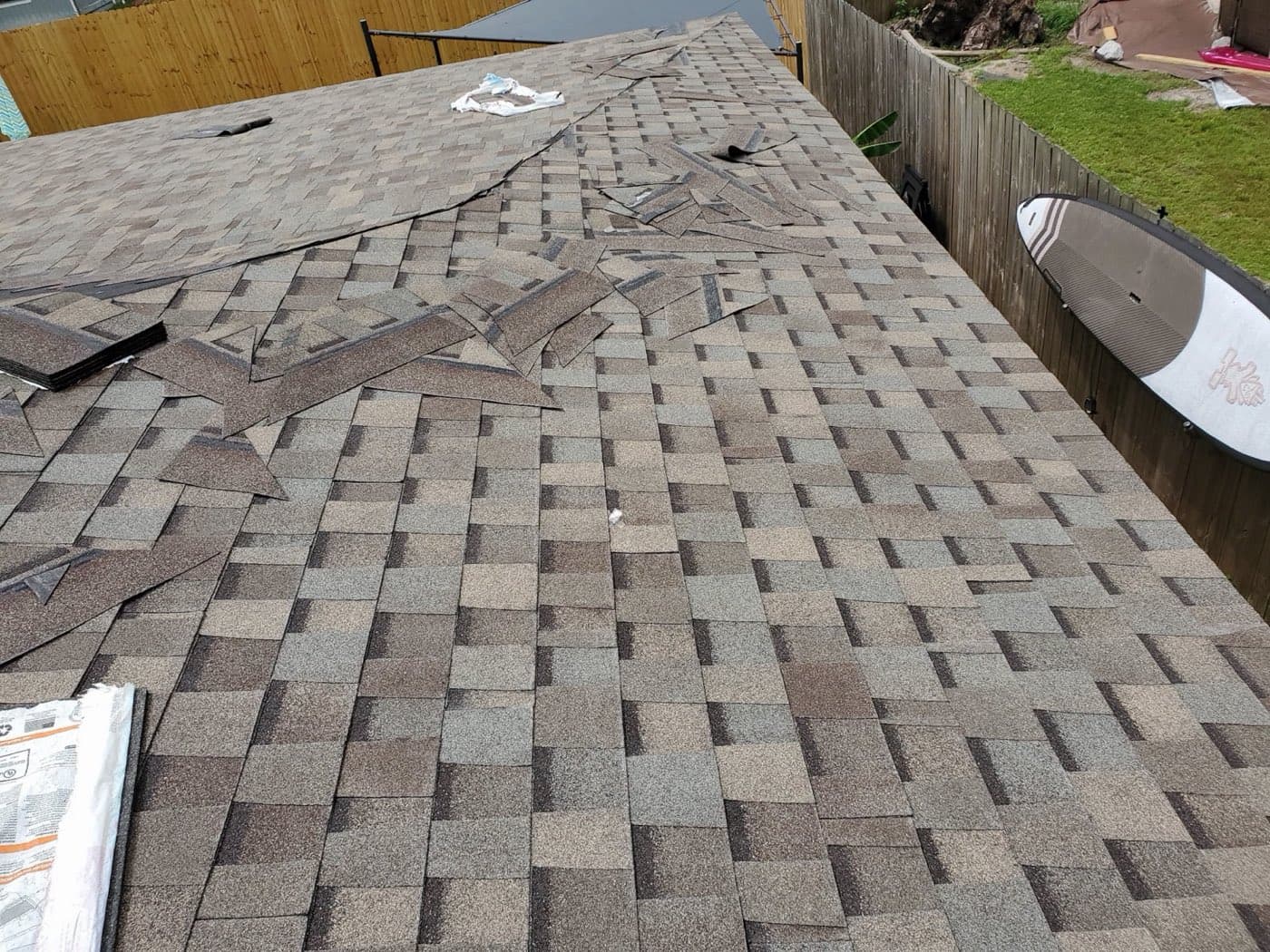
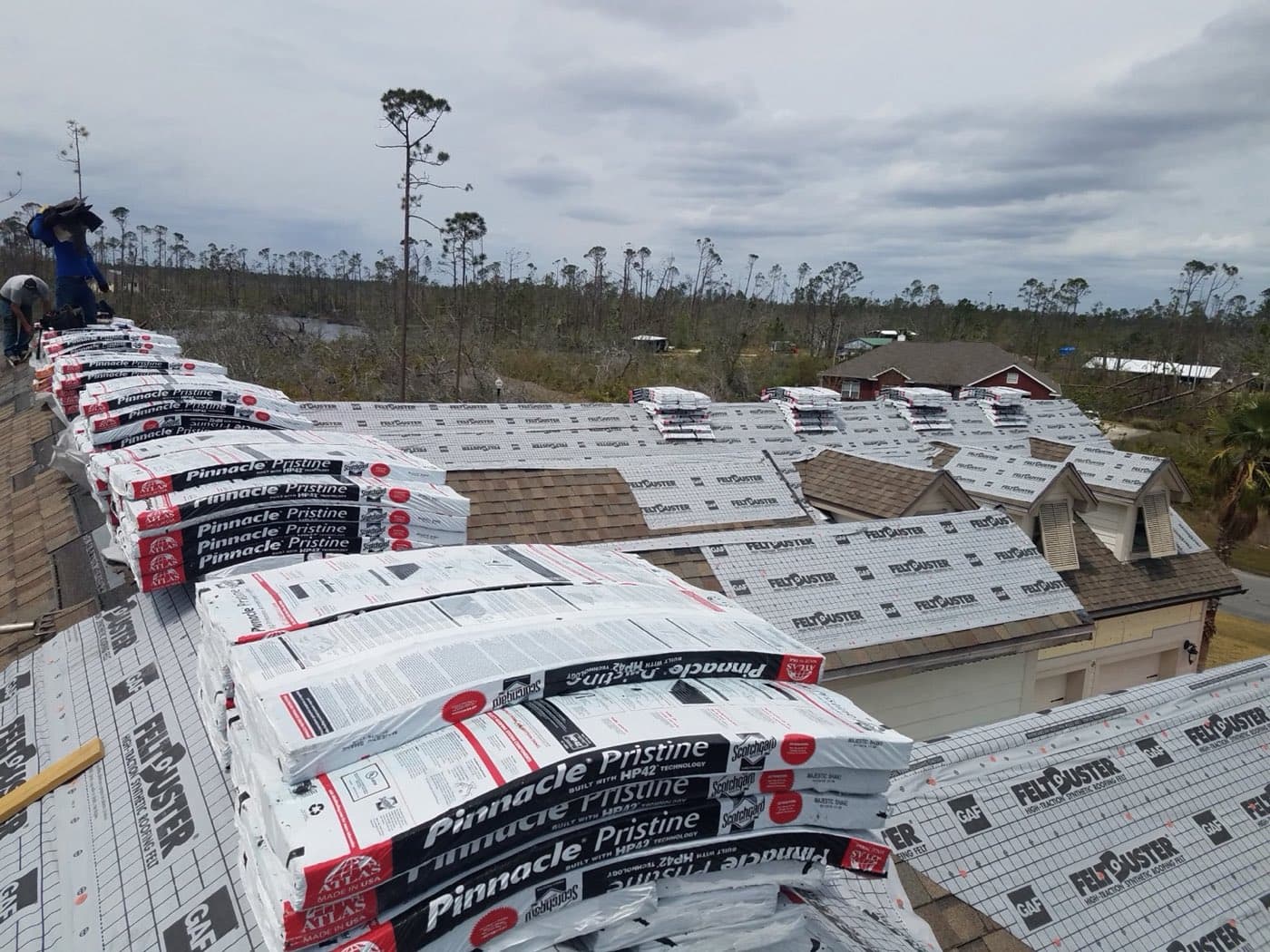
The work mix in Panama City still leans heavily on storm restoration and replacement. There is meaningful deferred and re-emerging Michael damage in the market, plus ongoing exposure from every storm since. We do a real amount of commercial flat-roof work in the downtown corridor and along the 23rd Street and 98 commercial strips. Roof inspections are in high demand because the insurance market is scrutinizing Bay County roof age and condition hard. We also build new commercial buildings across Northwest Florida from the ground up under our general contractor license.
Hurricane Michael and the Panama City insurance market
Michael was the defining storm in Bay County. It made landfall on October 10, 2018 as a Category 5, the third-most-intense hurricane to strike the continental United States by pressure. It came ashore at Mexico Beach, ground straight through Tyndall AFB, then over Panama City and out to the north. Sustained winds of 160 mph leveled neighborhoods. Tens of thousands of roofs failed at once. The replacement market in Bay County ran for years after: every available crew in the southeast was working here, materials supply ran short, and quality of work ranged from excellent to embarrassing, depending on who you hired.
We were on the ground here in the months after Michael and we have been working Bay County roofs ever since. What we still see today: roofs that were patched or partially repaired in 2018 and 2019 and are now finally failing; original-storm damage that was scoped low at the time and is now triggering insurance disputes; and re-roofs from 2019-2020 that were done badly by chasers and are now leaking. That work mix has shaped what we do here.
After Michael, the insurance market in Bay County tightened more aggressively than anywhere else in the panhandle. Carriers non-renewed roofs over a certain age, premiums climbed, and every claim became more contentious. If a storm damages your roof, we'll assess it and give you a quote, and we can coordinate with your insurance company's process as needed. If your roof was replaced after Michael by a contractor who isn't around anymore, an inspection now is worth doing, both to catch hidden workmanship defects while they're still cheap to fix and to have documentation ready for your next renewal.
Panama City building codes and permits
Reroofs inside Panama City limits go through the City of Panama City building department. Lynn Haven, Callaway, Springfield, and Parker each run their own. Unincorporated Bay County jobs go through the county. We pull and close out every permit on every job. After Michael, Bay County tightened inspection enforcement and that's still where things stand. There's less tolerance for un-permitted work here than in some inland counties.
Florida Building Code applies, and Bay County is in a high-wind zone with current fastening and uplift requirements that are stricter than they were pre-Michael. A roof installed before 2007 will need code upgrades on replacement; a roof installed before 2018 may need upgrades to meet current wind ratings depending on its specific assembly. We tell you exactly what your job triggers before you sign.
Wind mitigation inspections matter a lot in Bay County, and we can point you to trusted inspectors who handle the form. The wind premium portion is the largest single line on a lot of Panama City policies, and documenting features like hip roof geometry, secondary water barrier, and deck attachment can pull that down meaningfully. A lot of post-Michael replacements qualify for discounts the homeowner is not currently getting.
Why a panhandle roofing contractor matters in Panama City
Panama City was ground zero for storm-chaser activity for years after Michael. Out-of-state contractors signed thousands of contracts, did fast work, and left. Some of that work was fine. A lot of it was not. The legacy of that period is showing up now as warranty issues with no one to call, leaks that aren't covered, and homeowners who have learned the hard way that license-and-insurance verification matters.
We're not a Bay County-based contractor. Our shop is in Fort Walton Beach, about an hour west, and we are honest about the drive. What we are is a Florida-licensed roofing contractor that's been working the state for nearly 40 years, with a permit and insurance history in Panama City that's publicly verifiable, and a real address that will be in the same place in 2030 that it is now.
Practically, that means warranty claims on our work go to us and we'll be reachable. Atlas Pro Plus Diamond certification means the manufacturer's product warranty sits on top of our workmanship warranty, both meaningful only because we will still be operating. And the crews who do our Bay County work do it routinely; they know the city inspectors, the local lumberyards, and the difference between a roof in St. Andrews and one in Lynn Haven.