
Roof repair is most of our weekly call volume. Someone notices a brown spot on the ceiling after a thunderstorm, a piece of flashing flapping in the wind, a missing shingle on the garage slope, or a shiner of daylight in the attic. They want to know two things: is this a $400 fix or a $20,000 problem, and how soon can you get out here. Our answer is usually a same-week visit and a straight read on which way the repair-vs-replace conversation is going to go.
The big trap with roof repair is over-selling the job. If your roof is 9 years old and a tree limb knocked off a couple of shingles, that's a one-hour repair, not the front of a sales pitch for a replacement. We've turned away plenty of work that other outfits would have written up. The flip side: if your roof is 22 years old, the granules are gone, and the leak is the third one this year, we'll tell you straight that you're putting money into a roof that's done, and that a repair is buying weeks, not years.
Almost everything we repair falls into a short list of failure points we've seen thousands of times: flashing at chimneys, dormers, and skylights; pipe boots that have UV-cracked open; ridge vents installed without enough mastic; valley metal corroded through; lifted shingles at rake edges from sustained wind. Find the right one, fix it correctly, and the roof stops leaking.
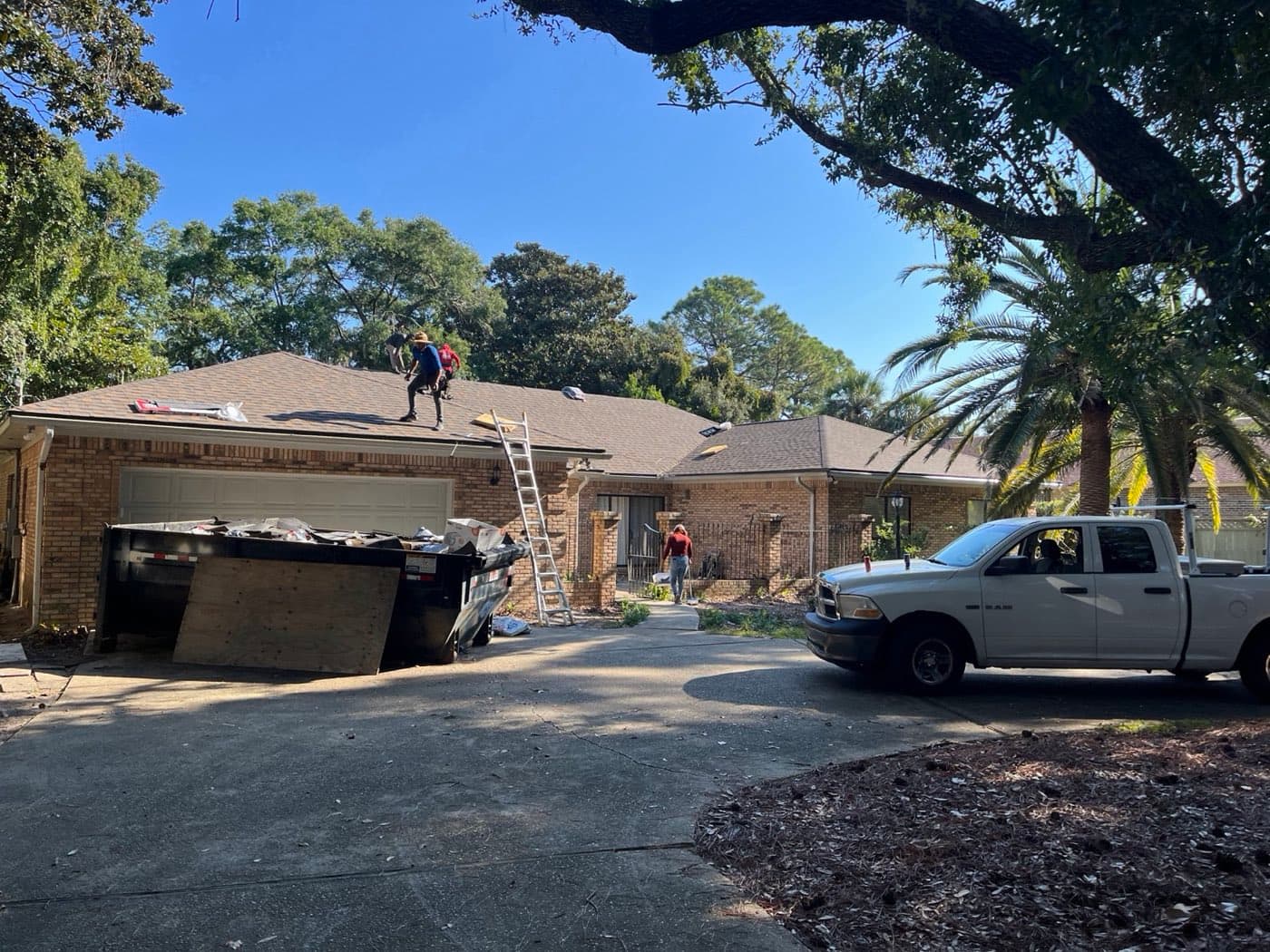
Why repairs on the panhandle have their own patterns
On Gulf Coast roofs the failure points are predictable, because the climate punishes the same spots over and over. Pipe boots, the rubber collars around plumbing vents, UV-crack at about year 8-10 down here, well before the shingles themselves are done. Most leaks we trace to a 'shingle problem' turn out to be a $90 pipe boot that nobody noticed. Same story with ridge vent end caps and around skylights. These are the spots that move first, and the rest of the roof is fine.
Wind events do their own kind of damage that you won't always see from the ground. Sustained 50-70 mph winds (which we get from regular afternoon storms, not just hurricanes) will lift shingle tabs and break the factory seal even when nothing actually comes off the roof. The shingle looks intact, but the next driving rain finds its way under the lifted edge. We see this constantly after squall lines roll through Escambia and Santa Rosa Counties in summer.
The other panhandle pattern is decking soft spots from chronic minor leaks that nobody addressed. A flashing leak at a chimney can run for two or three years before it shows up on a ceiling. By then there's wet plywood, mold in the rafters, and a repair that started as flashing turns into deck replacement and interior drywall. Catching repairs early is the cheap version of this job. Waiting is the expensive one.
What a Whitrock repair visit covers
- Full roof walk and leak source diagnosis, not just looking where you saw the water spot
- Attic inspection where access allows, to trace the leak path back to the entry point
- Photo documentation of what we find, given to you before we quote the repair
- Flashing repair or replacement (chimney step flashing, headwall, sidewall, kickout)
- Pipe boot replacement with lead or upgraded EPDM collars rated for Florida UV
- Valley metal repair or replacement, including underlayment beneath it
- Ridge cap and ridge vent repair, including resealing or re-fastening lifted sections
- Shingle replacement for missing, broken, or lifted tabs, color-matched as close as available stock allows
- Emergency tarping if the leak is active and we can't repair right away
- 5-year written workmanship warranty on the specific repair area
How a repair call runs with us
- 01
Phone call and triage
Call the office. We'll ask a few questions: when did it start leaking, where does it show up inside, what does the roof look like from the ground, how old is it. From there we either schedule a normal visit promptly or, if you've got water actively coming in, we prioritize an emergency tarp.
- 02
On-site diagnosis
We walk the roof and the attic. A leak that shows up over the kitchen can be entering 15 feet uphill. Water runs along the underside of the deck or down a rafter before it finds the ceiling. We trace it back. You get a written explanation of what we found and what's causing it.
- 03
Repair-or-replace conversation
Before we quote a repair, we tell you honestly what category your roof is in. If it's a young roof with one bad spot, the answer is a repair. If it's an old roof with multiple failure points, we'll lay out what a repair gets you (1-3 more years, maybe), what a replacement gets you (25+ years, lower premium, real warranty), and let you decide.
- 04
The actual repair
Most localized repairs are a half-day to one-day job. Flashing repair, pipe boot replacement, shingle replacement, ridge work: none of it takes long if you know what you're doing. We bring matching shingle stock where we can; if the original is discontinued (anything pre-2010 usually is), we'll show you the closest available and explain the visual difference before we install.
- 05
Cleanup, photos, and warranty
Magnet sweep around the work area, debris haul-off, and before/after photos of the repair. You get a 5-year written workmanship warranty on the specific area we touched. If the leak comes back in that window from anything we did, we're back out at no charge.
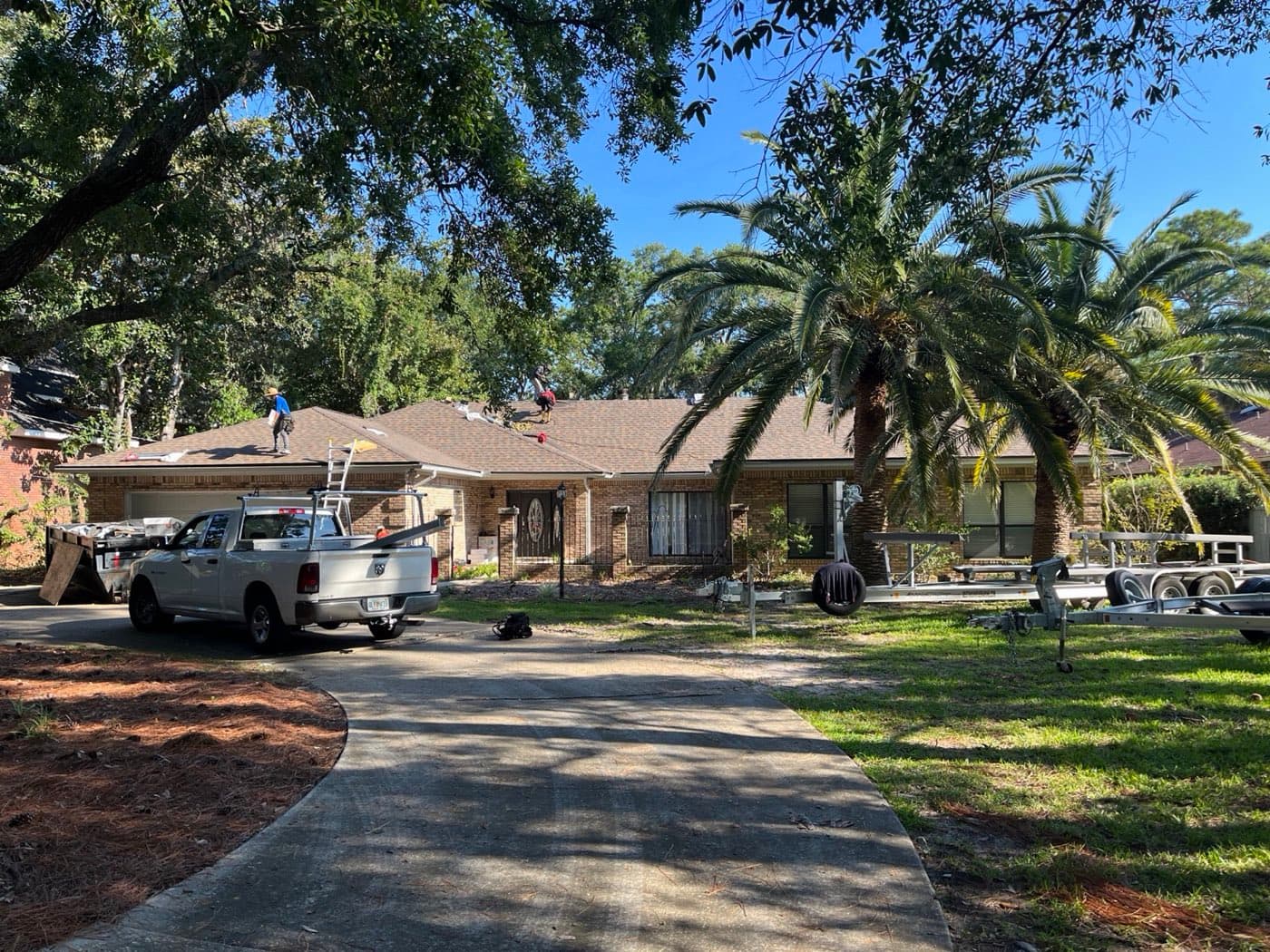
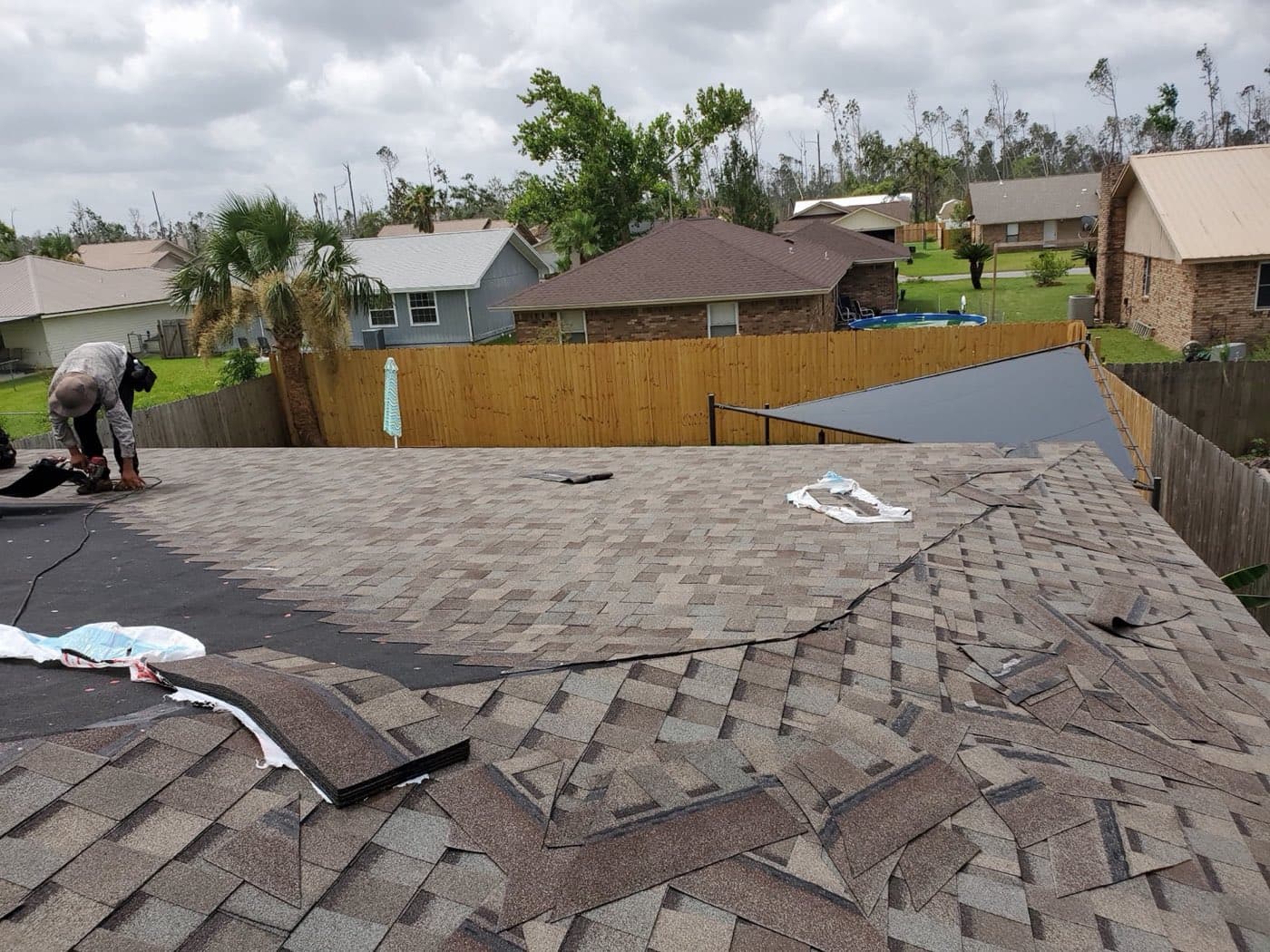
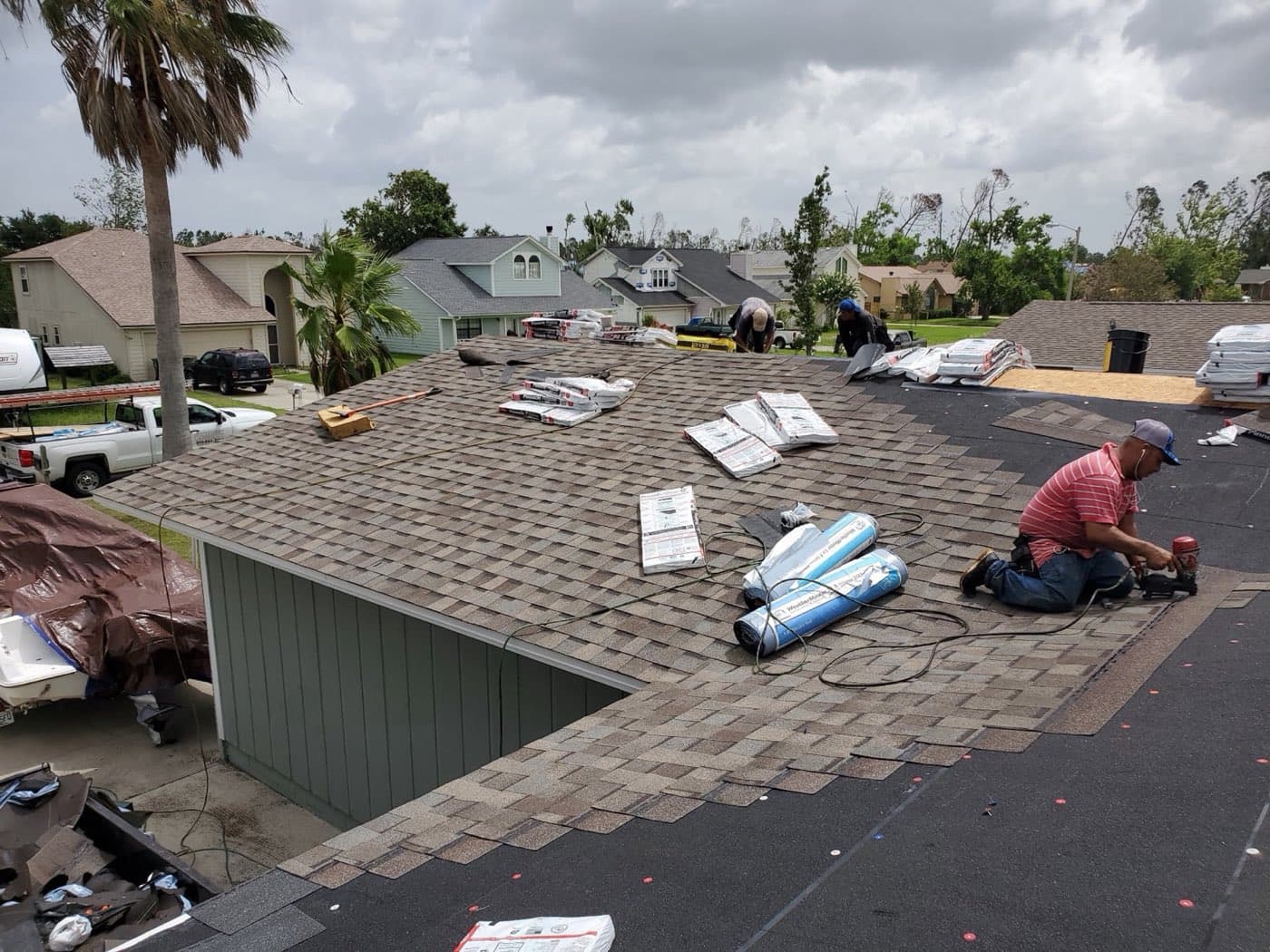
Roof Repair jobs around the panhandle
What affects the cost of a roof repair
Most residential repairs land somewhere between $400 and $2,500. A single pipe boot replacement is on the low end. Chimney flashing rebuild with associated shingle replacement is in the middle. Valley metal replacement with underlayment and a 6-foot decking patch is on the high end. We quote in writing before we start, not after.
What can move the price is what we find once we get up there. A leak that looked like a flashing problem from the ground sometimes turns out to be a soft deck section underneath. That's the repair that grew. We don't surprise you with it; if the scope changes once we open it up, we stop, show you what we found, and you decide whether to authorize the additional work.
- Type of failure: pipe boot is cheap, chimney flashing is moderate, valley metal is expensive
- Roof pitch and access: a 12/12 pitch needs a harness setup, which adds time
- How many spots: one leak vs. four leaks across the roof is a very different quote
- Decking damage underneath: if the plywood is wet, it's tear out and replace
- Shingle availability: older discontinued shingles sometimes require larger area replacement to keep the visual consistent
- Interior repairs from the leak (drywall, insulation, paint): we handle those as part of the job too
Why call us for repairs
We'll tell you when a repair doesn't make sense
Plenty of contractors will repair anything you'll pay them to repair, including a roof that's three years past its service life. We won't. If you're putting money into a roof that needs replacement, we'll say so, even if it costs us the work that week.
Repairs are not the cleanup crew job
On a lot of roofing companies the senior crews do replacements and the junior guys get sent on repairs. Not here. The crew on your repair has been doing this for years, because finding a leak source is harder than tearing off a roof. It takes pattern recognition.
Real workmanship warranty in writing
Repair-warranty terms vary across the industry from 'we'll come look at it' to nothing at all. We give you a 5-year written workmanship warranty on the specific repair area. If the leak comes back in that window from anything we did, the return visit is on us.
Local for the long haul, and we'll still be here
Whitrock Associates has answered the same phone in Pensacola for decades. The warranty on the repair we did this year still means something years from now because we're still going to be at this address. Storm chasers and out-of-state outfits can't say that.