
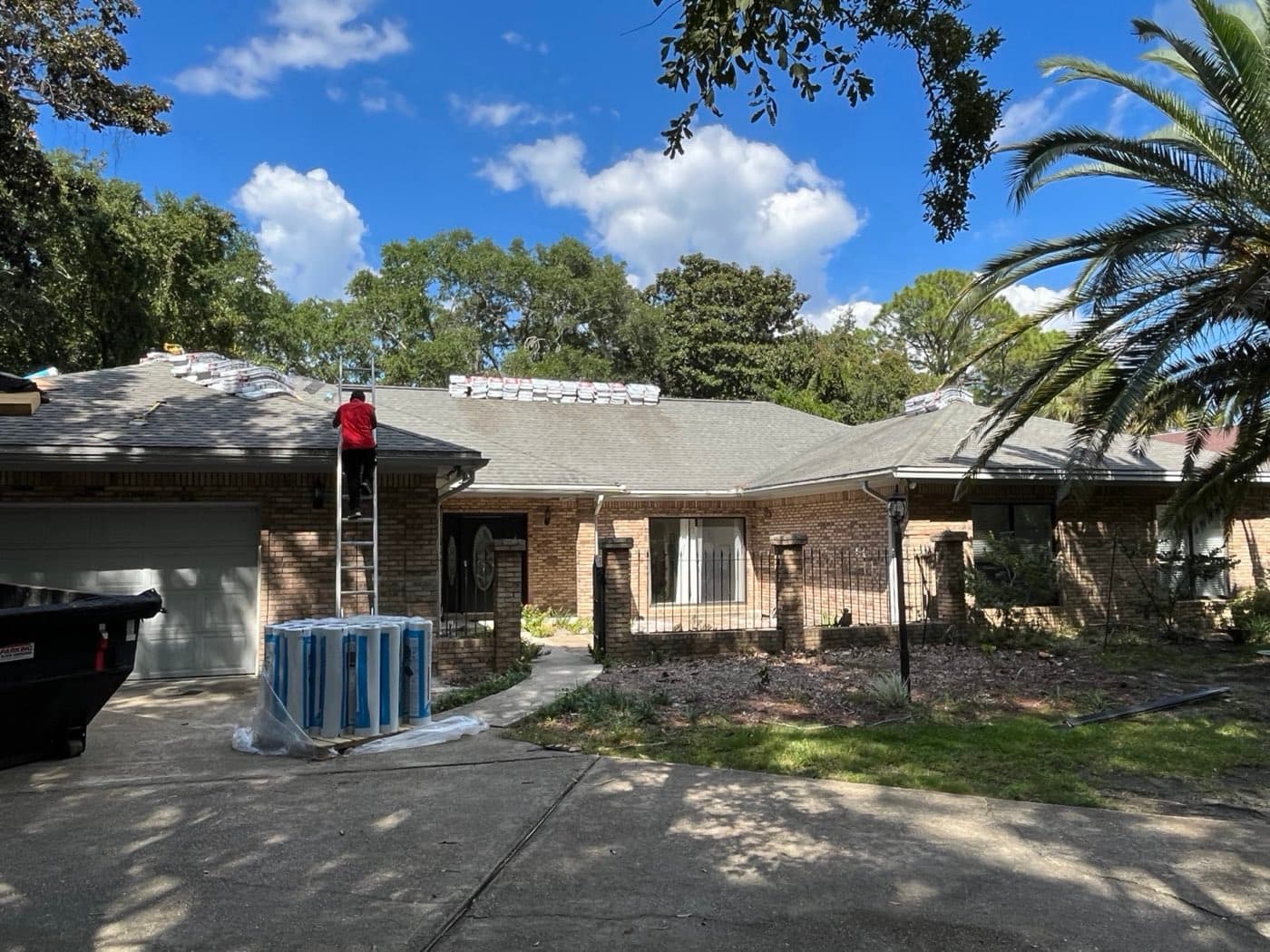
If your homeowners premium jumped this year, a wind mitigation inspection is the cheapest way to push some of it back down. We don't do the inspection ourselves, but we can point you to an FL-certified inspector who does, and we run into the same thing constantly: homeowners who already qualify for credits they're not getting, because nobody ever filed the form. The roof has clips. The deck is nailed to current spec. The credits are just sitting there, unclaimed.
Here's what the inspection actually is, what it documents, and why your carrier cares so much about it.
What the form actually is
A Florida wind mitigation inspection is a single standardized document: the OIR-B1-1802, set by the Florida Office of Insurance Regulation. Every carrier writing wind coverage in this state uses the same form, so the inspector isn't grading your roof, they're checking boxes against a fixed list. An inspector walks the roof, goes into the attic where there's access, photographs the construction details, and records what's there.
The form documents seven things. Each one maps to a discount, and the discounts stack.
The seven things it checks
Building code and roof covering: when the roof was built or last replaced, and whether the covering meets current Florida Building Code. A roof permitted after 2002 (and especially a recent code-compliant reroof) starts you in a better bracket.
Roof deck attachment: what the deck is nailed down with and how tightly. The inspector is looking for nail type and spacing. 8d ring-shank nails on a tight schedule score far better than the staples or short nails on older homes.
Roof-to-wall connection: this is the big one. The inspector checks how the roof is tied to the walls, toe-nails at the bottom, then clips, then single wraps, then double wraps at the top. Moving from toe-nails to clips or wraps is usually the single largest credit on the whole form.
Roof geometry: hip versus gable. A hip roof slopes on all four sides and sheds wind load better, so it earns a credit a gable roof can't. You can't change your geometry, but if you've got a hip roof, you want it documented.
Secondary water resistance: whether the deck is sealed (SWR, often a peel-and-stick membrane under the shingles) so that if the covering blows off, water still doesn't pour into the house. Many newer reroofs include this and the homeowner never knew to claim it.
Opening protection: impact-rated windows, doors, and shutters. Full coverage of every opening earns a credit, partial coverage earns less. This one lives off the roof but it's on the same form.
How the credits move your premium
Only the wind portion of your premium is in play here, but in Northwest Florida wind is a large share of what you pay. When the credits stack, homeowners commonly see the wind portion drop 20 to 40 percent. The roof-to-wall connection and the roof covering compliance tend to move it the most, with deck attachment and secondary water resistance close behind.
Carriers require these inspections (or heavily reward them) because the form tells them exactly how your house is likely to perform in a hurricane. A double-wrapped, sealed-deck, hip roof is a smaller claim risk than a toe-nailed gable with a 25-year-old covering, and the pricing reflects it. Citizens Property Insurance and the private market both lean on this data. The Florida Department of Financial Services has more on how these discounts are regulated.
Why a new roof plus a fresh form pays off
When we do a code-compliant roof installation, we're building in several of these credits on purpose: current deck fastening, secondary water resistance, a covering that meets today's code. If you want to go further, building to the IBHS FORTIFIED standard documents even stronger roof-to-wall and sealed-deck details. But the credits do nothing until the form is filed. A new roof with no fresh wind mit report is money left on the table.
So is an old form. Wind mit reports expire (usually after five years), and if yours predates your last reroof or a window upgrade, it's understating your house. Re-inspecting after storm damage repairs or any roof work is how you capture the credits you just paid to earn.
Getting it done
We don't perform wind mitigation inspections ourselves, but we can point you to a trusted FL-certified inspector, and once the report is done we're glad to help you make sense of it. If we just put a roof on your house, we know exactly what's up there and what credits it should earn. Reach out for a free estimate anywhere from Pensacola to Panama City.
Two related reads: Filing a roof insurance claim, step by step covers the claims side, and What hurricane season does to a panhandle roof covers what these credits are actually protecting against.