Roof coatings are restoration, not replacement. You take a roof that's mid-life (the membrane is sound but the surface is oxidizing, the seams are getting brittle, the reflectivity is gone) and you coat it with a fluid-applied membrane that seals the surface, restores the reflectivity, and renews the warranty. Done right, you get years more out of a roof you'd otherwise tear off. Done wrong, you spend tens of thousands painting a roof that needed replacement, and you discover the problem the next time it rains.
We've coated commercial roofs across Pensacola, Pace, Navarre, Destin, Fort Walton, and Panama City for nearly 40 years. Retail centers with single-ply membranes. Light industrial buildings with mod-bit. Apartment complexes with old built-up roofs. Standing seam metal that's chalked out from coastal salt air. The right candidate for a coating saves the building owner serious money and avoids a 3-week tenant disruption. The wrong candidate gets a tear-off recommendation and we walk away from the coating job.
This page walks through when coating makes sense, which coating goes on which roof, what the warranty actually covers, and how we sequence the work around a working building. The short version: coating is the right answer on a specific category of roof, and we'll tell you straight whether yours is in that category.
Why coatings are worth a real conversation on the panhandle
The economics are unusual. A typical commercial coating job runs a fraction of the cost of a full tear-off and re-roof. There's no debris hauling, no tenant access disruption, no permit-level wind-uplift recalculation. The roof stays watertight throughout the work. The coating goes on in coats over a couple weeks, and the building keeps operating. For a property owner trying to time a roof replacement against a CapEx cycle or a building sale, a coating buys the time the financial side needs.
The climate makes the case stronger. White and reflective coatings drop the surface temperature of a black mod-bit or aged-EPDM roof by 50-90°F during summer, which directly reduces cooling load. We've measured roof surfaces at 165°F before coating and 90-100°F after, and that's a real change in HVAC runtime. Building owners with old, dark single-ply or built-up roofs typically see a meaningful drop in summer cooling costs after a coating, on top of the lifespan extension. The math compounds.
Then there's the storm hardening. Florida Building Code has tightened wind-uplift requirements significantly over the past two decades, and most pre-2010 commercial roofs on the panhandle don't meet current spec. A coating doesn't change the underlying wind-uplift rating, but it does reinforce seams and edges that are the most common failure points in a hurricane. Coating a roof in year 12 of its life makes it more likely to survive year 15's storm without seam separation. That's not nothing in a region that's been hit by Ivan, Dennis, Sally, and Michael in the last 25 years.
What our coating work covers
- Initial roof assessment: moisture survey, infrared scan where wet insulation is suspected, core samples to check membrane condition
- Honest go/no-go on whether the roof is a coating candidate or needs full replacement instead
- Power-wash and surface prep: most coating failures start with inadequate prep, so this gets done right
- Seam reinforcement with embedded fabric on all field seams, perimeter flashings, and detail areas
- Repair of any compromised areas before coating: pipe boots, flashings, drain bowls, blistered membrane
- Silicone or acrylic coating system applied at manufacturer-spec mil thickness, typically two coats with intermediate inspection
- Reinforcement of all penetrations, parapet walls, edge metal terminations, and HVAC curbs
- Manufacturer warranty registration, with the term depending on the system and spec
- Post-install inspection and a binder of documentation for your records and future maintenance
How a coating project runs
- 01
Assessment and go/no-go
We walk the roof, look at the membrane condition, check for wet insulation (infrared scan or core samples if needed), and assess the seams, edge details, and penetrations. If the substrate is sound and the failure mode is surface oxidation, the roof is a candidate. If the insulation is wet, the seams are open, or the deck is compromised, we recommend tear-off and tell you why. No selling a coating onto a roof that needs replacement.
- 02
Scope, system selection, and warranty term
We write a scope that names the coating manufacturer, the product (silicone or acrylic), mil thickness per coat, reinforcement fabric spec, and warranty term. We recommend the system based on the existing roof type, the climate exposure, and your warranty preference. You get a written quote with the specifics, not 'a coating.'
- 03
Repair phase and surface prep
Before any coating goes on, we fix what needs fixing: failed pipe boots, lifted seams, compromised flashings. Then the entire roof gets power-washed with appropriate chemistry for the existing membrane to remove dirt, algae, chalking, and contaminants. Surface prep is the most common reason coatings fail prematurely. We don't shortcut it.
- 04
Seam and detail reinforcement
Every field seam, every parapet termination, every penetration, every drain bowl gets reinforced with embedded fabric in coating. This is the work that turns a paint job into a restoration system. It's labor-intensive and it's what separates a coating that lasts from one that fails early.
- 05
Field coating application
First coat of coating goes on across the full roof field at manufacturer-spec mil thickness. We give it the cure time the data sheet requires, then inspect for thin spots and pin-holes. Second coat goes on, in many cases tinted differently than the first so the applicator can see full coverage. Mil thickness is measured at multiple points across the roof to confirm spec.
- 06
Final inspection, warranty registration, maintenance plan
Manufacturer rep walks the roof on warranty jobs that require it. Warranty paperwork registers. You get a binder: warranty certificate, product specs, photos of the work in progress, and a maintenance schedule. Most coating warranties require annual inspection and minor touch-up to stay in force. We can run that on a maintenance agreement.
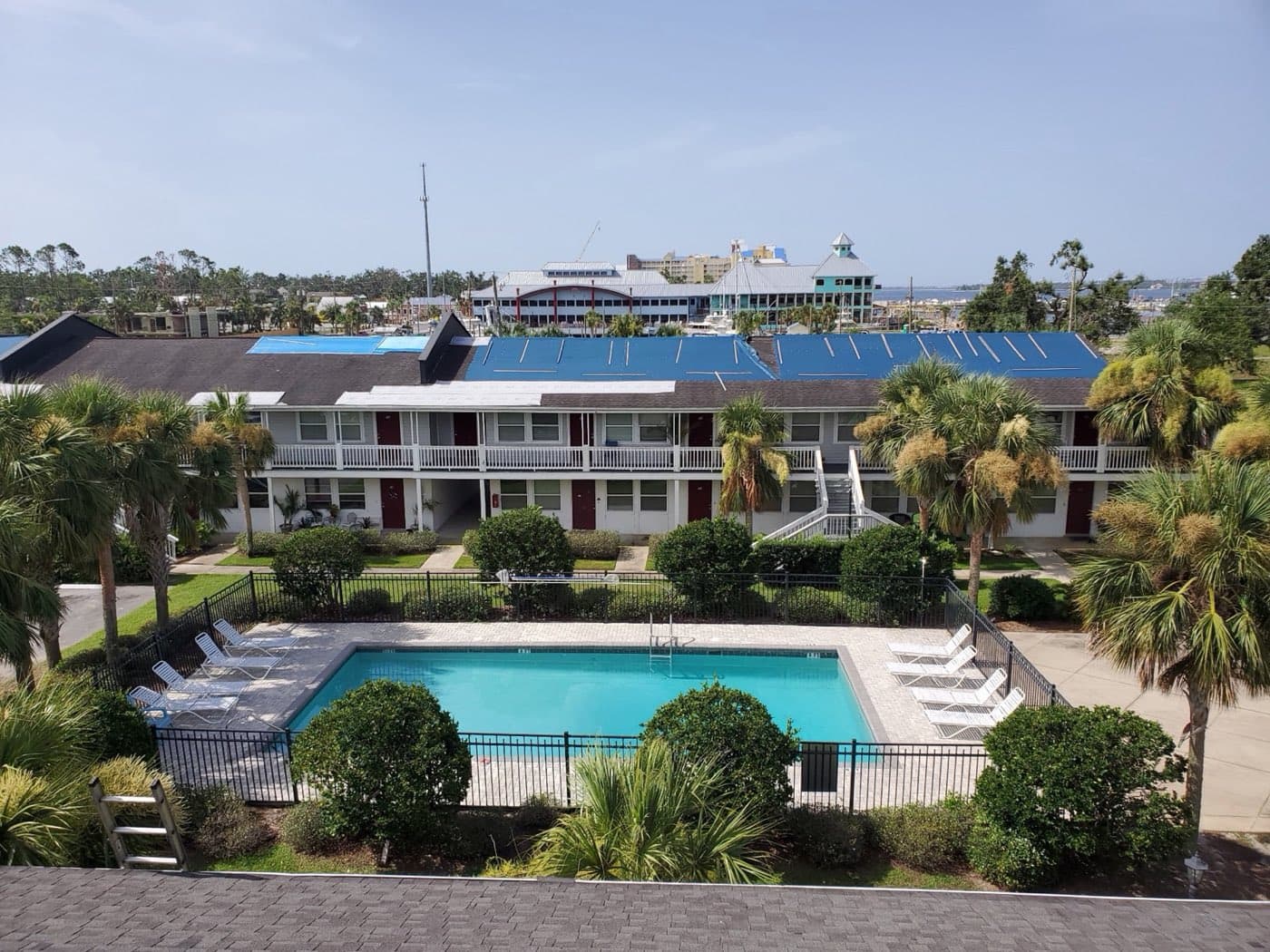
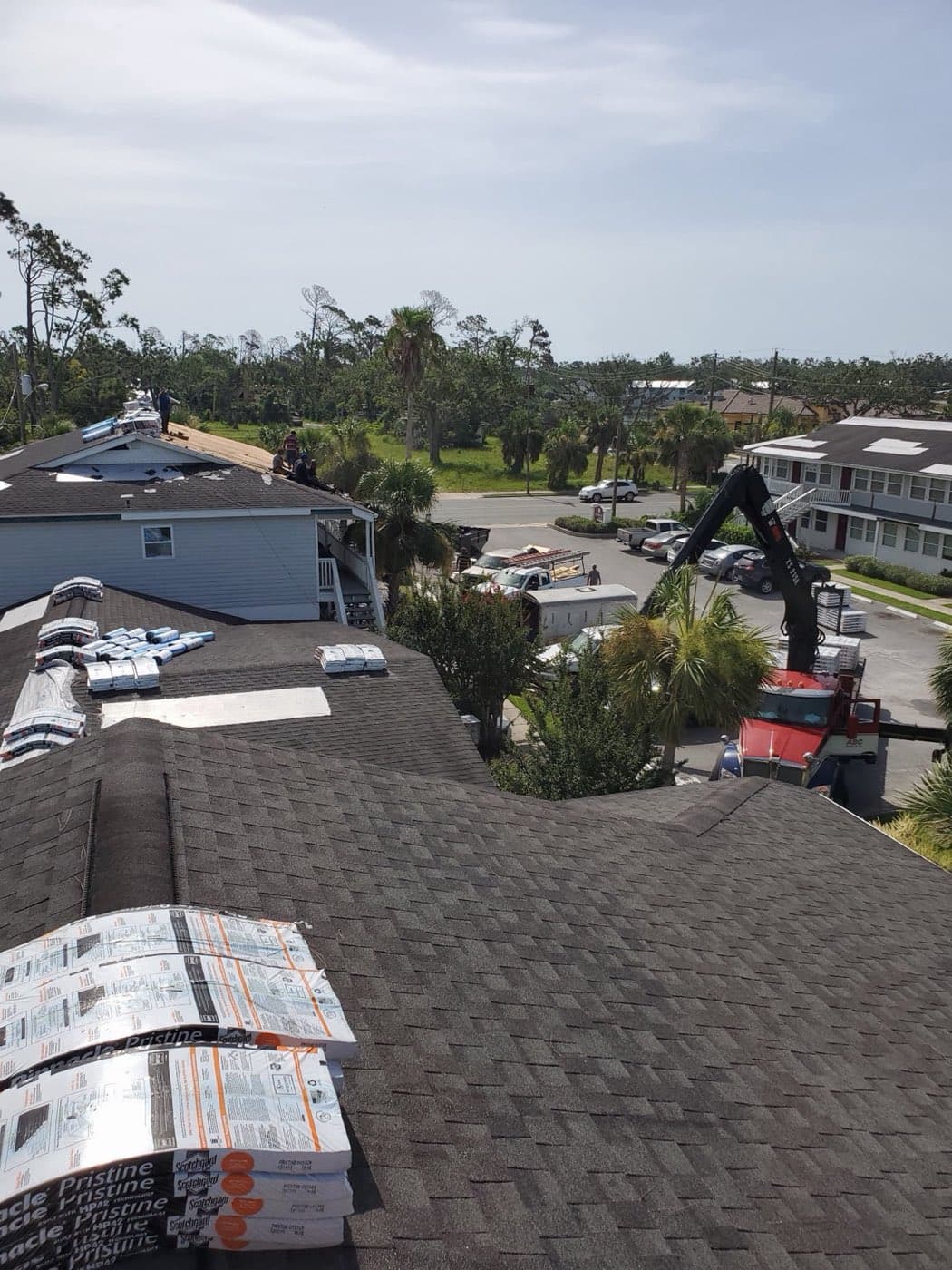
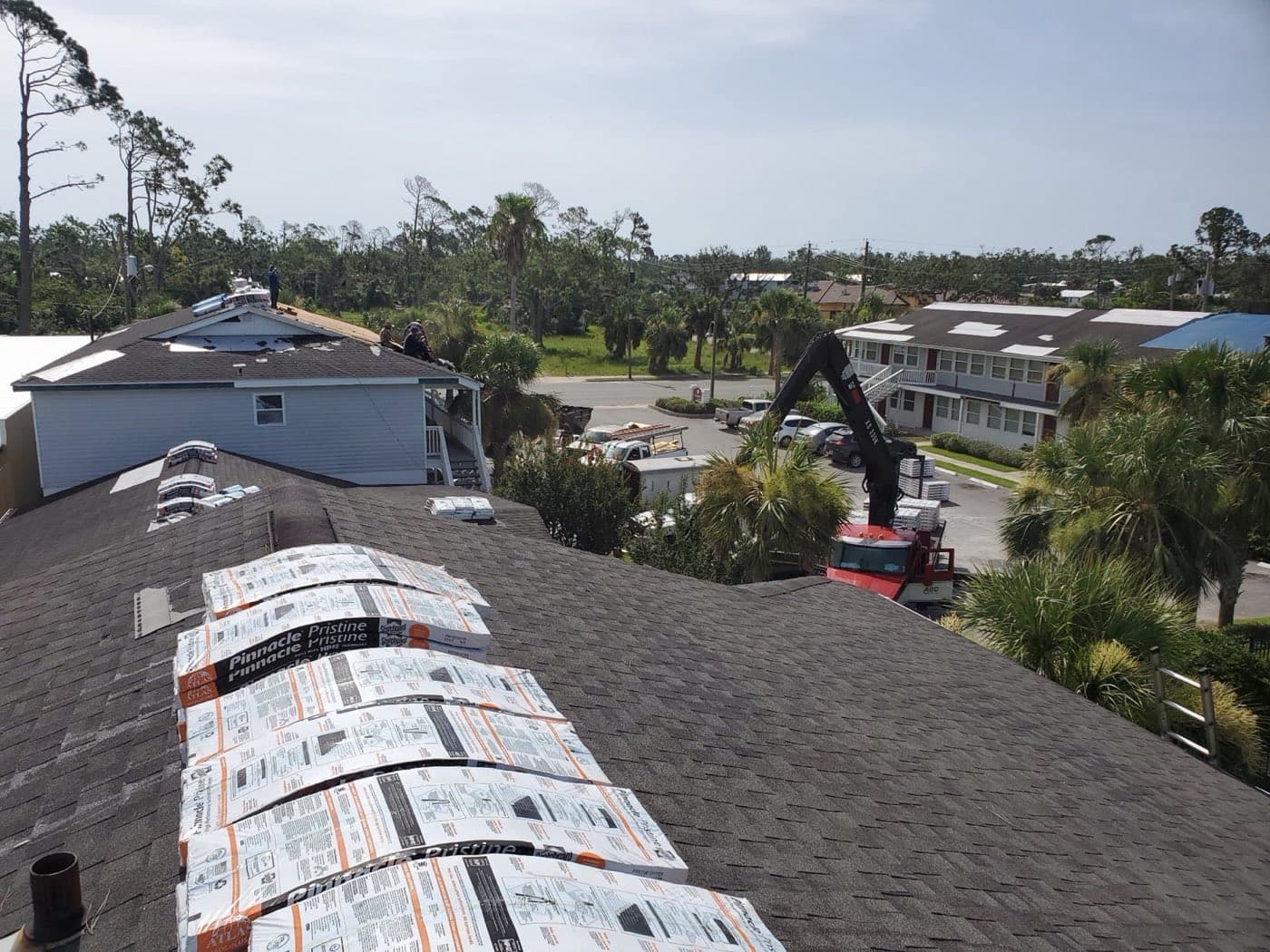
Roof Coatings jobs around the panhandle
Silicone vs acrylic: what we use and when
Coating chemistry matters. The two main systems we install, silicone and acrylic, perform very differently in the panhandle climate. Here's how we choose between them.
Silicone coating systems
Silicone is the longer-life choice and the right call on most commercial roofs in our service area. It handles ponding water (which a lot of older commercial roofs have), tolerates UV exposure better than acrylic, and carries strong manufacturer warranties when properly installed. It costs more per gallon than acrylic and it's harder to recoat in the future (you have to coat silicone with silicone), but the lifespan and durability make it the default choice on TPO, EPDM, mod-bit, and built-up roofs that are in the right age window for restoration. We install Atlas and GE silicone systems most often.
Acrylic coating systems
Acrylic is the lower-cost option and the right choice on metal roofs and on substrates that don't pond. Excellent reflectivity, good UV resistance, breathes (allows moisture vapor to escape from the substrate), and can be recoated with any compatible system in the future. Doesn't handle standing water well: acrylic in ponding areas will eventually fail. It carries a solid manufacturer warranty. We use acrylic on standing seam and exposed-fastener metal roofs, and on residential and light-commercial flat roofs where ponding isn't an issue.
Reinforcement fabric and primer systems
Most coating systems use embedded polyester fabric at seams, flashings, and high-stress areas. Some substrates also require a primer coat to ensure adhesion, particularly EPDM, weathered modified bitumen, and certain metals. The primer and fabric are part of the engineered system, not optional add-ons, and skipping them is where most failed coating jobs go wrong. We spec primer and fabric per the manufacturer's installation guide for the specific substrate, every time.
What drives the cost of a coating job
Coatings typically cost a fraction of a tear-off and re-roof of the same building. Within that range, the variables are the coating system (silicone is more per gallon than acrylic), the mil thickness called for, the amount of detail and seam reinforcement, and the prep work the roof needs before coating goes on. A clean TPO roof with simple geometry coats faster and cheaper than a built-up roof with twenty HVAC curbs and aging flashings.
The other thing to factor in is what you're buying. A properly specced silicone system on a fully prepped roof is a different financial product than a paint-it-and-walk acrylic job a budget contractor will quote you for a fraction of the price. The cheap version typically fails early and the warranty is unenforceable. We quote what the manufacturer will warranty, not what fits a target price.
- Coating chemistry: silicone is more per gallon than acrylic, but lasts longer
- Mil thickness: most warranties require 20-30 mil dry film thickness; thinner is cheaper and shorter-lived
- Existing substrate type: EPDM and metal need primers; built-up and mod-bit need more aggressive prep
- Roof condition: clean roofs coat fast; oxidized, dirty, or biologically contaminated roofs need more prep
- Detail complexity: number of penetrations, HVAC curbs, parapet linear feet, and drain bowls
- Warranty term: longer warranties require more mil thickness and inspection
- Repair work needed before coating: failed flashings, wet insulation patches, deteriorated edge metal
Why building owners call us for coatings
We turn down coating jobs that won't work
If your roof is past its coatable life (wet insulation, seam separation, deck deterioration) we'll tell you and quote replacement instead. A coating on a failed roof is throwing money at a problem and we'd rather lose the job than the customer's trust.
Manufacturer-certified application
Atlas Pro Plus Diamond plus authorized applicator status with the major coating manufacturers. That means your manufacturer warranty actually registers and gets honored when you need it, which is the whole point of a coating system.
Prep work that holds the warranty
Most coating failures trace back to inadequate surface prep. We power-wash with the right chemistry, prime where the spec requires it, reinforce every seam with embedded fabric, and document the prep with photos. The work is slower than a quick spray job; the result is a coating that lasts the warranty term.
Local, long-term presence
Whitrock Associates has been at the same Fort Walton Beach office for decades. If you call us in year 8 because there's a question on your coating warranty, the same company is still here to answer. Coating warranties span more than a decade, and the contractor matters more than the manufacturer over that span.